When deciding between junk removal and dumpster rental, the choice often comes down to cost, convenience, and the type of project. Here’s the bottom line:
- Junk removal is ideal for quick, small-to-medium cleanouts where professionals handle the labor through various junk removal services. It’s best for single-item pickups (like furniture or appliances) or when you need everything cleared in a few hours. Prices typically range from $150 to $850, depending on volume and item type.
- Dumpster rental works better for larger, multi-day projects like renovations or construction, where waste accumulates over time. You load it yourself, and costs range from $200 to $1,500, based on dumpster size, rental duration, and weight limits.
Key Considerations:
- Junk Removal Pros: No heavy lifting, quick service, eco-friendly disposal options.
- Dumpster Rental Pros: Lower costs for large-scale projects, flexibility to work at your own pace.
Quick Comparison:
| Criteria | Junk Removal | Dumpster Rental |
|---|---|---|
| Cost | $150–$850 | $200–$1,500 |
| Labor | Handled by professionals | DIY (you load the dumpster) |
| Best For | Small/medium cleanouts, fast jobs | Large/long-term projects |
| Rental Period | 2–3 hours | 7–10 days |
| Eco-Friendly | Higher recycling/donation rates | Lower recycling rates |
Choosing the right option depends on your project size, timeline, and willingness to do the work yourself. Let’s dive deeper into costs and scenarios to help you decide.
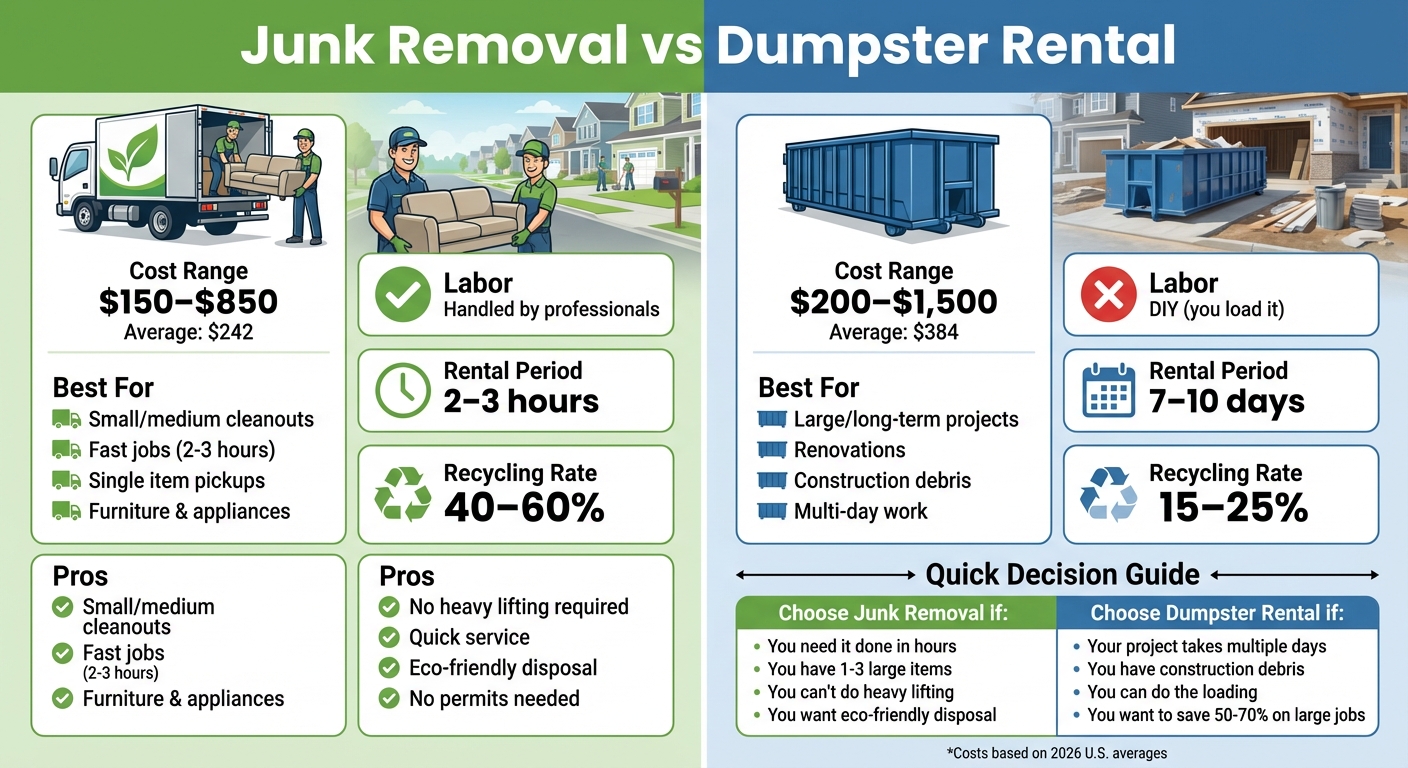
Junk Removal vs Dumpster Rental Cost Comparison Chart
Junk Removal or Dumpster Rental: Which is Better?
sbb-itb-096ce5b
What You Pay for Junk Removal Services
Before comparing junk removal costs to dumpster rentals, it’s helpful to understand how pricing works. Junk removal companies typically charge based on volume – the amount of truck space your items take up – rather than on an hourly basis. On average, prices across the U.S. hover around $242 [9], but regional factors can significantly influence costs. For example, in Sacramento, prices can range from $300 to $700, reflecting local disposal fees. Most jobs fall between $150 and $450, depending on how much material needs to be hauled [13]. West Coast cities like Sacramento also contend with landfill fees, such as Kiefer Landfill’s bulky waste rate of $144.90 per ton as of January 2026 [7].
Junk removal quotes usually include labor, transportation, and disposal fees. Companies like Green Light Junk Removal provide upfront pricing with no hidden charges. They offer quotes based on photos or an in-person evaluation, ensuring you know the cost before the work begins [10][12]. This transparent pricing approach eliminates surprise fees for things like fuel or extra labor.
"After hauling thousands of loads since 2014, we’ve found that customers don’t actually want the lowest price – they want the honest price." – Jiffy Junk Team [8]
What Affects Junk Removal Pricing
Several factors influence how much you’ll pay for junk removal:
- Volume: This is the primary cost driver. For example, removing a single mattress (1/8 of a truckload) can cost $60–$150, while a full truckload (13–17 cubic yards) runs between $600 and $850 [13].
- Item Type: Certain items, like mattresses, electronics, or appliances containing refrigerants, require special handling. These add-on fees range from $25 to $100 per item [15].
- Weight: Heavy materials, like construction debris, are priced by weight since they fill the truck’s capacity faster [13].
- Accessibility: If items are in hard-to-reach areas, such as up multiple flights of stairs or through narrow hallways, expect surcharges of $25–$100 per floor [13]. However, placing items curbside or in the driveway can earn you a 20–40% discount [13]. Disassembling large furniture beforehand can also reduce the volume and potentially lower your price tier.
Price Ranges for Common Jobs
To give you an idea of typical costs, here’s what you might pay for various removal tasks in 2026:
| Job Type | Price Range |
|---|---|
| Single furniture piece (sofa/couch) | $100–$200 [13] |
| Mattress removal | $75–$150 [9] |
| Hot tub removal | $200–$600 [9] |
| Refrigerator with Freon | $75–$180 [13] |
| Yard waste (per load) | $150–$300 [13] |
| Construction debris (per truckload) | $100–$800 [9][13] |
Junk removal is especially appealing for quick, one-day cleanouts where you want immediate results without doing the heavy lifting yourself. For instance, if your garage is cluttered with old furniture, broken appliances, and unused yard tools, a professional crew can clear it out in just 2–3 hours. They’ll handle everything, including sorting items for donation or recycling. This convenience and efficiency make full-service junk removal a popular choice, even if the per-item costs are higher than renting a dumpster.
Next, we’ll look at how dumpster rental fees stack up for similar projects.
What You Pay for Dumpster Rentals
When it comes to dumpster rentals, the pricing works differently compared to junk removal services. Instead of being charged based on the volume of debris, you pay a flat rate to rent a container for 7–10 days. This rate generally includes delivery, pickup, and disposal, but only up to a specific weight limit. The national average cost is $384[19][20], though the exact price depends on the size of the container and your location. While most rentals follow flat-rate pricing, exceeding the weight limit or rental period will result in extra charges[16][6].
Typically, the base price of a dumpster rental covers 2 to 4 tons of disposal capacity[16][17][19]. However, if your debris exceeds this weight – even if the dumpster isn’t completely full – you’ll face overage fees. For materials like concrete, dirt, or roofing shingles, it’s easy to hit the weight limit quickly, leading to additional charges of $40 to $200 per ton[16][17][20]. On top of that, landfill tipping fees – ranging from $20 to $70+ per ton, depending on your region – can also impact your total cost.
Extra Fees That Add Up
While the base rental rate covers the essentials, there are several additional fees to watch out for. If you keep the dumpster longer than the included 7 to 10 days, you’ll likely pay $5 to $25 per extra day[16][17][18]. Placing the dumpster on public property, like a street or sidewalk, often requires a permit, which can cost anywhere from $10 to $150, depending on local regulations[16][17][20]. Additionally, trip fees – ranging from $50 to $150 – may be charged if delivery or pickup is obstructed by things like parked cars or low-hanging branches[17][20].
You’ll also want to avoid putting prohibited items in the dumpster, as these can lead to extra charges. Items like mattresses, tires, or appliances containing refrigerants often come with surcharges of $25 to $100 per item[17][19][20]. Hazardous materials, such as paint, batteries, or chemicals, can result in fines up to $500, and in some cases, the entire load may be rejected[16][17]. Additionally, rain can pose an unexpected cost – if debris absorbs water, the added weight can lead to overage fees. Using a tarp to cover the dumpster during wet weather can help avoid this[21][17].
Understanding these potential charges can help you plan better and choose the right dumpster size for your needs.
Dumpster Sizes and What They Cost
Choosing the correct dumpster size plays a big role in controlling costs. For smaller projects like garage cleanouts or bathroom remodels, a 10-yard dumpster is usually sufficient and costs between $200 and $1,277, with most rentals falling in the $350–$558 range. For larger projects, like multi-room renovations or roofing jobs, a 20-yard dumpster is more appropriate, costing between $275 and $1,332, with typical prices around $450–$637[16][6].
For even bigger jobs, such as major renovations or commercial demolition, a 30-yard dumpster costs $300 to $1,430, while a 40-yard dumpster ranges from $350 to $1,538[16][6]. Interestingly, 70% of residential projects can be handled with a 10-yard dumpster, even though many homeowners assume they’ll need a larger size[20]. Opting for the next size up is often more cost-effective than paying for a second haul or dealing with overage fees[6][17]. If you’re unsure about the amount of debris, adding a 20% buffer to your estimate is a smart way to avoid unexpected costs, as projects often produce more waste than anticipated[17].
Price Comparison by Project Type
Breaking down costs by project type can help you decide what fits your budget and needs. Whether you’re dealing with heavy items, large volumes of debris, or tight deadlines, the choice often comes down to convenience versus cost.
Furniture Removal
For a few furniture items, junk removal costs range from $180–$500, and it takes care of the heavy lifting for you. Here’s a quick breakdown:
- A couch: $100–$200
- A dining table: $100–$200
- An entertainment center: $100–$300
- Piano removal: $200–$400 [22][23]
In contrast, even a small 10-yard dumpster will cost $250–$575 [22][23]. This makes junk removal a better option if you’re dealing with just one to three items.
For an entire household cleanout, junk removal for a full truckload costs $600–$800, while a 20-yard dumpster rental is slightly cheaper at $275–$700 [22][23]. Keep in mind, though, that with dumpster rental, you’ll need to handle all the loading yourself.
Hot Tub Removal
Getting rid of a hot tub? Junk removal services cost $410–$700, which includes disassembly, hauling, and cleanup. On the other hand, renting a dumpster costs $300–$500, but you’ll need to handle the disassembly yourself [24]. The added convenience of junk removal often justifies the higher price if you’re not up for the DIY effort.
Construction Debris Disposal
For large-scale construction or renovation projects, a dumpster rental is usually the cheaper choice. A 30-yard dumpster costs $400–$600 [24]. Heavy materials like concrete, roofing shingles, or drywall can quickly fill a dumpster, and multiple junk removal truckloads could exceed $1,000 [24].
A 20-yard dumpster can hold 8–10 tons of materials like concrete or asphalt [24]. Renting the right size upfront helps you avoid extra haul fees or overage charges, which can run $50–$100 per ton [24].
"Dumpster rental is usually much cheaper than junk removal… In many cases, customers save 50 to 70 percent by choosing a dumpster instead of junk removal." – Jessica Strenta, Owner of Chickadee Dumpster Rental [1]
For smaller construction jobs – like clearing one or two rooms – junk removal costs $200–$300, which can be more economical than the minimum dumpster rental price of $400 [24].
Yard Cleanup
For small yard cleanups, junk removal services start at $300, offering quick help with hauling away branches, brush, or bags of leaves [4]. But for larger landscaping projects, like tree removal or clearing overgrown areas, a dumpster might make more sense. Here’s what you can expect:
- 10-yard dumpster: $250–$400
- 20-yard dumpster: $350–$500 [5]
Dumpsters offer flexibility, letting you fill them at your own pace over a 7- to 10-day rental period. However, some companies may not allow yard debris to be mixed with construction materials, which could mean renting separate containers [3].
If your yard waste exceeds three to four pickup truck loads, a dumpster is usually more cost-effective than scheduling multiple junk removal trips [5]. Deciding between junk removal and a dumpster ultimately depends on the scale of your project and how much hands-on effort you’re willing to put in.
When to Choose Junk Removal
Junk removal is the go-to option when you need quick, hassle-free clearing of unwanted items. Whether you’re racing against a moving deadline, prepping for a property inspection, or just trying to reclaim your space, professional junk removal services can typically wrap up the job in just 1–3 hours [24].
Save Time and Physical Effort
One of the biggest perks of hiring Green Light Junk Removal is skipping the heavy lifting. Their crews handle everything – whether it’s in the basement, attic, or anywhere else on your property [11]. A DIY dumpster project can take 20–40 hours of your time, while professionals can get the same job done in 2–4 hours. Plus, dumpster rentals usually last 7–10 days, making the time savings even more obvious [24].
This convenience is especially important for dealing with bulky or hazardous items [4]. As one satisfied customer, Tiffany Zamolsky, shared:
"It’s one thing to do a not fun job of heavy lifting but to do it with a smile and act as though it is no inconvenience was priceless" [11].
On top of saving time and effort, you avoid injuries, the hassle of renting trucks, buying safety gear, or waiting in long lines at disposal centers.
For smaller cleanouts – like clearing out one or two rooms or disposing of a few large items – junk removal often costs less than the minimum fee for a dumpster rental [24]. And the benefits don’t stop there.
Better for the Environment
Junk removal services also come with eco-friendly perks. Green Light Junk Removal focuses on responsible waste management and recycling. Their teams recycle 40–60% of collected items, a big step up from the 15–25% recycling rate typical of dumpster rentals [24]. They also sort items during collection, sending reusable goods to donation centers and routing electronics or mattresses to specialized recycling facilities [2]. In contrast, dumpsters usually send everything straight to the landfill [25].
This approach helps address a common frustration for DIYers: the uncertainty about how to properly dispose of certain items, which 12.2% of households report as their biggest challenge [2]. For those who care about reducing their environmental impact, this responsible disposal process adds value while potentially cutting future environmental fees.
When to Choose Dumpster Rental
Dumpster rentals offer a cost-effective solution for longer, large-scale projects where waste accumulates over time. While junk removal works well for quick, one-day jobs, dumpster rentals make more sense for extended projects. With a flat-rate pricing model that includes delivery, pickup, a 7–10 day rental period, and a specific weight limit, budgeting becomes more straightforward for tasks like renovations, estate cleanouts, or major construction work [5][6].
Best for Big or Multi-Day Projects
Dumpster rentals shine in projects where debris builds up gradually. Whether you’re tackling home renovations, roof replacements, or demolition work, having a container on-site allows for ongoing waste disposal. In fact, the U.S. generated a staggering 600 million tons of construction and demolition debris in 2018, with demolition alone accounting for over 90% of that total [5].
Roll-off dumpsters are built to handle heavy materials like roofing shingles, concrete, brick, and dirt – materials that could damage standard trailers [1]. For perspective, a 10-yard dumpster can hold the equivalent of 3 to 4 pickup truck loads, saving you multiple trips to the landfill [5]. For larger jobs, a 20-yard dumpster is a popular residential choice. It fits comfortably in most driveways while accommodating multi-room renovations [6].
The cost advantage is especially noticeable for bigger projects. Jessica Strenta, Owner of Chickadee Dumpster Rental, highlights this point:
"Dumpster rental is usually much cheaper than junk removal. If you can load items yourself, removing labor from the job can save you a lot of money" [1].
For those willing to handle the physical loading, this option not only saves money but also provides greater scheduling flexibility.
Works Well for DIY Projects
If you’re comfortable managing the physical labor and prefer to work on your own schedule, dumpster rentals are a great fit [4]. Unlike junk removal services with strict time limits, dumpster rentals give you the freedom to load at your own pace, making it easier to maintain a safe and organized work site [25].
With a flexible 7–10 day rental period, you can take your time to complete your project. To avoid unexpected costs, it’s a good idea to estimate your waste volume carefully and add a 20% buffer. This reduces the risk of overage fees, which can range from $40–$100 per ton, or additional permit fees (typically $25–$150) if the dumpster needs to be placed on a public street [5].
Other Factors to Consider
When deciding between junk removal and dumpster rental, it’s not just about the upfront costs. Practical considerations like labor, space, and how environmentally friendly the process is can make a big difference. Being aware of these factors can save you from unexpected challenges and help you choose the option that fits your needs.
Labor and Convenience
One of the biggest differences comes down to who does the heavy lifting. With junk removal services, a professional team takes care of everything – they’ll come into your home, pick up items right where they are, and load them onto their truck. This process usually takes about 2–4 hours. On the other hand, renting a dumpster means you’re doing all the work yourself, which can take 20–40 hours of manual labor, depending on the volume of junk [24]. This is especially important if you’re dealing with heavy furniture, large appliances, or construction debris that requires extra effort to handle safely. A survey of 2,000 households even found that 7.8% of people list physical limitations as their biggest frustration when trying to manage junk removal on their own [2].
Beyond the labor, there are also space and permit considerations to think about.
Space and Permits
Dumpsters need a good amount of room – about 60 feet of clear space – for delivery and placement. If you need to place the dumpster on public property, you’ll also need a permit, which costs between $25 and $200 and can take 3–5 business days to obtain [24][5]. Plus, having a dumpster in your driveway or on the street for several days can block parking spaces and potentially lead to complaints from neighbors or your homeowners association [24]. Junk removal services avoid these hassles entirely. Their truck only stays long enough for the crew to load your items, so there’s no need for permits or extended disruptions to your space [24].
But space and logistics aren’t the only considerations – how each option handles waste disposal also matters.
Eco-Friendly Disposal
Junk removal services often go the extra mile when it comes to environmentally conscious practices. They recycle or donate 40–60% of the items they collect, compared to the 15–25% recycling rate typical with dumpster rentals [24]. These crews sort through your items to ensure usable goods are donated to local charities or sent to recycling centers, giving them a second chance instead of ending up in a landfill [2][3]. For many households, this is a big deal – 12.2% of people say their biggest frustration with DIY junk removal is not knowing how to dispose of items properly [11].
Conclusion: Which Option Is Right for You?
Deciding between junk removal and dumpster rental comes down to the size of your project and how much effort you’re ready to put in.
If you’re tackling a small-to-medium cleanout and need it handled fast, junk removal is a solid choice. It’s perfect for clearing out a few rooms of furniture, getting rid of bulky appliances, or even removing something like a hot tub. Typically, this service costs around $242–$260 and can often be completed within a few hours[4][14]. Plus, you won’t have to deal with permits, driveway blockages, or the risk of injury.
On the other hand, dumpster rentals shine for larger or longer-term projects, like home renovations or construction work, where waste builds up over several days. With an average cost of $654, you’ll have a container on-site for 7–10 days, giving you flexibility to load it at your own pace[4]. However, keep in mind that you’ll be doing the heavy lifting yourself, which can take more time and effort.
Your physical ability and available time are also key factors. For those who prefer not to handle the labor or have physical limitations, junk removal offers a convenient solution. Professionals take care of the loading and often ensure that items are recycled or donated whenever possible.
Ultimately, the choice depends on your specific needs. For a reliable and eco-conscious option, Green Light Junk Removal provides clear pricing with no hidden fees. Whether you’re clearing out a garage, removing old appliances, or managing an estate cleanout, you can count on their professional service to make the process smooth and environmentally responsible.
FAQs
How do I estimate how many dumpster yards I need?
To figure out the right dumpster size, start by calculating the total volume of your waste in cubic feet. Then, convert that number into cubic yards by dividing it by 27 (since 1 cubic yard equals 27 cubic feet). For instance, if you have 540 cubic feet of waste, divide 540 by 27 to get 20 cubic yards. Select a dumpster that fits this volume, and consider adding a little extra space for any unplanned waste.
What items cost extra or can’t go in a dumpster?
Some items simply don’t belong in dumpsters due to safety, environmental, or legal concerns. These include aerosol cans, liquids, animals, antifreeze, batteries, and hazardous materials like asbestos, syringes, contaminated waste, and electronics. Many of these require special handling or disposal methods, and tossing them in a dumpster could lead to extra fees or fines. Always check the rules for proper disposal to steer clear of unnecessary costs.
Can junk removal be cheaper than a dumpster for small jobs?
When it comes to small projects with minimal waste, junk removal can sometimes be the more budget-friendly option. Renting a dumpster usually runs between $350 and $550, but keep in mind, you’ll be doing all the heavy lifting yourself. On the other hand, junk removal services include the labor, which might raise the price. However, for smaller jobs with limited debris, the convenience and potential savings on effort could make junk removal a smarter choice compared to renting a dumpster.