Removing a hot tub can be a daunting task, but with the right tools, preparation, and steps, it’s manageable. Hot tubs are heavy, often hardwired to electrical systems, and made of materials that require proper disposal. Here’s a quick breakdown of how to tackle it:
- Turn off the power: Shut off the main circuit breaker and, for 240V systems, hire an electrician ($100–$200).
- Drain the water: Use a submersible pump for faster draining. Check local rules for water disposal.
- Disconnect utilities and remove accessories: Unplug electrical components, detach plumbing, and recycle parts like pumps and motors.
- Dismantle the structure: Use a reciprocating saw to cut the shell into smaller pieces for easier handling.
- Transport the debris: Use dollies, straps, and a truck or trailer to haul the pieces.
- Dispose of materials responsibly: Recycle metals and electronics, and ensure non-recyclables go to the correct facilities.
DIY removal can take a full weekend and cost $175–$600, depending on tool rentals and dump fees. Professional services, like Green Light Junk Removal, charge $300–$800, handle everything, and recycle up to 85% of components. Whether you do it yourself or hire pros, proper planning ensures a safer, smoother process.
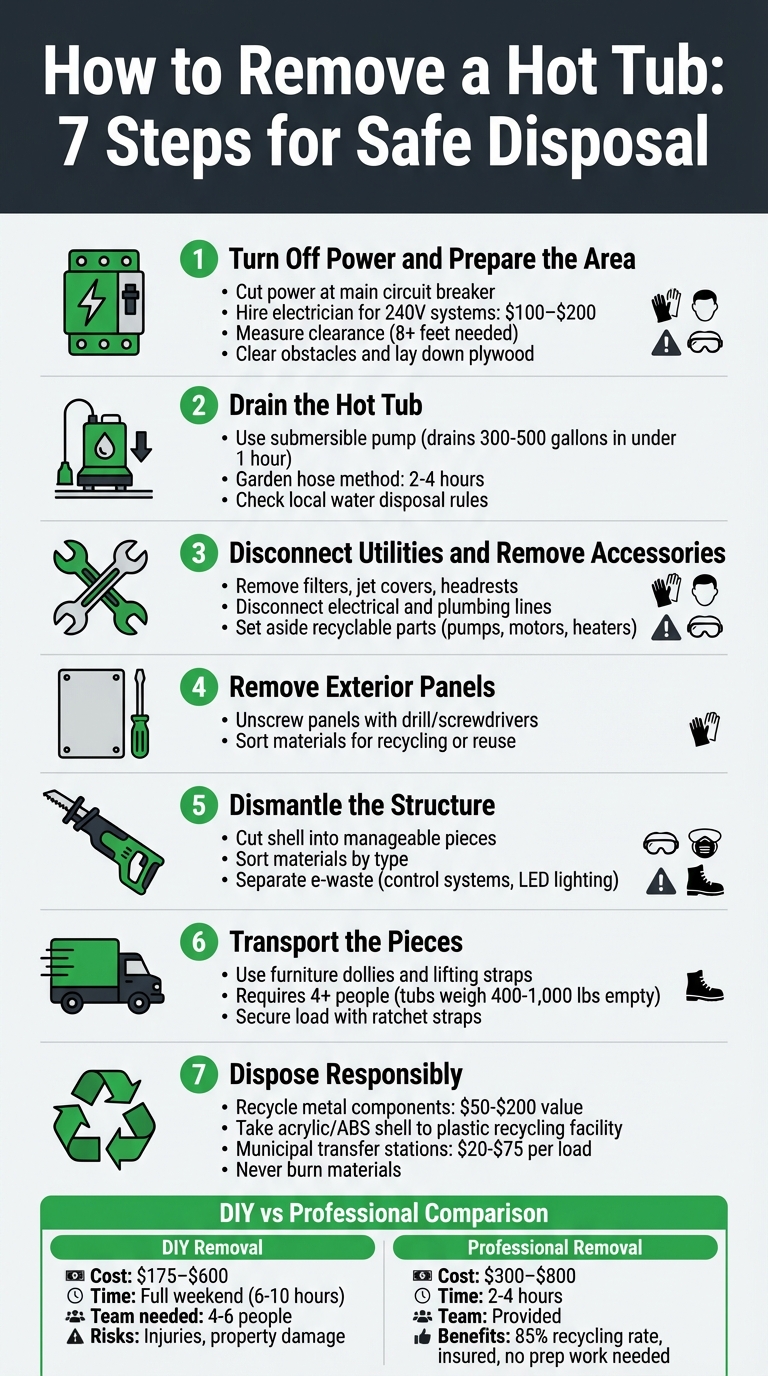
7 Steps to Remove a Hot Tub Safely: Complete DIY Guide
Tools and Safety Requirements
Required Tools
Taking out a hot tub involves using specific tools to get the job done efficiently. First on the list is a submersible pump, which can drain a 300–500-gallon tub in under an hour – much faster than the 2–4 hours you’d spend using a garden hose[5]. To deal with leftover water in the plumbing lines, a wet/dry shop vacuum is indispensable, as it helps prevent messy spills during dismantling[5].
When it comes to cutting through the tub’s shell, a reciprocating saw (like a Sawzall) equipped with demolition blades is your go-to tool[3]. You’ll also need a cordless drill, screwdrivers, wrenches, pliers, a sledgehammer, a pry bar, and a utility knife for other parts of the job[3]. To transport the tub or its pieces, use furniture dollies rated for over 1,000 pounds, lifting straps, and plywood sheets to protect your yard or driveway during the move[5]. Lastly, a heavy-duty pickup truck, trailer, or a rented roll-off dumpster will be necessary for hauling away the debris[3]. If you don’t own these tools, you can rent them from hardware stores, with rental costs typically ranging between $150 and $400[5].
With all your tools ready, make sure safety is your top priority before diving into the removal process.
Safety Precautions
Step one: turn off the power. It’s not enough to shut off the spa’s control panel – make sure to cut power at the main circuit breaker to avoid any electrical hazards[5]. For hot tubs wired to 240-volt systems, it’s best to call in a licensed electrician. DIY electrical work can be dangerous and might violate local codes. Electricians usually charge between $100 and $200 for this service[5].
Don’t skimp on protective gear. Wear heavy-duty work gloves, safety goggles, steel-toe boots, and an N95 mask or respirator to protect yourself from fiberglass or insulation dust[4]. Before moving the tub, measure pathways, gates, and doorways to ensure at least 8 feet of clearance[5]. Clear out any obstacles along the removal route and lay down plywood sheets to shield your deck or lawn from damage[6]. Also, check local rules about draining chlorinated water – some areas don’t allow it to be discharged into storm drains[1].
DIY vs. Professional Removal
Deciding between doing it yourself or hiring professionals depends on your budget, available time, and tolerance for risk. DIY removal generally costs between $175 and $600 when you include tool rentals, truck rentals, and dump fees. You’ll need a team of 4–6 people and should expect the project to take a full weekend, requiring 6–10 hours of labor[5]. However, DIY efforts come with risks like back injuries, cuts from fiberglass, and potential damage to surrounding structures like decks or fences[7].
On the other hand, professional services like Green Light Junk Removal charge between $300 and $800 for most jobs and can finish the task in just 2–4 hours[3]. Their team handles everything: disconnecting electrical components, dismantling the hot tub, hauling it away, and ensuring recyclable materials like metal pumps and motors are disposed of responsibly. Plus, their service often includes insurance coverage for property damage, giving you peace of mind[4]. They also work with established recycling programs to minimize landfill waste.
sbb-itb-096ce5b
7 Steps for Hot Tub Removal
Step 1: Turn Off Power and Prepare the Area
Start by cutting off the power at your main circuit breaker. Locate the GFCI (Ground Fault Circuit Interrupter) disconnect box – usually found on an exterior wall near the hot tub – and switch it off. If you have a 110-volt plug-in model, simply unplug it. For a hardwired 240-volt system, hire a licensed electrician, which typically costs between $100 and $200[1]. For gas-heated tubs, shut off the gas line before proceeding.
Next, measure your hot tub’s height and width to ensure it fits through doorways, gates, or stairways along the removal route. Allow extra space for a moving dolly if needed. Clear the path by moving patio furniture or other obstacles, and if your tub is built into a deck, remove any surrounding boards to create access. Protect your landscaping and floors by laying down plywood or thick cardboard. Label disconnected wires with masking tape, and double-check that the power is off before handling any wiring. Once the area is prepped, it’s time to drain the hot tub.
Step 2: Drain the Hot Tub
Attach a garden hose to the drain valve at the bottom of the tub, directing the water away from your home’s foundation. For faster draining, use a submersible pump placed in the deepest part of the tub. Draining can take anywhere from 10 minutes to several hours. Before starting, check local rules about disposing of chlorinated water – some areas don’t allow dumping into storm drains or on lawns. After draining the main shell, loosen plumbing connections to release any trapped water into a bucket, and use towels to dry any remaining puddles.
Step 3: Disconnect Utilities and Remove Accessories
With the water gone and power off, disconnect any remaining electrical and plumbing lines. Remove accessories like filters, jet covers, headrests, and the insulated cover, which can sometimes be sold separately for $100 to $500[1]. Set aside metal parts like pumps, motors, and heaters for recycling. Seal open plumbing lines with caps or plugs to avoid leaks during transport.
Step 4: Remove Exterior Panels
Unscrew and detach the exterior panels using a cordless drill or screwdrivers. These panels are often made of wood or composite materials. Check each panel for materials that can be reused or recycled – untreated wood can be composted or used in DIY projects, while metal frames should be saved for scrap metal recycling.
Step 5: Dismantle the Structure
Use a reciprocating saw with demolition blades to cut the hot tub shell into manageable pieces. Take apart the frame, shell, and internal components in sections, sorting the materials by type as you go. Note that insulation foam isn’t recyclable and must go to a landfill or hazardous waste facility. Control systems and LED lighting should be taken to an e-waste facility, as many states prohibit throwing electronics into regular trash[1].
Step 6: Transport the Pieces
Load the disassembled parts onto a heavy-duty truck or trailer using furniture dollies and lifting straps. Hot tubs, even when empty, can weigh between 400 and 1,000 pounds, so enlist at least four people to help stabilize and lift the pieces[1]. Use ratchet straps to secure the load and protect your truck bed with plywood or moving blankets to prevent damage. Once everything is loaded, you’re ready to dispose of it properly.
Step 7: Dispose Responsibly
Recycle metal components like pumps, heaters, and copper wiring at a scrap yard, which can pay between $50 and $200[1]. The acrylic or ABS shell should be taken to a specialized plastic recycling facility – websites like Earth911.com or Recyclenation.com can help you find one[2]. Never burn hot tub materials, as this releases harmful toxins from plastics, fiberglass, and treated wood. Municipal transfer stations may charge $20 to $75 per load for large items[1]. If sorting and transporting everything feels overwhelming, services like Green Light Junk Removal offer eco-friendly options to ensure recyclable materials don’t end up in landfills.
Why Choose Green Light Junk Removal

Eco-Friendly Practices
At Green Light Junk Removal, we go the extra mile to separate recyclable materials like metal pumps, copper wiring, and acrylic shells from non-recyclable items. This approach ensures that as much as possible is recycled, reducing the amount sent to landfills. For items that can’t be recycled, such as insulation foam, we use responsible disposal methods to limit environmental harm. Our team is trained to dismantle spas using specialized tools, ensuring proper sorting of materials while protecting your property during the process.
Professional Expertise
Our commitment to sustainability is matched by our expertise in junk removal. With over 200,000 satisfied customers, our fully background-checked team has perfected the art of hot tub removal, completing most jobs in just 2–4 hours. Whether your hot tub is located on a second-story deck, in a basement, or in another tricky spot, we handle the job without causing any damage to your property. From dismantling a 500-pound drained hot tub to hauling away a broken, unused unit, we take care of everything – so you don’t have to lift a finger.
Convenient Services
We’ve designed our services to make your life easier. Green Light Junk Removal offers upfront pricing you can count on, with online booking and free on-site assessments available in select areas. Customers consistently rate us highly, with an average score of 4.68/5 from 6,397 reviews. Many describe the booking process as "super easy", and they appreciate our punctual arrivals and professional communication. Best of all, there’s no prep work required on your end. Our team clears the area, dismantles the hot tub, and hauls away the debris. Beyond residential hot tub removal, we also handle business junk removal and full property cleanouts for estates, offices, and foreclosures.
How to remove a Hot Tub, Jacuzzi or Spa step by step
Conclusion
Removing a hot tub can be straightforward if you follow the right steps. From disconnecting the power to properly disposing of the materials, each stage is designed to prioritize safety and minimize waste. Key precautions, like shutting off the main breaker and wearing N95 masks when cutting fiberglass, are essential for a safe and smooth process. Whether you tackle it yourself or bring in professionals, preparation and attention to safety make all the difference.
Deciding between a DIY approach and hiring professionals often comes down to factors like time, safety, and waste management. Professional services, for instance, can recycle up to 85% of hot tub components, reducing landfill waste significantly [8].
Green Light Junk Removal takes care of the entire process for you. From dismantling 240V electrical systems and sorting recyclable materials to handling hazardous components and protecting your property, they make it hassle-free. Plus, you don’t need to prep anything – they’ll clear the area, take apart the hot tub, and haul away the debris.
Choosing professional removal not only saves you from the physical effort but also takes the guesswork out of proper disposal. If you’re ready to transform your outdoor space, book online for transparent pricing and a free assessment. Let the experts handle the hard work while you enjoy the results.
FAQs
Do I need a permit to remove a hot tub?
Whether or not you need a permit to remove a hot tub depends largely on the rules in your area. In some places, permits are required, especially when the project involves disconnecting electrical components or making changes to the structure of your property. To be sure, reach out to your local building department or municipal office to confirm what regulations apply to your situation.
Where can I take hot tub parts for recycling near me?
You can recycle hot tub parts at local disposal or recycling centers that handle large appliances and materials like fiberglass, metal, and wood. Reach out to your local waste management service or specialized recycling facilities to check if they accept hot tub components. Many centers prioritize eco-friendly practices to ensure these materials are disposed of and recycled responsibly.
What’s the safest way to remove a hot tub from a deck?
Removing a hot tub from a deck requires careful planning and complete power disconnection to ensure safety. If the hot tub is hardwired, it’s essential to bring in a certified electrician to handle the disconnection properly.
For built-in or sunken hot tubs, you might need to remove part of the deck. In such cases, hiring professionals is a smart move to prevent any structural damage. If you decide to handle it yourself, make sure to use the right tools – like saws and pry bars – and always prioritize safety by wearing gloves and eye protection.