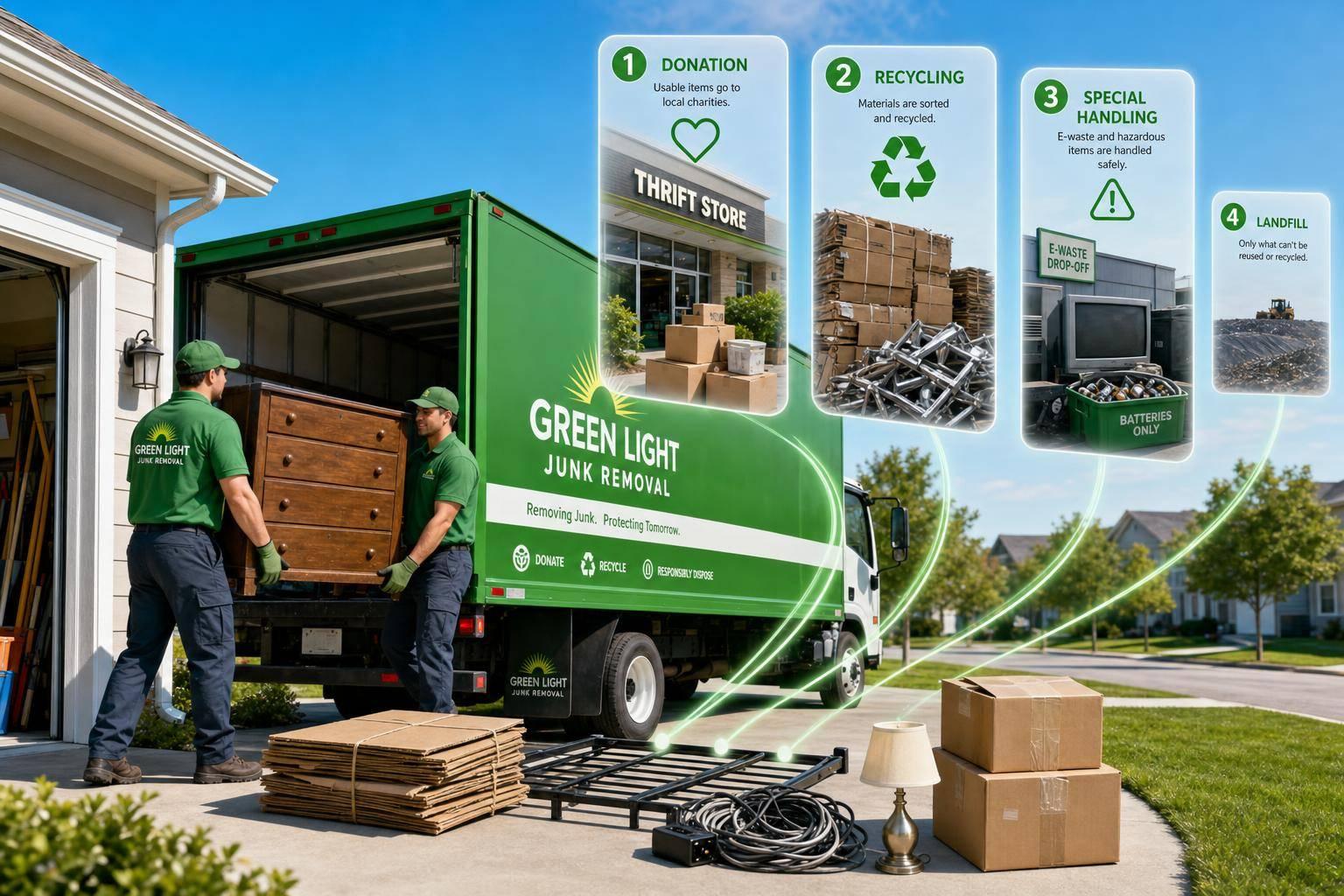
Most junk does not go straight to the landfill. After pickup, it is usually sorted into four paths: donation, recycling, special handling, or trash.
If I had to sum up the full process in a few lines, it would be this:
- Usable items may go to charities, thrift stores, shelters, or resale outlets
- Metal, electronics, yard waste, and building debris are often separated for recycling or processing
- Hazardous items like paint, batteries, bulbs, and chemicals are pulled out for regulated drop-off or treatment
- Damaged, moldy, wet, stained, or unsafe items usually end up at a landfill or transfer station
That order matters: reuse first, recycling next, disposal last.
A few examples make it simple:
- A working refrigerator may be donated, but refrigerant has to be removed before the metal can be recycled
- A bed frame often goes into the scrap metal stream
- A mattress may be broken down into steel, foam, and fabric
- A water-damaged shelf usually cannot be donated or recycled
- A CRT TV needs special handling because one unit can contain up to 8 pounds of lead
- In the U.S., mattresses and box springs account for about 450 million pounds of landfill waste each year
What you do before pickup can change the result. If you keep clean, usable goods separate from dirty or broken junk, more of your load has a better chance of staying out of the landfill.
So when the truck leaves, the job is not over. That is when sorting starts.
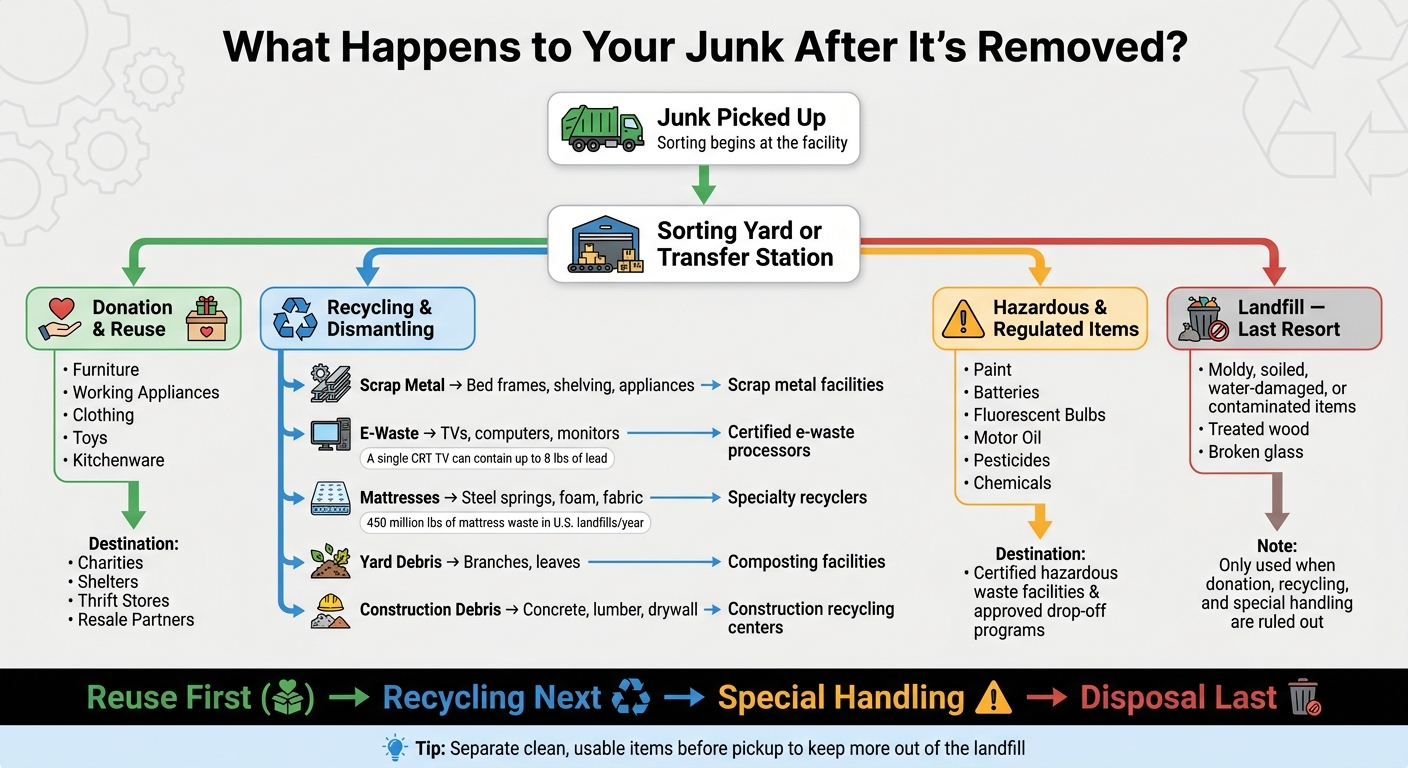
What Happens to Your Junk After It’s Removed?
How Trash Goes From Garbage Cans to Landfills (Every Step Explained) | WIRED

sbb-itb-096ce5b
From Pickup to Sorting: The First Step After Removal
After pickup, the load heads to its first sorting stop. That might be a sorting yard, transfer station, or partner facility. This is where the process starts to split: furniture, appliances, electronics, and mixed household clutter don’t all go to the same place.
In some cases, crews pull out donation-ready items while loading the truck. Then they finish the job at the facility, where items are sorted by material type and condition.
How Items Are Separated After They Leave Your Property
At the sorting facility, items are placed into separate streams. Scrap metal goes to metal recyclers. Electronics go to certified e-waste processors. Yard debris is sent to composting facilities. Construction materials like clean lumber, concrete, or drywall go to construction recycling sites. Hazardous items – paint, batteries, and fluorescent bulbs – are pulled aside and sent to approved hazardous-waste facilities.
Each stream then moves to a different facility.
| Sorting Stream | Common Items | Typical Destination |
|---|---|---|
| Donation-Ready | Furniture, working appliances, clothing, toys | Charities, shelters, thrift stores, resale partners |
| Scrap Metal | Bed frames, shelving, appliances, hardware | Scrap metal recycling facilities |
| E-Waste | TVs, computers, monitors, printers | Certified e-waste processors |
| Yard Debris | Branches, stumps, leaves, grass clippings | Composting facilities |
| Construction and demolition debris | Concrete, drywall, clean lumber, masonry | Construction recycling centers |
| Hazardous/Regulated | Paint, batteries, chemicals, bulbs | Regulated waste drop-off sites |
| General Trash | Soiled upholstery, treated wood, broken glass | Licensed transfer stations or landfills |
Refrigerators and freezers need to have refrigerants removed before the metal shell can be recycled [2]. After that, each material continues along its own reuse, recycling, or disposal route.
Donation, Recycling, and Resale: How Usable Materials Stay Out of the Landfill
Once sorting is finished, each item goes to the best option first: reuse, then recycling, and only then disposal. In plain English, landfill is the last stop, not the first. Usable items are sent to donation, resale, or recycling before anything is thrown away.
What Can Be Donated or Reused
The screening rules are pretty simple: no mold, no pests, and no heavy soiling. If an item is clean and sturdy, it has a good shot at being donated.
Common examples include:
- Couches, dressers, tables, and chairs
- Working appliances
- Clothing, toys, and kitchenware
How Common Junk Items Are Recycled or Dismantled
A non-donated item doesn’t automatically become trash. Many items are taken apart so crews can recover metal, wood, glass, plastics, and wiring [1][3].
Electronics usually go to certified e-waste processors. There, metals like gold and copper are recovered, while materials such as lead and mercury are removed and handled safely [1][2]. Mattresses are also broken down into separate parts, including steel springs, foam, and fabric, with each material sent into its own recycling stream [2]. That matters because mattresses and box springs make up about 450 million pounds of waste in U.S. landfills each year [4].
Appliances, electronics, mattresses, yard waste, and upholstered furniture are often routed to specialty recycling or dismantling streams. Landfill is used only for parts that are contaminated or too damaged to recover.
Where Large Specialty Items Usually End Up
Hot tubs, pianos, and oversized furniture are often taken apart before disposal. That lets crews separate wood, metal, and other recoverable parts first. Whatever can’t be recovered then moves to landfill or another regulated disposal stream.
When Items Go to Landfill or Need Special Disposal
Not everything makes it through sorting. In most cases, an item’s condition decides what happens next: reuse, recycling, special handling, or disposal.
The main factors are pretty simple: damage, contamination, and local rules. If an item is too far gone, it won’t qualify for donation or recycling.
What Makes an Item Non-Recyclable or Non-Donatable
A couch may look salvageable at first glance, but if it’s structurally sound and heavily stained, it still fails donation screening. The same idea applies to cardboard. If it’s soaked with moisture or oil, it can’t go into the paper recycling stream.
Food waste, mold, biohazards, and medical waste are common deal-breakers. Once those kinds of contaminants are present, reuse and recycling are usually off the table. At that point, the item usually goes to landfill.
Landfill disposal is the last resort after donation, recycling, and special handling have all been ruled out.
How Hazardous and Regulated Materials Are Handled
Some items can’t stay in the regular waste stream at all. They’re pulled out first, separated from the rest of the load, and sent to certified facilities. From there, they go to approved drop-off programs or licensed handling sites.
A single CRT television can contain up to 8 pounds of lead [4]. That’s why e-waste goes to specialized processors instead of general disposal.
What remains is contaminated or unrecoverable debris, which then goes to landfill or another approved disposal route.
How to Get Better Eco-Friendly Results Before Pickup
Simple Ways to Help More of Your Junk Stay Out of the Landfill
Because crews sort loads after pickup, a little prep can make a big difference. The main goal is simple: keep usable items away from plain trash so more of them can be donated or recycled instead of dumped in a landfill.
Before the crew shows up, sort your items into a few basic groups: donate, recycle, and dispose. That small step helps prevent good items from getting mixed into the garbage pile. If something is still usable, keep it separate from broken or dirty items.
Clean, dry goods also have a better shot at donation. Books, kitchenware, and toys are good examples. Box them up and set them aside so they don’t get damaged or tossed in with trash by mistake.
It also helps to group like materials together before pickup. Put scrap metal, bed frames, and e-waste in one area so those items stay out of the general pile and can be routed the right way.
For items that need special processing, advance notice matters most. Tell the crew ahead of time if you have anything that needs extra handling, such as hot tubs, refrigerant appliances, or yard waste. And if you’re not sure whether something counts as hazardous, it’s best to say something early. Motor oil, pesticides, and lead-acid batteries should be flagged in advance so they can be handled the right way instead of ending up in a standard load.
Conclusion: The Truck Leaves, but the Process Continues
After pickup, items move through donation, recycling, and special processing, with landfill used only as a last resort.
FAQs
How much of my junk is usually recycled or donated?
It depends on the job, but junk removal crews usually sort through items so more of them can be recycled or donated instead of dumped in a landfill. Some companies say they recycle up to 60% of what they pick up.
During pickup, workers may pull out items for donation or refurbishment. They may also break things down into parts like metal, plastic, or glass so those materials can be recycled.
Can I ask where specific items will likely go after pickup?
Yes – you can, and you should ask.
Professional junk removal crews usually look over items when they arrive and sort them for donation, recycling, or special disposal.
It’s smart to ask how certain items – like furniture, appliances, or electronics – will be handled. That way, you can confirm whether they’re likely headed to local charities, certified recycling facilities, or final disposal instead of going straight to a landfill.
What should I separate before pickup to keep more out of the landfill?
Set hazardous materials aside from the rest of your junk. That includes old paint, chemicals, batteries, and certain lightbulbs, since those items need special handling.
For everything else, you usually don’t need to sort it yourself. Just put the items in an easy-to-reach spot and point out any large or heavy pieces to the team so they can figure out what should be donated, recycled, or thrown away the right way.