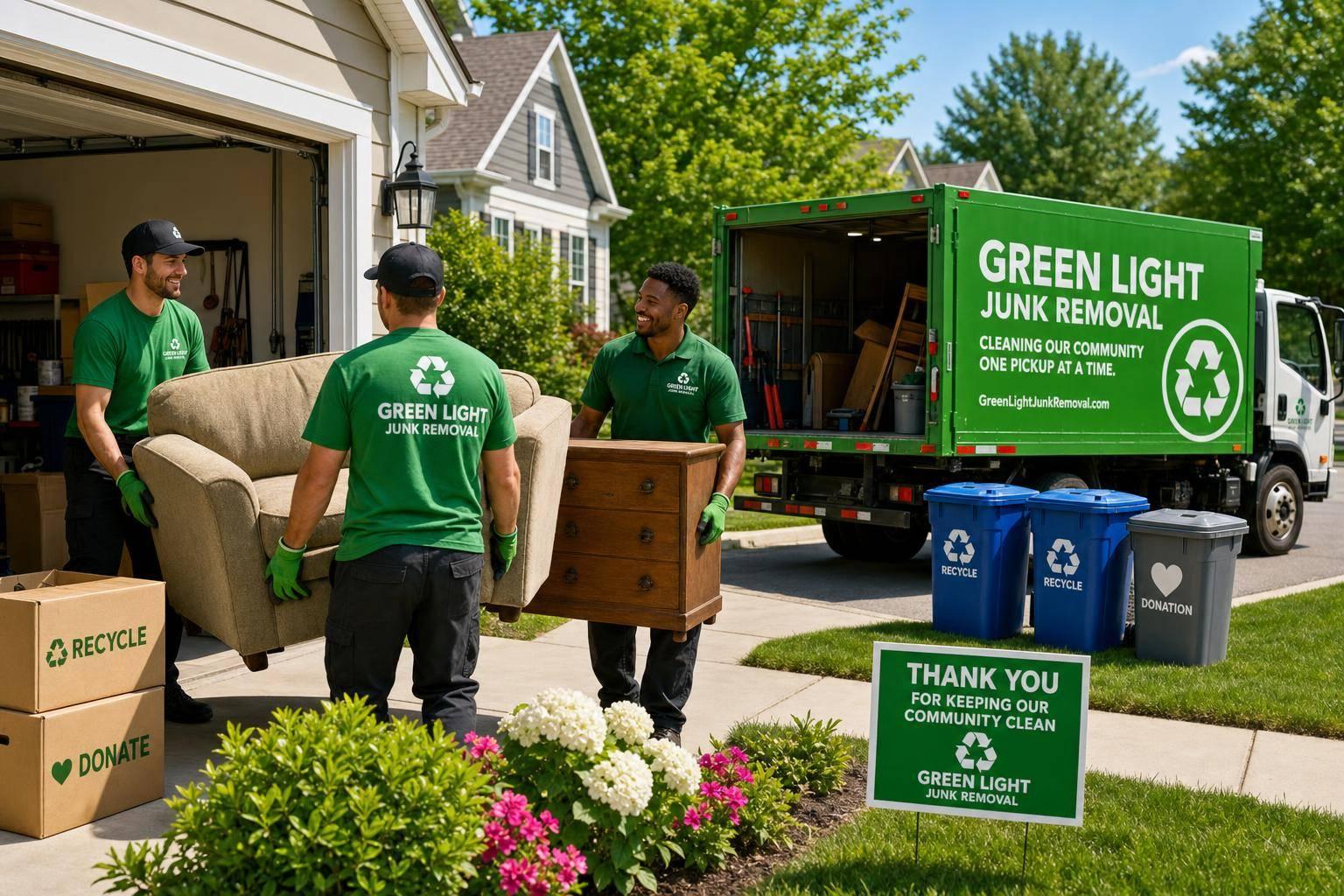
One junk pile can affect more than one property. I’d sum it up this way: when I remove old furniture, broken appliances, yard waste, or demo debris the right way, I help cut pest risks, reduce trip hazards, keep alleys and sidewalks clear, and lower the chance that items end up dumped in empty lots.
Here’s the short version:
- Clutter can turn into a public problem fast.
- Bulky waste can block walkways and slow emergency access.
- Damp items like rugs and mattresses can hold moisture and mold.
- Dumped junk can affect soil and water if it breaks down in the wrong place.
- Sorting matters: some items can be donated, some recycled, and some need special handling.
- Regular cleanouts help homes, rentals, and businesses stay cleaner and safer.
I also see a simple pattern: when one property gets cleaned up, the street often looks better too. Cleaner yards, garages, and driveways often mean fewer pest hiding spots, less illegal dumping, and better curb appeal.
What junk removal usually covers:
- Couches, dressers, and mattresses
- Fridges, washers, dryers, and stoves
- TVs, computers, and monitors
- Pianos, pool tables, and hot tubs
- Yard debris, sheds, fencing, and playsets
- Carpet, drywall, and other construction debris
The main point: junk removal is not just about clearing space inside a home. It also helps keep shared spaces cleaner, lowers safety risks, and makes proper disposal more likely instead of curbside dumping or landfill-only disposal.
A lot of this comes down to what happens after pickup. Electronics may contain lead or mercury. Appliances may contain refrigerants. Batteries, paint, and similar items need careful disposal. When those materials are sorted well, less waste goes to landfills and fewer harmful materials end up where they shouldn’t.
So if you’re looking at a packed garage, an old mattress, a broken hot tub in Sacramento, or a full property cleanout, the issue is bigger than storage space. It’s also about keeping the block cleaner, safer, and easier to maintain.
Clearing RUBBISH With COMMUNITY SERVICE For FREE!! Alley Takedown!
sbb-itb-096ce5b
Community Problems Caused by Unwanted Junk
Private clutter doesn’t stay private for long. What starts as a packed garage or a pile in the yard can spill into the whole neighborhood. Unwanted junk brings safety risks, health issues, and cleanup costs that reach far past one property.
How Overfilled Homes and Outdoor Areas Create Safety and Health Risks
Overstuffed garages, porches, and yards can attract rodents and insects, hold moisture, and increase the risk of mold. Damp rugs and mattresses are a big part of the problem. They trap moisture and can grow mold, which may trigger respiratory problems, allergies, and skin irritation [2].
There’s also a plain safety issue. Cluttered exits and crowded hallways can slow evacuation during an emergency and make trip-and-fall accidents more likely [7]. It doesn’t take much for a “small mess” to turn into a serious hazard.
When junk piles up outdoors, the problem gets bigger. It stops being about one house and starts affecting streets, alleys, and vacant lots nearby.
How Illegal Dumping Spreads Mess Into Alleys, Curbsides, and Empty Lots
Large items are often tough to get rid of. And when disposal feels like a hassle, people may leave them in alleys, empty lots, or on the curb. That’s where a local mess turns into a community one.
Once dumping starts, the fallout usually follows fast:
- More cleanup work
- More contamination risk
- More signs of neighborhood decline
As dumped materials break down, they can contaminate soil and water [5][6].
Visible dumping can also drag down property values, push away residents and businesses, and leave taxpayers stuck with the cleanup bill [3][4].
How Professional Junk Removal Works in Everyday Situations
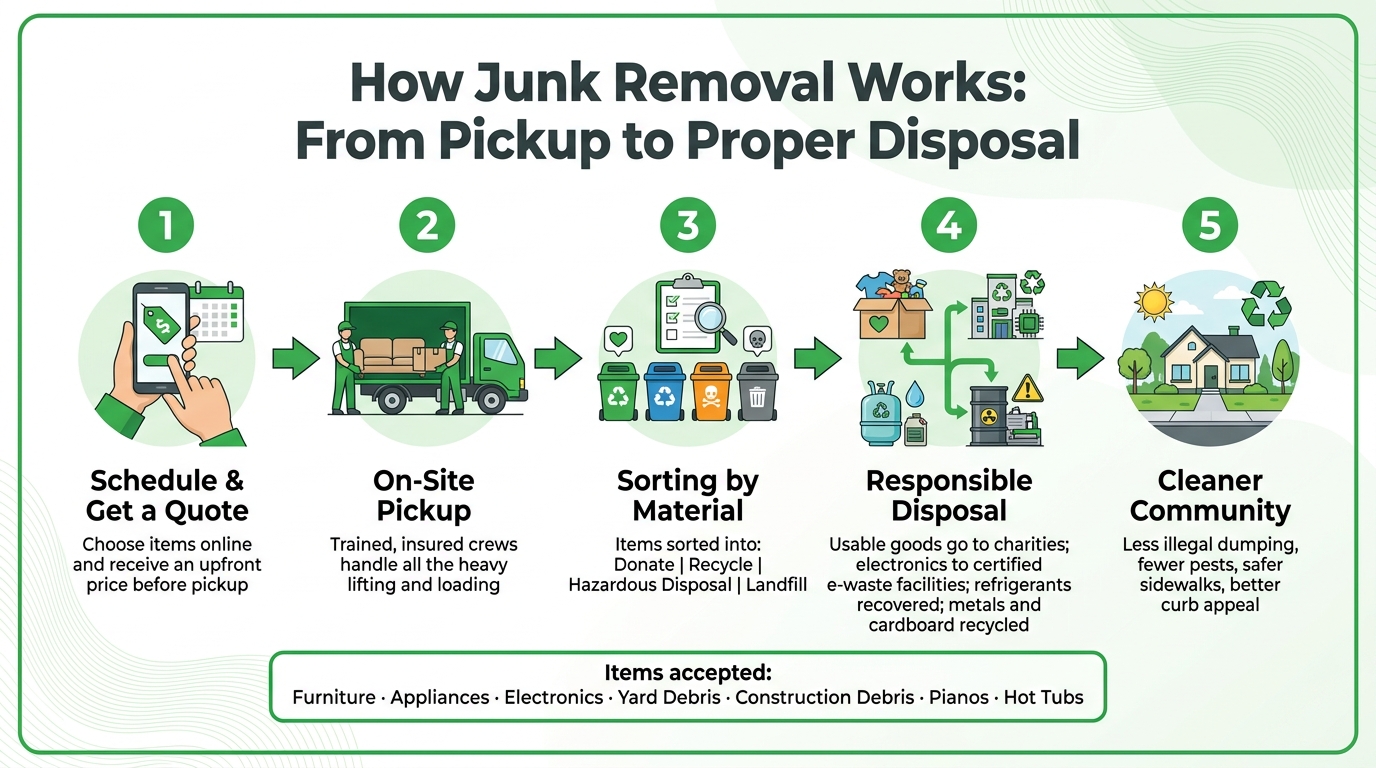
How Junk Removal Works: From Pickup to Proper Disposal
When bulky items are too tough to move on your own, professional hauling helps keep them off curbs, out of alleys, and away from vacant lots. That matters because most people don’t want to deal with the heavy lifting, truck space, disposal rules, and time it takes to get rid of large items.
Put simply: professional junk removal takes the logistics off your plate.
What Green Light Junk Removal Can Take From Homes, Rentals, and Businesses
Green Light Junk Removal can remove a long range of items from homes, rental properties, and business spaces, including:
- Couches, dressers, and mattresses
- Refrigerators, washers, dryers, and stoves
- TVs, computers, and monitors
- Pianos, pool tables, and hot tubs
- Yard debris, fencing, sheds, and play structures
- Drywall, carpet, and demolition debris
The company also handles bigger cleanout jobs, not just single-item pickups. That includes estate settlements, hoarder cleanups, garage cleanouts, storage unit cleanouts, and end-of-lease clearances. In those cases, customers can book a full-property cleanout instead of piecing the job together item by item.
If you’re booking a piano, pool table, or hot tub pickup, it’s smart to mention that ahead of time so the crew shows up with the right plan and equipment.
The Service Process From On-Site Estimate to Hauling and Sorting
Customers choose their items online and receive an upfront price before pickup. On service day, trained and insured crews take care of the physical work, load the items onto the truck, and handle the hauling.
After pickup, the items are sorted based on what can be donated, recycled, or disposed of the right way.
Eco-Friendly Disposal Practices That Protect Local Communities
What happens after pickup matters just as much as the pickup itself. Once everything is loaded, the next step is sorting. That step decides what can be reused, what can be recycled, and what needs safe disposal. Professional crews sort each material stream and send it to the right place, which helps keep waste out of nearby neighborhoods and public spaces.
How Donation and Reuse Keep Usable Items in Circulation
Usable furniture, clothing, and appliances don’t have to end up in a landfill. Many of those items can go to charities, shelters, or reuse programs instead. That means good items stay in use longer while local groups get support at the same time.
When usable goods remain in circulation, fewer resources go to waste. It also means fewer items are dumped, which takes some pressure off local disposal sites.
How Recycling and Certified Disposal Cut Landfill Waste and Pollution
Scrap metal, cardboard, wood, plastics, and electronics should be separated and sent to the right recycling processors. Some materials need more than basic recycling. Refrigerators and air conditioners, for example, contain refrigerants that must be recovered before the units are scrapped.
Electronics such as TVs, computers, and monitors contain lead and mercury. Because of that, they need to go to certified e-waste facilities so those toxins don’t leach into soil and groundwater. Batteries, paint, and other hazardous household materials follow the same rule [9][10].
Sorting by material puts reusable items, recyclables, and hazardous waste on the right disposal path. It’s a simple idea, but it does a lot of work. It keeps more waste out of landfills, helps stop harmful materials from reaching local soil and water, and makes properties easier to keep clean.
You can often see the result in everyday life: cleaner streets, fewer pests, and better curb appeal.
How Cleaner Properties Lead to Cleaner Neighborhoods
Once junk is gone and sorted the right way, the change doesn’t stop at the property line. You can see it out on the street.
Cleaner Streets, Fewer Pests, and Better Curb Appeal
One cluttered property rarely stays a private issue for long. When junk builds up in a driveway, alley, or yard, it sends a clear message of neglect. Before long, nearby spaces can start to reflect that same pattern.
Old furniture, wood piles, and discarded appliances can give rodents, cockroaches, mosquitoes, and raccoons a place to hide and breed. Clearing junk fast helps shut down those harborage spots before pests and odors move onto neighboring properties.
Debris on sidewalks and in alleys can also create trip hazards and slow emergency responders trying to reach buildings [1][11][14]. So this isn’t just about appearance. It’s a basic safety issue.
And once a property looks cleaner, regular cleanouts tend to feel much easier to keep up with.
Practical Ways Property Owners Can Use Junk Removal on a Regular Basis
This shows up most clearly in routine property cleanouts. Landlords and property managers can book end-of-lease or eviction cleanouts right away, which helps prevent trouble at vacant properties during turnover [8][12]. Homeowners and HOAs can set up seasonal garage and yard cleanups to clear storm debris before it turns into a fire hazard or blocks drainage [8][11]. Small businesses can use office cleanouts to get rid of old electronics and furniture, helping their spaces stay professional and welcoming [8][13].
Professional junk removal also saves time, cuts risk, and sends items to the right place through donation, recycling, or proper disposal instead of dumping everything in a landfill.
Conclusion: A Cleaner Home Supports a Cleaner Community
Unwanted junk can lead to pest problems, safety hazards, blocked drainage, and a slow drop in how a neighborhood looks. Professional junk removal helps deal with those issues fast while keeping usable items in circulation through donation and recycling instead of sending everything to the landfill.
Regular cleanouts help homes, rentals, and businesses stay safer and look better. Each cleanout helps make the neighborhood cleaner, safer, and more welcoming.
FAQs
Why does junk attract pests?
Junk piles like old furniture, wood, and appliances give rodents, insects, and other wildlife the kind of cover they love. They offer shelter, hiding spots, and places where pests can settle in before spreading to nearby homes.
Waste and debris can also hold moisture or trap standing water, which draws in pests like mosquitoes, ants, and flies. When you clear these materials away, you remove the shelter and breeding spots pests rely on.
What junk needs special disposal?
Some items need special handling because they can create health and disposal risks. That includes old batteries, paint, chemicals, electronics, and fluorescent lights. They should not go in standard landfills.
Appliances and metals need proper recycling and disposal too. If they’re tossed out the wrong way, they can lead to toxic leaks, fire risks, and even pest issues.
How often should I schedule a cleanout?
Schedule a cleanout as soon as clutter starts to pile up. Acting early can help cut down risks like pests, bad smells, and fire hazards.
Getting rid of unwanted items like old furniture, appliances, or renovation debris also makes your property safer, easier to manage, and more likely to stay in line with local rules before the mess grows into a much bigger job.