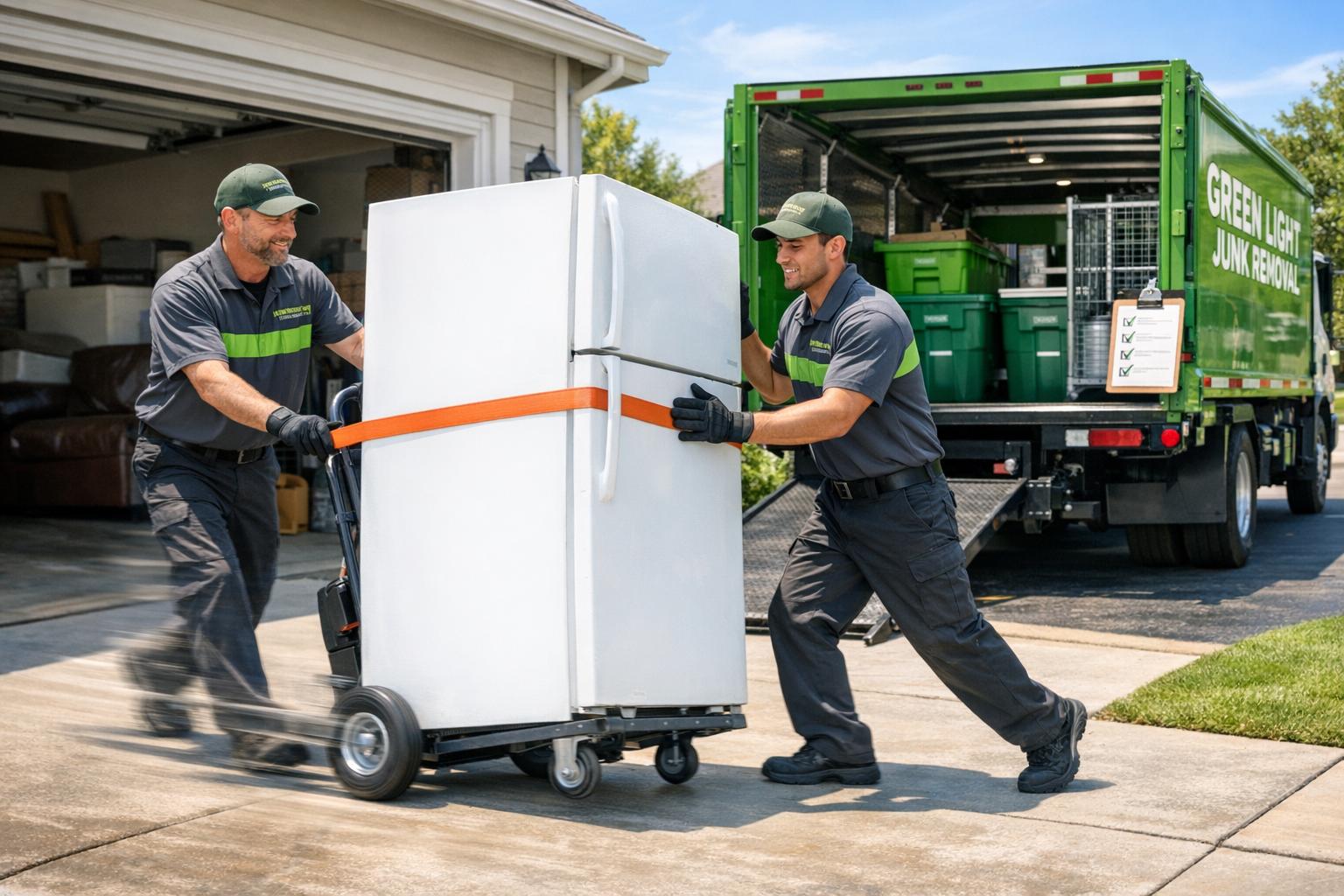
Need to get rid of old appliances fast? From bulky refrigerators to heavy water heaters, appliance removal can be tricky without the right tools and knowledge. Here’s the solution:
- Hire professionals: Services like Green Light Junk Removal handle everything – lifting, transport, and proper disposal – within 30–60 minutes. They even prioritize eco-friendly practices.
- Retailer haul-away: Buying a new appliance? Many stores will remove your old one for $15–$50.
- Utility or municipal programs: Some offer free or low-cost pickups, sometimes with rebates up to $150 for working appliances.
- DIY removal: With the right tools and preparation, you can handle it yourself, but it’s labor-intensive and requires safe disposal planning.
Key takeaway: Professional services save time and effort, while other options are budget-friendly but may involve more work. Choose what suits your needs best.
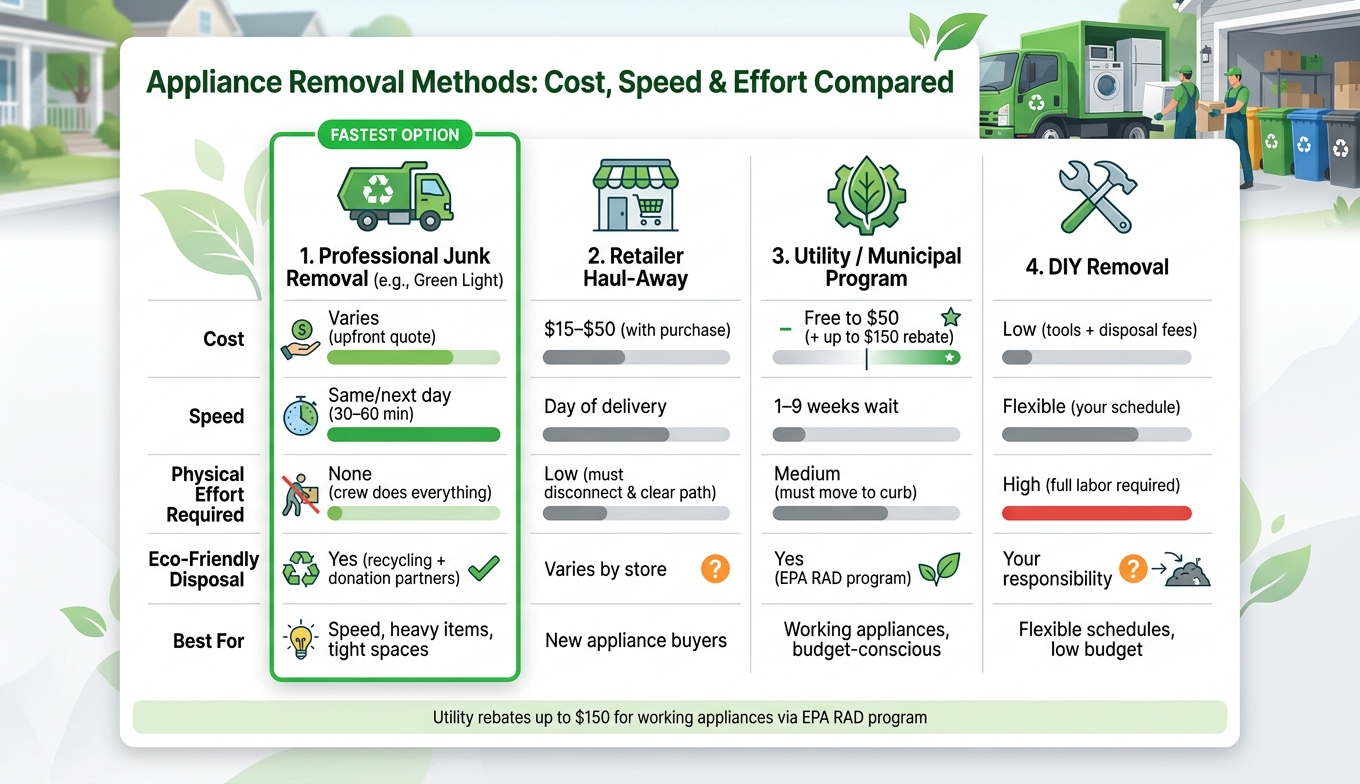
Appliance Removal Methods: Cost, Speed & Effort Compared
How to Dispose of or Donate Old Appliances Before You Move | Smart Moving Tips
sbb-itb-096ce5b
How to Prepare Your Appliance for Removal
Getting your appliance ready for removal doesn’t just save time – it also makes the process safer. A bit of prep work can go a long way in avoiding accidents. As Mesa Junk Removal wisely advises:
"A little planning prevents a lot of sweat. Decide what’s leaving, when it needs to go, and whether it’ll be recycled, donated, or trashed." [5]
Steps to Safely Prepare Your Appliance
No matter the type of appliance, start by unplugging it, emptying all contents, and removing any loose parts like shelves, trays, or drawers.
Refrigerators and freezers require the most advance preparation. Unplug them 24–48 hours before removal to allow time for defrosting. Place towels underneath to catch any melting water, and wipe the interior dry to prevent mold. For washing machines, run a final spin cycle to clear the drum, then turn off the hot and cold water valves (turn clockwise). Disconnect both the inlet and drain hoses, but have a towel handy for leftover water in the lines.
If you’re dealing with gas appliances like dryers or stoves, turn the gas supply valve until the handle is perpendicular to the gas line to shut it off. If you’re unsure, it’s best to call a licensed plumber to avoid any risks. Also, avoid using your oven’s self-cleaning feature right before removal. This cycle can heat the oven above 900°F, and it takes at least four hours to cool down enough to handle safely [7].
Water heaters need special handling because of their weight. A full 50-gallon tank can weigh around 550 lbs, but draining it reduces the weight to about 100–150 lbs [7]. Attach a hose to the drain valve and direct the water into a floor drain or outdoor area to empty the tank before moving it. This one step makes a massive difference in manageability.
After disconnecting the appliance, secure all doors and lids with painter’s tape, and coil the power cord against the back of the unit using a zip tie or tape. These precautions prevent doors from swinging open and cords from becoming trip hazards during transport. Proper preparation not only speeds up removal but also ensures the appliance is ready for recycling or donation.
Once the appliance is prepped, focus on clearing its path for safe and efficient removal.
How to Plan a Clear Exit Path
A well-planned exit route is just as important as prepping the appliance itself. Start by measuring the appliance’s dimensions – both width and height – and then walk the entire path to the nearest exterior door. Measure doorways and hallways along the route. For reference, standard refrigerators are 30–36 inches wide, but larger models like French door or side-by-side units can exceed 42 inches [10]. If any pathway is narrower than 32 inches, you may need to remove door hinges to gain extra clearance, which can provide an additional 2–3 inches [10].
Clear the route of any obstacles like furniture, rugs, or boxes. Protect floors – especially hardwood or tile – by laying down old blankets, moving pads, or sheets of cardboard. Even a slight slide of a heavy appliance can scratch or gouge the surface. Pull the appliance 6–12 inches away from the wall the day before to expose the back connections [7].
If stairs are part of the removal process, let the removal team know ahead of time. This allows them to bring the proper equipment, like an appliance dolly with heavy-duty straps, instead of improvising. Make sure there’s also a flat, clear staging area outside – such as a driveway or curb – where the appliance can be set down before loading.
Finally, keep children and pets out of the removal area to ensure everyone stays safe.
The Fastest Option: Green Light Junk Removal
When to Call a Professional Removal Service
Professional removal services come in handy when appliances are too heavy to handle, the space is too tight, or you’re racing against a deadline. Mishandling heavy appliances can lead to injuries or property damage, so calling experts is often the safer and faster choice. With that in mind, let’s see how Green Light Junk Removal makes the process efficient and hassle-free.
How Green Light Junk Removal Works
Green Light Junk Removal keeps things simple and stress-free. Start by booking online, where you can select the appliances you need removed and get an upfront, guaranteed price instantly – no waiting around for estimates or calls back [3].
"Simply select the junk items you need removed and get an immediate upfront price when you book online, guaranteed!" – Green Light Junk Removal [3]
From there, the crew takes over. Their team handles all the heavy lifting, no matter where the appliance is located in your home. You don’t have to drag anything to the curb. Every crew member is background-checked, and the company is fully insured with multi-million dollar coverage. Plus, they focus on responsible disposal, working with local charities and recycling facilities to minimize waste [3].
To make the process even faster, clear a path to the door before the team arrives. If you have an oversized or particularly heavy item, let them know during booking so they can bring the right tools for the job.
Green Light Junk Removal serves the Sacramento area, including Natomas, Folsom, West Sacramento, Rocklin, Roseville, and Lincoln. With over 200,000 customers served and a 9.1/10 satisfaction rating from 200 reviews, their track record speaks volumes [3]. Not only does this service save you time, but it also prioritizes eco-friendly disposal, making it a smart choice for quick and responsible appliance removal.
Other Ways to Remove Old Appliances
Retailer Haul-Away Services
If you’re purchasing a new appliance, retailer haul-away services can be a hassle-free option. Many major retailers will take your old appliance on the same day they deliver your new one. The cost typically ranges from $15 to $50, provided it’s a one-for-one exchange [9][11]. This means your old appliance is removed when the new one arrives.
To prepare, disconnect all water, gas, or power lines ahead of time and clear a path for easy access. If you’re replacing a refrigerator, make sure it’s emptied, defrosted, and ready for removal. Also, ensure hallways and doorways are clear to avoid delays [6][12].
Keep in mind: Crews generally avoid hard-to-reach areas, such as second-floor laundry rooms. If your appliance is in a tricky spot, confirm access details with the retailer beforehand [9].
If retailer haul-away doesn’t fit your schedule, consider utility or municipal programs as alternatives.
Utility and Municipal Recycling Programs
Utility and municipal programs can be great for saving money – or even earning some – while responsibly recycling old appliances. Many utilities participate in the EPA‘s Responsible Appliance Disposal (RAD) program, which often includes cash rebates for recycling working appliances. Rebates typically range from $50 to $150 per unit and often include free removal [16]. For example, PSE&G’s "Swing Into Spring" event offered $150 rebates for refrigerators or freezers, plus $50 rebates for room air conditioners or dehumidifiers picked up at the same time [16]. To qualify, appliances usually need to be operational and between 10 and 30 cubic feet in size [16].
"This helps ensure that old appliances in working condition are taken off the energy grid entirely. That way, they can’t be resold on the secondhand market, where they could continue to operate inefficiently and waste energy." – PSE&G [16]
Municipal programs are another option, though they often involve longer wait times and curbside-only pickup. For instance, the City of Phoenix charges $30 for curbside removal of up to five appliances, with an extra $25 per unit for those containing refrigerants [15]. Federal law also requires removing doors from refrigerators and freezers before placing them curbside to prevent accidents [12].
Quick Comparison:
| Method | Cost | Wait Time | Condition Required |
|---|---|---|---|
| Retailer Haul-Away | $15–$50 with purchase | Day of delivery | Any condition |
| Utility Rebate Program | Free + $50–$150 rebate | 1–4 weeks | Must be working |
| Municipal Bulk Pickup | Free–$50 | 2–9 weeks | Any condition |
These options provide affordable and flexible ways to get rid of old appliances, complementing professional removal services for added convenience.
DIY Appliance Removal: What You Need to Know
Tools and Safety Tips for DIY Removal
Taking on appliance removal yourself requires careful preparation and the right tools. At the top of your list should be an appliance dolly and ratchet straps to secure the load. Moving blankets are great for shielding your floors and door frames from scratches or damage, while an adjustable wrench is indispensable for disconnecting water or gas lines.
Before you start moving anything, be sure to disconnect all power, gas, and water lines. If you’re removing a refrigerator or freezer, unplug it at least 24 hours in advance. This gives it time to defrost, reducing the risk of leaks during transport. Secure appliance doors with tape and bundle any loose cords or hoses using zip ties to keep them out of the way.
One crucial safety note: never cut or drain refrigerant lines yourself. Handling refrigerants like Freon is strictly regulated under Section 608 of the Clean Air Act, and only certified technicians are legally allowed to manage them. Venting refrigerants into the atmosphere is illegal [17][9]. Additionally, older appliances made before 1979 may contain hazardous materials like PCBs or mercury switches, which require specialized disposal methods [4].
If you’re working with gas appliances, make sure to turn off the gas valve and cap the supply line once disconnected. If you’re uncertain about this step, it’s best to call in a professional [17].
By following these guidelines, you can avoid injuries and ensure your appliance is ready for recycling or donation. Once safely removed, consider eco-friendly disposal options to give your appliance a second life.
How to Find Local Recycling and Donation Options
Now that your appliance is out of the house, it’s time to decide where it should go next. You’ve got plenty of options for recycling or donating, depending on its condition. For instance, the ENERGY STAR Recycling Finder is a handy tool that lets you search by ZIP code for utility-sponsored recycling programs. Many of these programs offer free pickup and may even include cash rebates [9][13]. Another great resource is Earth911, where you can look up certified recyclers, scrap yards, or municipal drop-off locations near you [9][14].
If your appliance is still in good working condition, organizations like Habitat for Humanity ReStore and the Salvation Army often accept donations. They usually provide free pickup but require that appliances are clean, functional, and typically less than 10 years old [8][14]. On the other hand, if the appliance is broken, scrap yards might still take it and pay you a small amount based on its metal weight – as long as refrigerants have been professionally removed [14].
Here’s a quick breakdown of your options:
| Destination | Best For | Cost/Benefit |
|---|---|---|
| Utility Recycling Program | Working fridges/freezers | Free pickup + $25–$100 rebate [9][13] |
| Donation (ReStore, Salvation Army) | Clean, working appliances under 10 years | Free pickup + potential tax deduction [9][13] |
| Scrap Yard | Broken or non-working units | Small cash payment based on metal weight [14] |
| Municipal Drop-off | Any condition | Free or $10–$30 flat fee [14][15] |
Before heading out, always call ahead to confirm that the facility accepts your specific appliance type. Policies can vary, especially at scrap yards, where acceptance often depends on metal market prices and whether refrigerants have been properly removed. By planning ahead, you can ensure a smooth and responsible disposal process.
Conclusion: Picking the Right Removal Method for You
Balancing Speed, Safety, and Responsible Disposal
Every removal option comes with its own set of benefits and challenges. Retailer haul-away services are convenient if you’re purchasing a new appliance, but they require you to stick to the retailer’s delivery schedule. Municipal and utility programs are often free, but they can be slower and require you to move the appliance to the curb yourself [2]. DIY removal offers flexibility and control, but it requires proper tools, physical effort, and a plan to ensure the appliance is disposed of responsibly.
Before starting any removal, always disconnect utilities safely. Appliances containing refrigerants must be handled by certified professionals to avoid fines, injuries, or environmental harm. Taking these precautions ensures a safe and responsible disposal process.
Why Green Light Junk Removal Is the Top Choice
If you value speed and ease, professional removal services are hard to beat. Green Light Junk Removal offers a quick and dependable solution, with same-day or next-day pickups. They handle all the heavy lifting, no matter where the appliance is located in your home, and prioritize eco-friendly disposal so you don’t have to worry about it [1][2].
Booking is simple: schedule online to get an upfront price, and a team of insured, background-checked professionals will take care of the rest [3]. No need for you to lift heavy items or figure out recycling logistics.
"Our eco-friendly junk removal practices ensure that as much waste as possible is recycled or donated, reducing the impact on landfills and promoting responsible disposal." – Green Light Junk Removal [3]
With a 9.1/10 rating from 200 reviews and over 200,000 satisfied customers, Green Light Junk Removal combines speed, reliability, and environmental responsibility [3]. For most homeowners, this hassle-free service is a standout choice, making it easier to protect your home and the planet while addressing your appliance removal needs.
FAQs
Do I have to defrost my fridge before pickup?
Yes, it’s a good idea to defrost your refrigerator before it’s picked up, especially if it has an ice maker or a lot of ice buildup. Here’s how to do it:
- Unplug it 24–48 hours in advance: This gives the ice enough time to melt completely.
- Place towels underneath: Meltwater can make a mess, so towels will help catch any drips.
- Empty all contents: Make sure the fridge is completely empty, including the freezer.
- Handle heavy frost: If there’s thick frost, letting it defrost overnight works best.
- Disconnect the water supply line: If your fridge is connected to a water line, make sure to disconnect it properly.
- Remove exterior items: Take off magnets, decorations, or anything attached to the outside to get it ready for the crew.
Taking these steps ensures the refrigerator is prepped and hassle-free for pickup.
Can you remove appliances from upstairs or tight spaces?
Professional removal services are equipped to handle appliances in tricky spots, like tight spaces or upstairs areas. They rely on tools such as dollies, straps, and floor protection to carefully maneuver through narrow doorways and staircases. This approach helps prevent damage to walls, floors, or trim, while also sparing you the risks of moving heavy items like refrigerators or washing machines on your own.
What happens to appliances with refrigerant during disposal?
Refrigerators, air conditioners, and other appliances containing refrigerants require special handling due to regulations under the federal Clean Air Act. Certified technicians are responsible for safely extracting refrigerants using EPA-approved tools before these items can be discarded. Once the refrigerants are removed, the appliance shell – typically made from recyclable materials like steel and plastic – is sent for material recovery. Additionally, proper documentation of the refrigerant removal process is often necessary to legally dispose of these appliances at landfills or scrap yards.