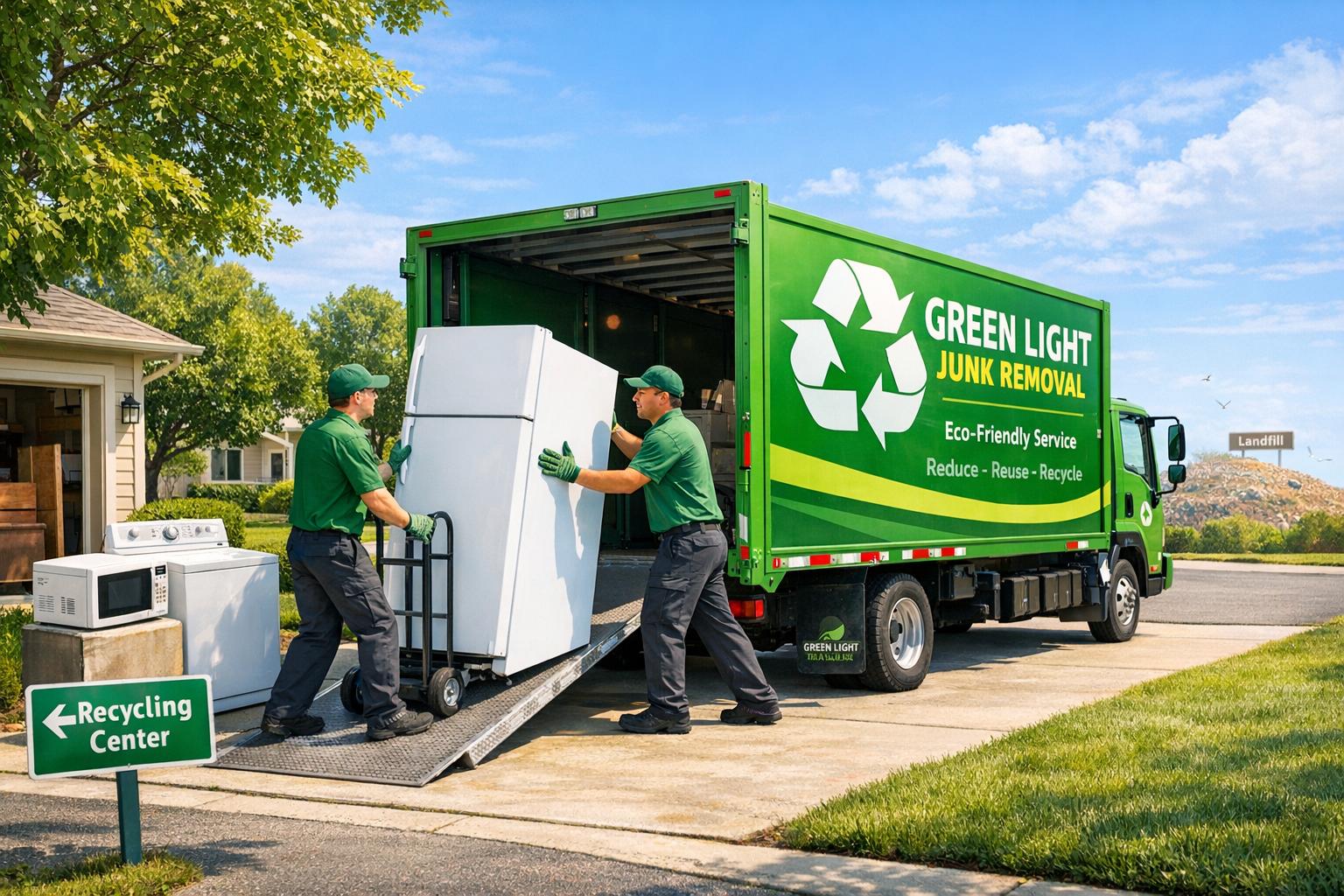
When it’s time to get rid of old appliances, you have two main options: recycle or send them to a landfill. Recycling is safer for the planet, recovering useful materials like steel, copper, and aluminum while ensuring harmful substances like refrigerants and mercury are properly handled. Landfill disposal, on the other hand, can leak toxins into the environment and waste valuable resources.
Here’s why recycling is the better choice:
- Recycling Benefits: Reclaims materials, reduces greenhouse gas emissions, and complies with federal laws requiring refrigerant removal.
- Landfill Drawbacks: Releases toxins, wastes recoverable metals, and contributes to pollution.
- Cost Comparison: Recycling can be free or come with rebates (up to $75), while landfill disposal often involves gate fees or illegal dumping risks.
- Legal Compliance: Federal and state laws favor recycling, with 22 states banning appliances from landfills.
Quick Tip: Many utilities and retailers offer free or low-cost recycling programs, and professional junk removal services can simplify the process.
Recycling appliances not only protects the environment but also saves resources and ensures hazardous components are handled responsibly.
What REALLY Happens To Old Washing Machines? Shocking Truth About Appliance Recycling!
sbb-itb-096ce5b
What Is Eco-Friendly Appliance Recycling?
Eco-friendly appliance recycling involves dismantling appliances in a way that safely recovers valuable materials while minimizing harm to the environment. Certified recyclers handle this process by first removing hazardous substances, then reclaiming metals and plastics for reuse.
The U.S. Environmental Protection Agency (EPA) explains it clearly:
"To reduce energy demand, ozone depletion, and global climate impacts, it is critical that older units be permanently removed from the energy grid and properly disposed of so that environmentally-harmful refrigerants and foam blowing agents are captured and recycled or destroyed." [1]
Here’s how the recycling process ensures discarded appliances are turned into useful resources.
How Appliance Recycling Works
The first step in eco-friendly recycling is the extraction of hazardous materials. Certified technicians remove substances like refrigerants (CFCs, HCFCs, HFCs as regulated under EPA Section 608), mercury, PCBs, used oil, and foam blowing agents. Skipping this step isn’t just unsafe – it’s a violation of federal law.
Once the hazardous materials are removed, the appliance is manually dismantled. Recyclers recover materials such as steel, aluminum, copper, glass, and plastics, which are then sent to manufacturers for reuse in new products. This reduces the need for energy-intensive processes like mining raw materials.
Proper recycling also ensures that outdated appliances are permanently retired. Interestingly, about 40% of used appliances collected by retailers are resold, even though older models consume significantly more energy than newer, more efficient ones [1].
Common Appliances That Can Be Recycled
Most large household appliances can be recycled, but each type contains specific materials and hazardous components that require careful handling. Here’s a breakdown:
| Appliance | Recyclable Materials | Hazardous Components |
|---|---|---|
| Refrigerators/Freezers | Steel, copper, aluminum, plastic, glass | Refrigerants (CFC/HFC), foam blowing agents, PCBs, used oil |
| Washers/Dryers | Steel, aluminum, plastic | Mercury (in models made before 1972), used oil |
| Air Conditioners | Copper coils, aluminum fins, steel | HCFC/HFC refrigerants |
| Microwaves | Steel, plastic, copper | High-voltage capacitors, magnetrons (classified as e-waste) |
| Stoves/Ovens | Steel, glass, chrome | Mercury (in older gas pilot light sensors) |
Older appliances, like pre-1972 washing machines and gas ranges with pilot lights, can contain mercury – a toxic substance that poses a serious risk to groundwater if not handled properly [1]. Additionally, modern appliances often include circuit boards and other electronic components, which must be separated and processed as e-waste to ensure safe recycling.
How Landfill Disposal Works
Americans landfill about 2.1 million tons of major appliances every year [3]. This practice leads to the loss of millions of tons of recoverable materials like steel, copper, and aluminum.
How Appliances End Up in Landfills
Appliances typically find their way to landfills through one of three main methods: municipal curbside bulk pickups, drop-offs at local transfer stations, or illegal dumping. In 28 states where appliances aren’t banned from landfills, they’re often categorized as bulky waste. If these items can’t be resold or salvaged for scrap, they end up buried in Municipal Solid Waste (MSW) landfills [3].
Federal law mandates the recovery of refrigerants before disposal, but only the refrigerants are removed. Insulating foam, plastics, and glass are usually shredded and buried instead [1]. In areas with limited or expensive curbside pickup – especially rural or low-income regions – illegal dumping becomes more common [3].
Adding to the problem is the shrinking lifespan of appliances. While older refrigerators lasted 17–20 years, newer models only last around 10–13 years [3]. This shorter lifespan means appliances are entering the waste stream at a faster rate.
These disposal methods come with serious environmental consequences, as detailed below.
Environmental Risks of Landfill Disposal
Dumping appliances in landfills doesn’t just waste valuable materials – it also poses significant environmental threats. Many older appliances contain hazardous substances that can leach into the soil and groundwater over time.
| Hazardous Component | Appliance Type | Risk |
|---|---|---|
| Refrigerants (CFC/HCFC) | Pre-1995/2010 units | Ozone depletion, high global warming potential |
| Mercury | Pre-2000 chest freezers | Bioaccumulates; harms neurological development |
| PCBs | Pre-1979 capacitors | Carcinogenic; damages immune and nervous systems |
| Used Oil | Compressor cooling circuits | Groundwater contamination |
| Foam Blowing Agents | Pre-2005 refrigerator insulation | Ozone depletion and climate change |
One often-overlooked issue is the foam insulation in older refrigerators. The EPA highlights this concern:
"The common practice of shredding and/or landfilling of foam represents a significant source of ODS and GHG emissions which could be avoided through foam recovery." [1]
Beyond the environmental hazards, landfilling appliances is a huge waste of resources. For example, a single refrigerator contains $11–$28 worth of recoverable metals, including 3–8 pounds of copper [3]. Multiply that by the millions of appliances discarded each year, and the economic and environmental losses become staggering.
Eco-Friendly Recycling vs. Landfill Disposal: A Side-by-Side Look
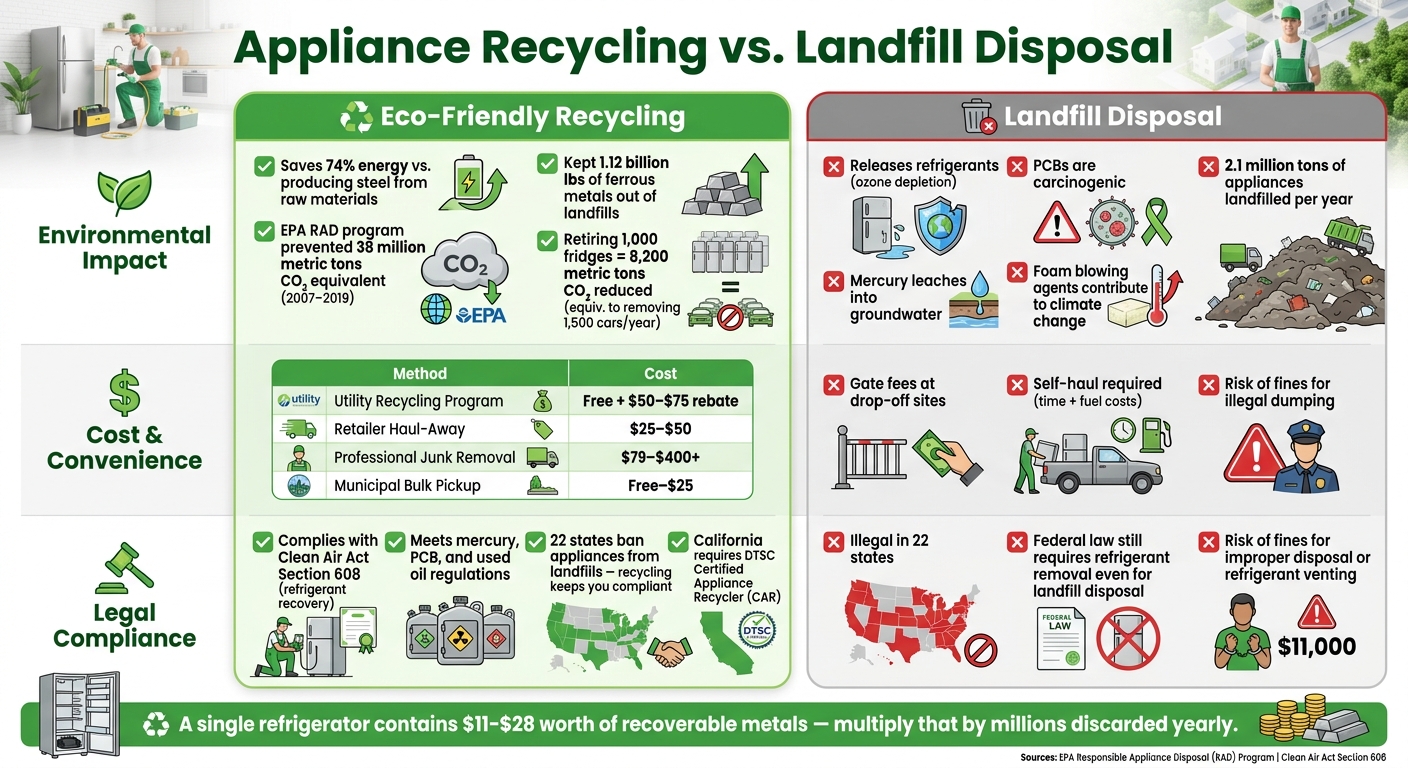
Appliance Recycling vs. Landfill Disposal: Cost, Environment & Compliance
Now that we’ve gone over landfill disposal methods and their environmental impacts, let’s see how they stack up against recycling.
Environmental Outcomes
Recycling has a clear edge when it comes to reducing environmental harm. For example, recycling steel saves 74% of the energy compared to producing it from raw materials [3]. On the other hand, landfilling often releases toxins and greenhouse gases. Materials in landfills are either shredded and buried or vented into the atmosphere, contributing to pollution.
Consider this: between 2007 and 2019, the EPA’s Responsible Appliance Disposal (RAD) program helped prevent over 38 million metric tons of CO2 equivalent emissions. It also kept more than 1.12 billion pounds of ferrous metals out of landfills. These achievements highlight the stark difference between recycling’s benefits and the ongoing emissions and resource losses tied to landfill disposal [4].
With such environmental contrasts in mind, let’s explore practical concerns like cost and convenience.
Cost and Convenience
Recycling might cost less than you think – and sometimes, it can even put money back in your pocket. For instance, many utility companies offer free pickup and a $50–$75 rebate for working refrigerators or freezers [3]. Retailers typically charge $25–$50 for haul-away services when you’re purchasing a new appliance. If you prefer professional junk removal services, they cost more – ranging from $79 to $400+ – but they provide flexibility with same-day or scheduled pickups [3].
On the other hand, landfill disposal isn’t necessarily the cheaper option. Drop-offs come with gate fees, and self-hauling adds time and fuel costs, which can close the price gap between the two methods.
Here’s a quick comparison of costs and convenience:
| Method | Cost | Convenience |
|---|---|---|
| Utility Recycling Program | Free + $50–$75 rebate | Home pickup; 1–2 weeks |
| Retailer Haul-Away | $25–$50 | Same day as new delivery |
| Professional Junk Removal | $79–$400+ | Same day or scheduled |
| Municipal Bulk Pickup | Free–$25 | Curbside only; 1–8 weeks |
| Landfill Drop-Off | Varies (gate fees) | Self-haul required |
These factors make it easier to weigh your options while also considering the legal requirements tied to disposal.
Regulatory Compliance
Federal law requires proper refrigerant recovery under Section 608 of the Clean Air Act (40 CFR Part 82, Subpart F) [5]. Older appliances may also be subject to rules regarding mercury, PCBs, and used oil [1].
State-level regulations add another layer of responsibility. As of 2026, 22 states have banned major appliances from landfills altogether [3]. States like California, New York, Illinois, and Massachusetts mandate certified recycling. In California, for instance, you’re required to use a DTSC Certified Appliance Recycler (CAR) [1][3]. Choosing certified recyclers not only ensures compliance with federal and state laws but also eliminates the risk of fines for improper disposal or refrigerant venting. It’s an eco-conscious choice that keeps you on the right side of the law.
How to Recycle Your Old Appliances
Getting rid of old appliances? There are plenty of ways to recycle them responsibly, whether you’re replacing a single fridge or overhauling your entire kitchen. Recycling not only helps reduce landfill waste but also ensures hazardous materials are handled properly. Let’s break down the options, starting with professional services and moving on to other alternatives.
Using a Professional Junk Removal Service
Large appliances like refrigerators and washing machines can be tricky – and even dangerous – to move without the right tools. That’s where professional junk removal services come in. Companies like Green Light Junk Removal make the process hassle-free by offering eco-conscious sorting, upfront pricing, and flexible scheduling, including same-day pickups. Whether you need a single appliance removed or an entire property cleared, they’ve got you covered.
The cost typically depends on how much space your items take up in the truck. Many services also offer pricing for single-item pickups, making it easy to budget.
Other Ways to Recycle Appliances
If hiring a professional isn’t your style, there are other options to fit different needs:
- Utility and Retailer Programs: Many utility companies and retailers offer pickup services, often at little to no cost. Some utilities even provide rebates – usually between $50 and $150 – for working refrigerators or freezers. You can check eligibility using the ENERGY STAR Rebate Finder [7][8]. Retailers like Best Buy charge a small fee (typically $10–$50) for appliance recycling during delivery of a new item. They also accept smaller electronics for in-store drop-off [6].
- Manufacturer Mail-Back Programs: For smaller appliances, some manufacturers, like Hamilton Beach and Nespresso, offer mail-back recycling options. These programs are ideal for items that aren’t eligible for curbside pickup.
- Donation: Got an appliance that still works? Consider donating it to organizations like Habitat for Humanity ReStore or Goodwill. This keeps it out of the landfill and gives it a second life.
- Scrap Metal Yards: Older appliances made mostly of metal – like stoves or grills – can be taken to scrap metal yards. These facilities recover valuable raw materials, reducing the need for new mining.
For small items like coffee makers or monitors, many stores, including Staples and Best Buy, have designated drop-off points [2].
Once you’ve chosen a method, a little prep work can make the process smoother.
How to Prepare Appliances for Pickup or Drop-Off
Proper preparation is key to ensuring your appliance is accepted for recycling or donation. Start by unplugging the appliance and disconnecting any utilities. Clear a pathway for easy removal, and for refrigerators, defrost and dry the interior thoroughly. Don’t forget to remove all food – appliances with mold or mildew are often rejected.
If your appliance qualifies for a utility rebate, keep it plugged in until pickup so the crew can confirm it’s still working [7]. For gas appliances, it’s best to hire a licensed technician to disconnect them safely. Also, secure pets and confirm elevator access if the appliance is on an upper floor – most services won’t carry heavy items down multiple flights of stairs [7].
"Older refrigerators/freezers contain ozone-depleting refrigerants and/or foam blowing agents, depending on the year they were manufactured." – EPA [2]
Planning to donate or sell your appliance? Check for recalls first. The U.S. Consumer Product Safety Commission offers an up-to-date database at recalls.gov where you can verify if your model has any safety issues.
Conclusion
Recycling is the clear winner. It prevents hazardous materials – like refrigerants, mercury, and PCBs – from polluting soil and water, salvages valuable metals such as steel and copper, and lowers greenhouse gas emissions. On the flip side, dumping appliances into landfills wastes resources and causes long-term harm to the environment. The numbers speak for themselves: retiring just 1,000 refrigerators responsibly reduces greenhouse gas emissions by 8,200 metric tons of CO₂ equivalent – that’s like taking 1,500 cars off the road for a year [1]. Plus, recycling can often be more affordable than you’d think, especially with utility rebates or retailer haul-away options.
Staying compliant with federal rules and state bans is crucial to avoid fines, but beyond that, it’s about doing the right thing for the planet.
For added convenience, services like Green Light Junk Removal make recycling effortless. They manage the heavy lifting, sort items for eco-friendly disposal, and ensure your appliances go to certified recycling facilities. With these options, recycling becomes not just the better choice – but the easiest one too.
FAQs
How do I know if a recycler is certified?
To confirm whether a recycler is certified, request documentation or certification that validates their adherence to proper handling practices. If you’re dealing with appliances that contain refrigerants, check that they hold EPA Section 608 certification, which ensures safe and responsible disposal methods.
Which appliances have the most hazardous materials?
Some appliances are packed with materials that can harm both people and the environment if not handled correctly. For example, refrigerators and freezers often contain refrigerants like CFCs and HCFCs, which can deplete the ozone layer. Removing these substances safely requires certified technicians who know how to manage them properly.
Electronics are another category to watch out for. They can house dangerous materials such as lead, mercury, and flame retardants. If these aren’t managed responsibly during recycling or disposal, they can pose serious health and environmental risks.
What should I do if my state bans landfilling appliances?
If your state has laws against landfilling appliances, disposing of them in regular trash isn’t just a bad idea – it’s illegal. Instead, look for certified recycling or disposal options that align with state regulations. Many states have programs or facilities designed for proper appliance recycling, often recovering materials safely. Another option? Hire professional junk removal services like Green Light Junk Removal, which focuses on eco-friendly disposal and recycling of appliances.