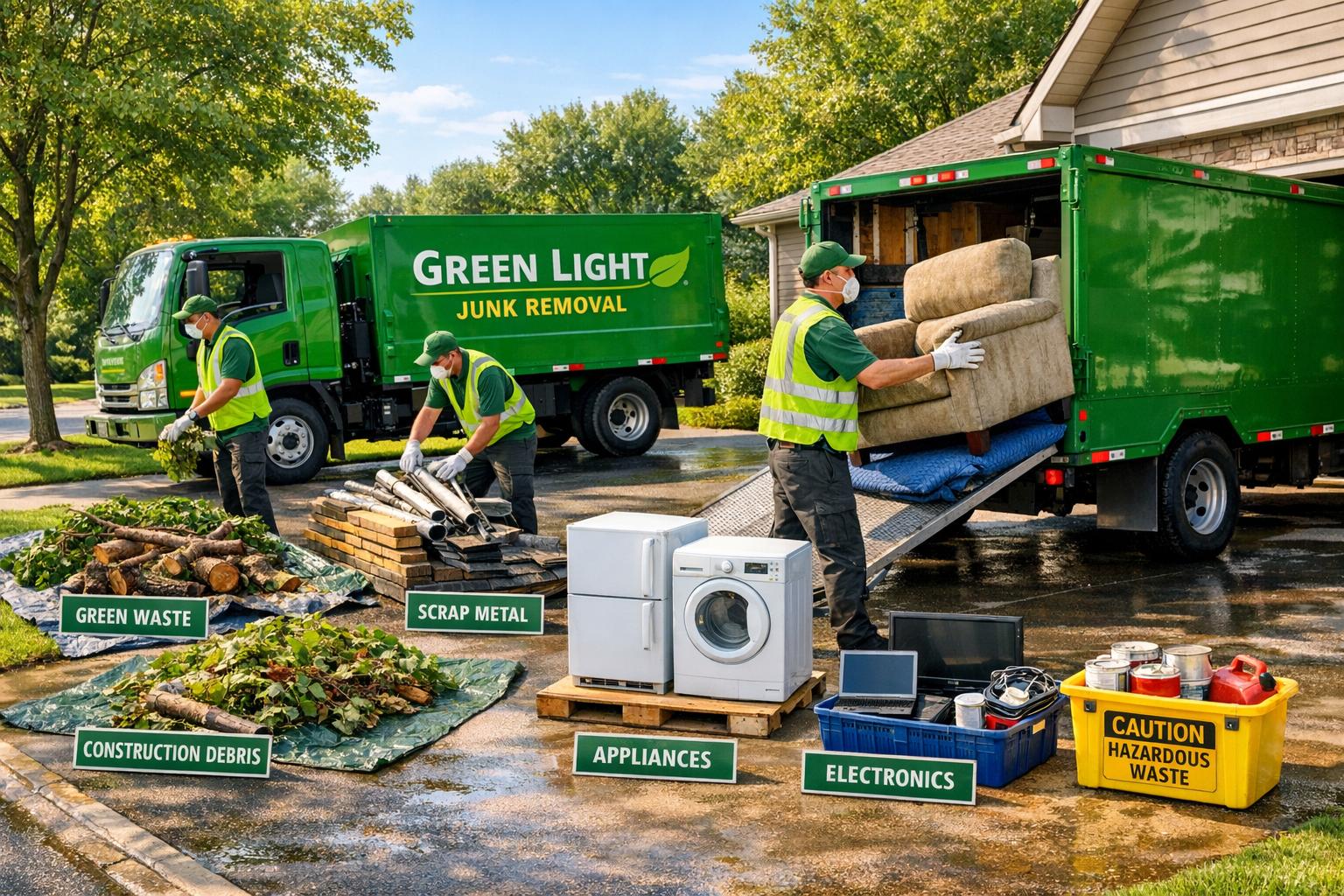
Cleaning up storm debris can feel overwhelming, but recycling it properly is crucial for reducing landfill waste and preventing harm to the environment. Here’s a quick guide to managing storm debris effectively:
- Sort debris into categories: Vegetative (tree limbs, branches), construction materials (lumber, concrete), metals and appliances, electronics, and hazardous items.
- Recycle vegetative debris: Turn branches and shrubs into mulch or compost. Avoid using plastic bags for green waste.
- Handle construction debris carefully: Separate clean materials like concrete and untreated wood for reuse. Contaminated materials may require special disposal.
- Recycle appliances and electronics: Remove refrigerants from appliances before recycling. Take electronics to certified e-waste facilities.
- Dispose of hazardous waste properly: Items like paint, motor oil, and batteries need special handling to avoid environmental contamination.
For safe handling, wear protective gear, avoid burning debris, and check local guidelines for disposal and recycling services. Use tools like the EPA’s Disaster Debris Recovery Tool or Earth911 to locate recycling centers nearby. Professional debris removal services can help with large-scale cleanup.
Key takeaway: Sorting debris immediately and using local resources ensures proper recycling and minimizes landfill impact.
Useful tips on how to sort through storm debris during cleanup
sbb-itb-096ce5b
Types of Storm Debris
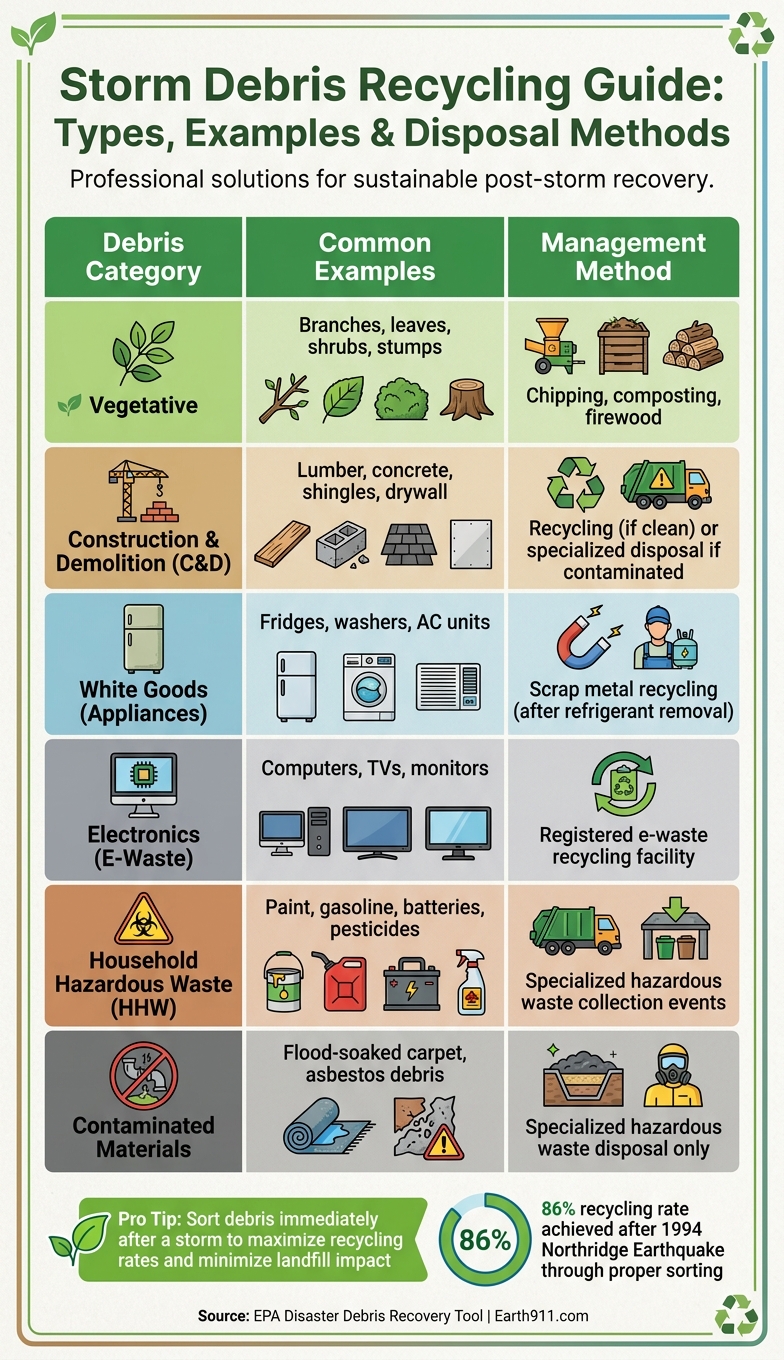
Storm Debris Recycling Guide: Types, Examples & Disposal Methods
Storm debris can be sorted into specific categories, which makes recycling and disposal more efficient. The EPA explains:
"Separating debris into its different types makes more management options available, including reuse, recycling, and composting, allowing communities to optimally plan for and manage each category." [5]
When debris isn’t sorted, it often ends up in landfills. However, separating materials beforehand can reduce landfill waste and cut costs for both homeowners and local governments.
Here’s a closer look at the main types of storm debris and how each is managed.
Vegetative and Woody Debris
This category includes tree limbs, branches, leaves, shrubs, and stumps. It’s one of the easiest types to recycle. Woody debris can be turned into mulch, compost, or even firewood. The New York State Department of Environmental Conservation emphasizes:
"Significant volumes of tree and limb debris can be chipped into mulch or donated as firewood to avoid expensive disposal costs and the related consumption of valuable landfill air space if mixed with solid wastes." [1]
However, there’s an exception if you’re in a quarantine zone for invasive pests like the Asian Long-horned Beetle. In such cases, woody debris must be chipped to less than 1 inch in two dimensions before use as mulch or erosion control.
Construction and Demolition (C&D) Debris
C&D debris includes materials like lumber, concrete, bricks, roofing shingles, drywall, and siding. Some of these, such as clean concrete and bricks, can be crushed and reused as fill or aggregate. Uncontaminated lumber might also be salvaged or processed as fuel.
Contamination, however, is a significant concern. For example, drywall soaked in floodwater, asbestos-containing roofing materials, or debris painted with lead-based paint cannot be recycled through typical methods. If your home was built before the 1970s, it’s smart to consult a professional before handling demolition debris. You can contact our team for assistance with safe removal and disposal.
Metals, Appliances, and Electronics
Large appliances – commonly referred to as "white goods" – include refrigerators, stoves, washing machines, and air conditioners. These items are recyclable as scrap metal, but refrigerants like Freon must be removed by certified technicians first. Skipping this step is not only illegal but also harmful to the environment.
Electronics, or e-waste, like computers, televisions, and monitors, are another category entirely. These items often contain heavy metals and other toxins, making them unsuitable for standard landfills. Instead, they must be taken to a registered e-waste recycling facility.
Hazardous and Non-Recyclable Materials
Some items can’t be recycled through regular processes. Household hazardous waste (HHW), such as paint, gasoline, pesticides, motor oil, solvents, and batteries, requires special handling and must be separated from general debris.
Mixed debris – where different types are jumbled together – is particularly hard to manage and usually ends up in landfills. The North Carolina Department of Environmental Quality underscores the importance of sorting:
"Curbside segregation of waste materials is critical during disaster clean-up." [2]
The table below provides a quick reference for managing different types of debris:
| Debris Category | Common Examples | Management Method |
|---|---|---|
| Vegetative | Branches, leaves, shrubs, stumps | Chipping, composting, firewood |
| C&D | Lumber, concrete, shingles, drywall | Recycling (if clean) or proper disposal if contaminated |
| White Goods | Fridges, washers, AC units | Scrap metal recycling (after refrigerant removal) |
| Electronics | Computers, TVs, monitors | Registered e-waste recycling |
| HHW | Paint, gasoline, batteries, pesticides | Specialized hazardous waste collection events |
| Contaminated | Flood-soaked carpet, asbestos debris | Specialized hazardous waste disposal |
How to Recycle Storm Debris by Type
Building on the debris categories outlined earlier, here’s a closer look at how to manage and recycle each type effectively.
How to Recycle Vegetative and Woody Debris
Branches, limbs, and shrubs can be chipped or ground into mulch, compost, or even used as industrial boiler fuel. This process not only makes recycling easier but also reduces the amount of waste heading to landfills. Many cities provide seasonal chipping services or have drop-off locations specifically for storm debris, so it’s worth checking with your local public works department for options.
One important thing to remember: don’t bag green waste in plastic bags. Joe Tate, a Project Manager at Storm Reconstruction Services, explains the issue:
"I just wish people (homeowners) would have paid more attention to not bagging the green waste. We have to make separate runs to collect the bagged waste, and it has to be ground with the construction and demolition debris." [6]
Plastic bags make processing green waste as clean mulch impossible, which wastes a valuable resource. If you’re composting at home, keep windrows under 6 feet tall and 10 feet wide, and turn the pile when the internal temperature reaches 160°F to avoid spontaneous combustion [7].
Now, let’s move on to handling construction materials.
How to Recycle Construction and Demolition Debris
Start by separating clean materials from contaminated ones. This step is essential for determining what can be recycled and what needs to go to a landfill. For example:
- Clean concrete and brick: These can be crushed on-site or at a recycling facility and reused as aggregate or driveway fill [9].
- Untreated wood: This can be repurposed as mulch, compost, or turned into engineered wood products.
- Metal components: Items like siding and roofing are often recyclable as scrap metal.
Before dealing with demolition debris, check for hazardous materials like asbestos, lead-based paint, or PCBs. These require special handling and should not be mixed with regular recyclables [8]. To find appropriate facilities, the EPA’s Disaster Debris Recovery Tool offers a free, interactive map of over 20,000 recycling and disposal sites across the U.S. [9].
Now, let’s look at recycling metals, appliances, and electronics.
How to Recycle Metals, Appliances, and Electronics
For appliances and scrap metal, local scrap dealers are a great first stop. Many appliance retailers also offer take-back programs, so check with them before hauling items yourself. Recycling these materials helps recover valuable resources and reduces landfill waste.
Electronics, however, require a different approach. Avoid placing them in general recycling bins. The EPA recommends using certified recyclers under the Responsible Recycling (R2) or e-Stewards standards to ensure proper handling and data destruction [10]. Before dropping off any device, make sure to erase all personal data.
Batteries, whether lithium-ion, lead-acid, or rechargeable, should be taken to specialized drop-off locations or household hazardous waste centers. Never toss them into curbside bins. After a storm, local facilities may be overwhelmed, so always call ahead to confirm they can accept your items [3][4].
Finding Storm Debris Recycling Options Near You
Looking for the right way to recycle storm debris? Start with reliable tools and resources to make the process easier.
Government and Public Resources
The EPA’s Disaster Debris Recovery Tool (updated August 2025) is a great starting point. It maps out over 20,000 facilities across the U.S. and its territories that can handle storm debris. Its "EZ-DD Search" feature helps you locate the 12 closest recyclers and landfills [11][14].
"EPA developed this interactive mapping tool of twelve types of recyclers and landfills to promote sustainable disaster debris management in disaster planning and emergency response." – U.S. Environmental Protection Agency [14]
For more specific materials like stumps, shingles, or brush, Earth911 is another excellent resource. Their database includes over 100,000 listings and covers more than 350 material types. Just enter your zip code to find recycling options nearby [13]. Additionally, the EPA’s Recycling Infrastructure and Market Opportunities Map (Version 2.0, updated June 2025) identifies 15 types of recycling infrastructure across 16 material categories, including wood recycling and composting sites [12].
Don’t overlook your city or county website. Local solid waste divisions often share information on curbside pickup schedules, temporary debris staging areas, and guidelines for separating materials. In states like North Carolina, agencies such as the NC DEQ maintain recycling directories for items like wood grinding and hazardous household waste [2]. Always check the availability of facilities before heading out, as they can fill up quickly after a storm [4].
If public resources don’t meet your needs, professional services can step in.
Using a Professional Debris Removal Service
For larger or more complicated debris removal, hiring a professional service can save you time and hassle. Companies like Green Light Junk Removal specialize in tasks such as yard cleanups, appliance removal, and managing demolition debris. They also focus on eco-friendly disposal practices.
Professional services offer an added benefit: they ensure compliance with regulations, which is crucial when dealing with materials that require special handling before recycling or disposal.
Safe and Responsible Storm Debris Handling
Personal Safety While Handling Debris
Before diving into cleanup, take a moment to assess your surroundings. Look for dangers like downed power lines, gas leaks, or unstable structures. If you’re dealing with any of these, address them first – turn off electricity at the main breaker for added safety. Equip yourself with the right gear: heavy-duty gloves, sturdy boots, a hard hat, and eye protection. If there’s a chance of asbestos or lead paint exposure – common in buildings from the mid-1900s through the 1970s – use respiratory protection as well. Remember, standing water and debris piles can hide sharp objects like nails, so tread carefully.
Cleanup can be physically exhausting. Stay hydrated, take regular breaks, and work with a partner to avoid overexertion. These precautions help keep you safe while you focus on the task ahead.
Legal and Environmental Rules to Follow
Once safety is squared away, it’s time to think about proper debris disposal. One mistake many people make is burning debris. Not only is this dangerous, but it’s also often illegal. For example, many states in the U.S. have strict rules against burning non-vegetative materials. North Carolina outlines this clearly:
"The Open Burning Rule… prohibits most outdoor burning and sets conditions for allowable fires. Under the rule, it is always illegal to burn trash and other non-vegetative materials." – North Carolina Division of Waste Management [2]
Never burn items like treated wood, shingles, or painted lumber, as they can release harmful toxins into the air.
Proper disposal also means steering clear of waterways when dealing with chemicals or debris. Dumping near rivers, lakes, or other water sources can lead to contamination. Flood-damaged sandbags, for instance, may contain raw sewage or industrial chemicals. These should be taken to a municipal solid waste landfill instead of being reused.
Lastly, always stay vigilant for hazardous materials while cleaning up. If you come across an underground storage tank or a hazardous spill, stop immediately and contact your state’s environmental agency. Mixing hazardous waste with regular debris not only poses safety risks but can also drive up disposal costs significantly.
Key Takeaways for Recycling Storm Debris
Effective recycling of storm debris starts with immediate sorting. Mixing waste types makes separation harder later and often leads to more material ending up in landfills [15].
Once sorted, debris can be recycled into useful materials:
- Green waste (like trees and shrubs) can be turned into mulch, compost, or even fuel.
- Concrete and asphalt are crushed and reused as road sub-base.
- Scrap metal is processed and sold through dealers.
- Brick can be ground down for landscaping or resold.
- Dirt finds new life as landfill cover or a soil amendment.
| Material | Recycled Use |
|---|---|
| Trees & shrubs | Mulch, compost, or cogeneration fuel |
| Concrete & asphalt | Crushed for road sub-base |
| Metal | Recycled and sold by scrap dealers |
| Brick | Ground for landscaping or resold |
| Dirt | Used as landfill cover or soil amendment |
Organized debris management has shown incredible results. For instance, after the 1994 Northridge Earthquake, sorting efforts boosted recycling rates to 86%, diverting over 56% of debris from landfills [15].
For handling large-scale debris, professional services like Green Light Junk Removal can simplify the process. They specialize in sorting, loading, and transporting debris to appropriate recycling facilities. This is especially helpful for mixed materials like construction debris, appliances, or yard waste.
FAQs
What should I do if my storm debris might contain asbestos or lead paint?
If your storm debris might include asbestos or lead paint, it’s crucial to handle it safely. For asbestos, wear protective gear, dampen the debris to minimize dust, and think about hiring licensed professionals to manage it. For lead paint, test the material to determine if it qualifies as hazardous waste. If the lead levels exceed regulatory limits, the waste must be taken to a hazardous waste facility. Always follow proper containment and disposal procedures, and prioritize both safety and environmental care when dealing with hazardous materials.
Can I recycle storm debris that’s been soaked by floodwater?
Storm debris that has been soaked by floodwater typically shouldn’t be recycled without a thorough evaluation. Floodwater can carry contaminants or hazardous substances, which may pose risks if not handled correctly. Always refer to local disposal guidelines and consult with environmental agencies to ensure the debris is managed and disposed of safely.
How do I find the right drop-off site for each type of storm debris near me?
The EPA’s Disaster Debris Recovery Tool is a helpful resource for locating over 20,000 facilities that recycle or manage storm debris. This tool makes it easy to find recyclers and landfills near you.
For more tailored advice, reach out to your local waste management authorities or the EPA office in your state. Common items like appliances are often accepted by scrap dealers for recycling, while tires should be taken to registered processing facilities. Be sure to review local guidelines for any specific requirements or additional details.