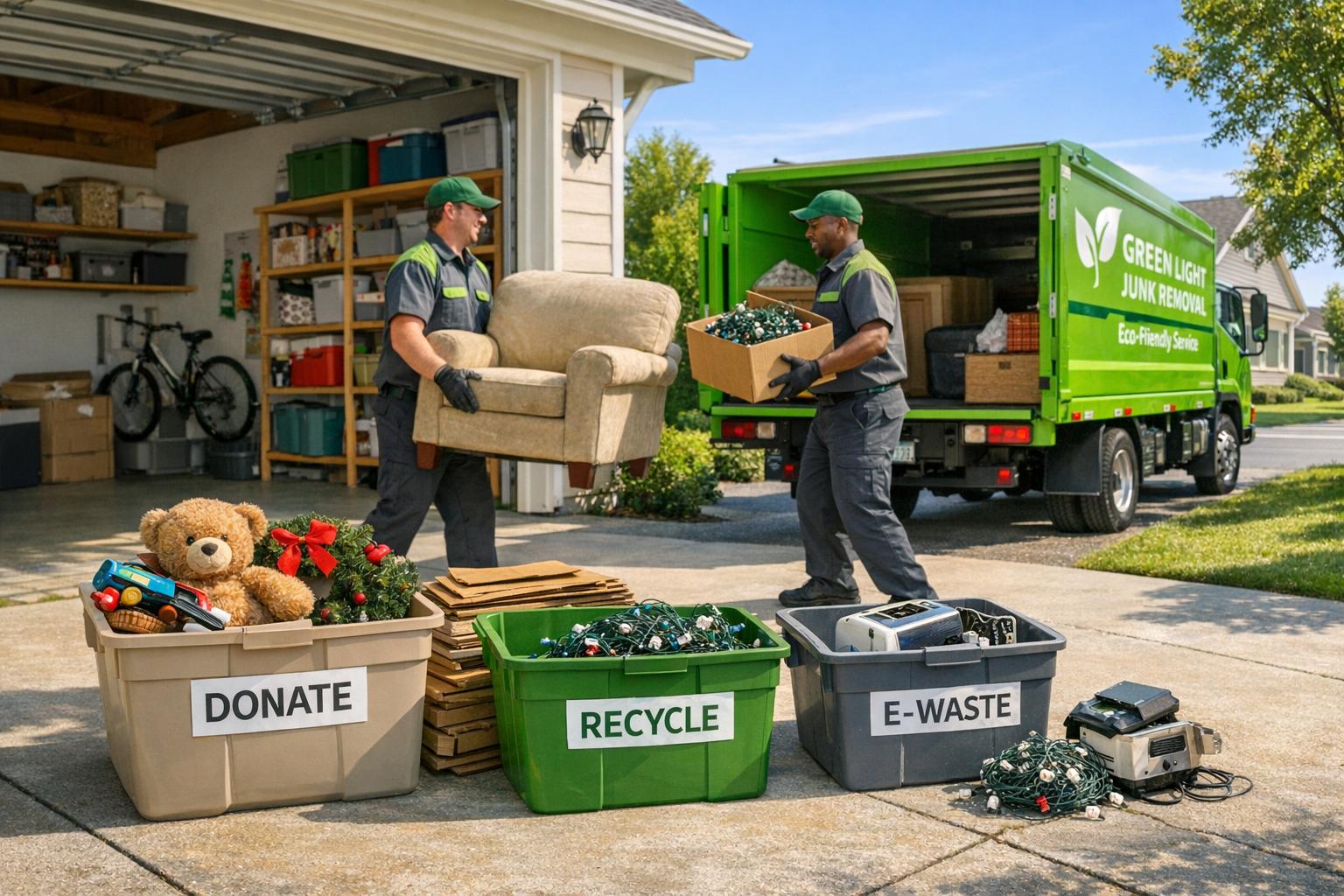
Americans generate 23% more waste in December, adding 5.8 million tons of garbage during the holidays. Wrapping paper, decorations, electronics, and packaging contribute to this surge. Many of these items are improperly disposed of, with 80% of U.S. waste ending up in landfills, including recyclable or reusable materials. Proper sorting, recycling, and donation can significantly reduce this burden.
Key Takeaways:
- Wrapping paper: Glitter or foil versions are non-recyclable.
- Christmas trees: Real trees can be composted; artificial ones are rarely recyclable.
- Electronics: Contain hazardous materials; use certified e-waste facilities.
- Unwanted gifts: Donate or resell instead of discarding.
Eco-friendly junk removal services can help manage bulky or complex items responsibly. Start by sorting your clutter into categories: keep, donate, sell, recycle, and trash. Consider using services like Green Light Junk Removal for larger cleanups. By reusing, donating, and recycling, you can reduce waste and make post-holiday cleanup easier.
Holiday trash disposal and sustainability tips
sbb-itb-096ce5b
Common Post-Holiday Junk Problems and Their Effects
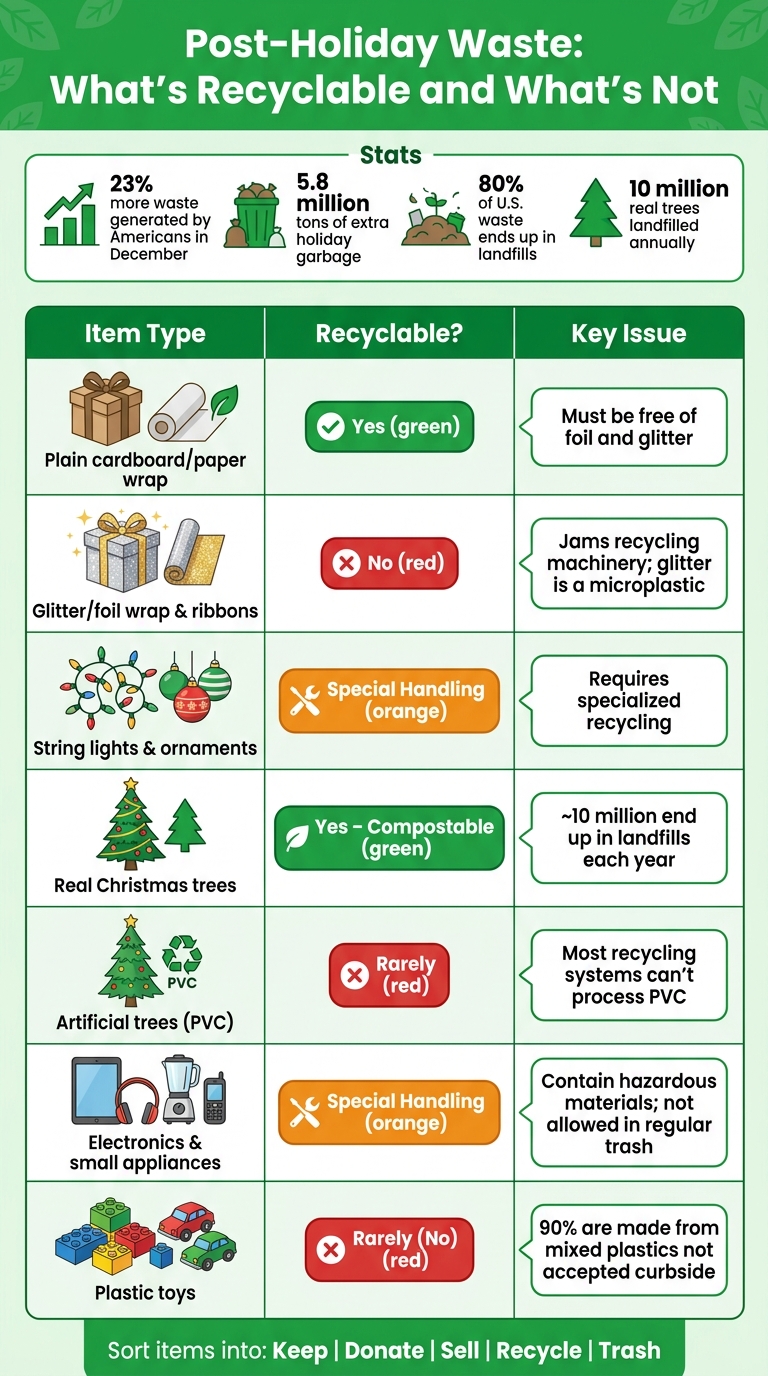
Post-Holiday Waste: What’s Recyclable and What’s Not
The holiday season brings joy and celebration, but it also leaves behind a significant environmental footprint. During December, Americans produce 23% more waste than any other month, adding approximately 5.8 million tons of extra garbage – equivalent to the weight of more than 28,000 Boeing 747 airplanes[3]. This surge in waste creates a host of disposal challenges. Let’s take a closer look at the most common types of post-holiday waste and the problems they cause.
Excess Packaging and Gift Wrap
Holiday packaging often goes beyond simple paper or cardboard. Materials like foil finishes, glitter, plastic coatings, ribbons, and bows make many items non-recyclable. Ribbons and tinsel, in particular, can jam recycling machinery, making them especially troublesome[4]. As Jeremy Walters, Sustainability Ambassador at Republic Services, explains:
"The fancier the bag or paper, the less recyclable it becomes."[4]
For gift wrap, the rule of thumb is simple: if the paper is free of shiny or sparkly coatings, it’s likely recyclable. Otherwise, it should go in the trash. Beyond wrapping paper, holiday decorations add another layer of complexity.
Old Decorations and Christmas Trees
Broken string lights and ornaments require specialized recycling and cannot be disposed of through standard curbside programs[2][3]. Artificial Christmas trees pose their own issues, as many are made with polyvinyl chloride (PVC), a material that most recycling systems can’t handle[4]. If an artificial tree is still in good condition, donating it is the best option.
Real Christmas trees often go to waste unnecessarily. Around 10 million real trees end up in landfills annually, even though they can be composted, turned into mulch, or repurposed for wildlife habitats. Many communities offer "tree-cycling" programs, so checking local options can prevent these trees from becoming landfill waste.
The challenges don’t stop at decorations – electronics and larger items also contribute to post-holiday waste.
Bulky Items and Electronics
The holidays often bring new gadgets, leaving old ones to be discarded. In the U.S., more than 130 million cell phones are thrown away each year, many after holiday upgrades[3]. Small appliances are frequently replaced during this time as well.
These items often contain hazardous materials that can leach into soil and groundwater if sent to landfills[3]. In fact, many municipalities prohibit e-waste disposal in regular household trash[1]. Retailers like Best Buy and Staples offer recycling programs, making it easy to drop off electronics safely.
Even items that aren’t immediately thrown away can contribute to long-term waste problems.
Clutter from Gifts and Seasonal Items
Not all post-holiday waste heads straight to the trash. Unwanted gifts, duplicate items, and seasonal décor often linger in closets, garages, or storage spaces. Over time, these items – especially children’s toys – can add to landfill waste. About 90% of children’s toys are made from mixed plastics, which are not accepted in most curbside recycling programs[4]. Once toys break or are outgrown, they typically end up in the trash.
This kind of clutter might not seem urgent, but eventually, it creates disposal challenges that are harder to solve sustainably.
| Item Type | Recyclable | Key Issue |
|---|---|---|
| Plain cardboard/paper wrap | Yes | Must be free of foil and glitter[3][4] |
| Glitter/foil wrap & ribbons | No | Jams recycling machinery; glitter is a microplastic[4] |
| String lights & ornaments | Special handling | Requires specialized recycling[2][3] |
| Real Christmas trees | Yes (compostable) | Around 10 million end up in landfills each year[3] |
| Artificial trees (PVC) | Rarely | Most recycling systems can’t process PVC[4] |
| Electronics & small appliances | Special handling | Contain hazardous materials; not allowed in regular trash[3] |
| Plastic toys | Rarely | 90% are made from mixed plastics not accepted curbside[4] |
These holiday waste challenges highlight the need for smarter, more eco-conscious disposal methods, which will be explored further in the next sections.
How to Declutter After the Holidays the Right Way
Dealing with post-holiday clutter can feel overwhelming, but taking a thoughtful, organized approach makes the process much easier. By tackling it systematically, you can reduce waste while making choices that are better for the planet.
Sort and Categorize Your Items First
Start by sorting everything into five categories: keep, donate, sell, recycle, and trash. This step ensures that useful items don’t end up in the landfill. For recyclables, separate them by material type – cardboard, metal, plastic, and wood – and place them into distinct bags or piles. This way, they can be sent to the right recycling facilities without confusion.
Reuse, Donate, and Resell What You Can
After sorting, focus on items that can be reused. Clothes that no longer fit, unopened toys, or duplicate household goods make great donation candidates. Look for local charities, thrift stores, or community centers that accept these items. For toys, children’s organizations are often a perfect match.
"Many things that no longer serve you can find a second life with someone else. Old clothes, electronics, or holiday décor in good condition are all items that can be donated to local charities." – TWO MEN AND A TRUCK [5]
If you have items with resale potential, use online platforms or consider hosting a yard sale. Selling these items not only keeps them out of the trash but also puts some extra cash in your pocket.
Recycle and Compost the Rest
For everything else, recycling and composting are the way to go. Flatten cardboard boxes to make them easier to recycle. If you had a real Christmas tree, check out local tree-cycling programs – they often repurpose trees for mulch or other uses. Even tree branches can be handy for DIY garden projects.
Old electronics or broken gadgets should be taken to certified e-waste facilities. And if you’re left with items that are hard to categorize, eco-friendly junk removal services can help you dispose of them responsibly.
How Professional Junk Removal Can Help After the Holidays
After the holidays, even your best efforts to declutter can leave you with items that are just too much to handle on your own. Sorting, donating, and recycling might take care of some of the mess, but when you’re left with oversized or difficult-to-dispose-of items, calling in a professional junk removal service can make all the difference.
When to Call in a Professional Junk Removal Service
Handling small loads on your own is manageable, but there are times when you need extra help. For instance, bulky items like an old couch, broken appliances, or a large artificial tree can be tough to move and dispose of properly. Similarly, e-waste such as outdated electronics, including TVs or laptops, often requires specialized disposal methods. Professional junk removal services are especially useful when you’re short on time or facing an overwhelming workload. They offer reliable, scheduled pickups, ensuring your cleanup happens without any unnecessary delays.
What to Look for in an Eco-Friendly Junk Removal Service
Choosing the right junk removal service is about more than just convenience – it’s also about being responsible with your waste. A good provider will sort items for trash, recycling, and donations rather than sending everything to a landfill. Look for companies that partner with local charities and certified recycling facilities, especially those equipped to handle e-waste and safely manage refrigerants from appliances.
Key features to prioritize include:
- Transparent pricing: Costs should be clear and based on volume or item type, with no hidden fees.
- Flexible scheduling: Services that offer same-day or adaptable time slots make post-holiday cleanups easier.
- Full-service pickup: The crew should handle all the heavy lifting and loading directly from your home.
On average, junk removal costs range from $60 to $240, though larger items like appliances can cost up to $600. If you’re looking for a deal, January and February are often considered the off-season for junk removal, which can mean lower prices and more availability [6].
Green Light Junk Removal: A Greener Way to Clean Up
For those aiming for a more sustainable cleanup, Green Light Junk Removal is a standout option. They specialize in residential junk removal, storage unit cleanouts, appliance removal, and even full property cleanouts. Their process ensures eligible items are sorted for donation or recycling, reducing landfill waste.
With upfront pricing and simple online booking, Green Light Junk Removal makes it easy to schedule a pickup. Whether you’re clearing out holiday clutter from your garage or getting rid of an outdated appliance, their eco-focused approach ensures your cleanup aligns with greener practices.
How to Cut Down on Holiday Waste Year After Year
Start reducing next year’s holiday waste now by adopting habits that make a difference all year long. Small, consistent changes can help tackle the staggering amount of waste generated during the holiday season. Americans produce about 25% more waste than usual during the holidays, adding up to an extra 1 million tons of waste every week between Thanksgiving and New Year’s Day [9]. But it doesn’t have to be this way.
Build a Reusable Holiday Supply Kit
One simple way to cut down on waste is to avoid buying disposable supplies every year. Save ribbons, bows, and gift bags that are still in good shape, and store them in a labeled bin for easy access. Swap single-use wrapping paper for reusable fabric. For instance, the Japanese tradition of Furoshiki uses cloth like scarves or tea towels to wrap gifts – an elegant and waste-free option [9].
Switching to LED holiday lights is another smart move – they use 90% less energy and last much longer [7]. For decorations, consider natural elements like pinecones, dried citrus, or cinnamon sticks. These not only look festive but can also be composted afterward. By reducing your reliance on disposable items, you’ll also cut down on the amount of trash needing removal after the holidays.
Make Decluttering a Regular Habit
Before storing holiday items, take time to review what you have. Toss broken items and keep only what you’ll use again. A handy tip is the "one in, one out" rule: for every new gift you receive, donate an older item [2]. This habit keeps your home from becoming overcrowded and minimizes the waste that might otherwise pile up over time.
Track Your Waste Reduction Progress Each Year
Keep a record of how much waste you reduce each year. Note the number of donation bags, recycled items, or packaging waste. Set specific goals, like cutting down donation bags from five to three, to give yourself something concrete to aim for. Tracking also helps identify patterns – like whether online shopping is adding extra packaging. Online purchases, for instance, generate 4.8 times more packaging waste than shopping in-store [8]. By shifting even part of your holiday shopping to local stores, you can noticeably reduce waste over time. These small, annual efforts pave the way for a more environmentally conscious home.
Conclusion: Taking Action for a Cleaner Post-Holiday Home
The holidays often leave behind more than just cherished memories – they also bring a fair share of clutter that can linger well into the new year. The upside? Tackling the mess doesn’t have to be overwhelming. A few simple actions – like sorting, donating, and recycling – can make a noticeable difference.
By embracing these eco-conscious habits, you can enjoy long-term benefits. Don’t wait too long – scheduling junk removal right after the holidays can help you avoid letting clutter pile up further [5]. Clearing out your space early helps set the tone for a fresh start, making it easier to focus on your new goals without last season’s mess getting in the way.
For bulkier items or larger cleanup projects, consider bringing in the pros. Green Light Junk Removal offers full-service junk removal with a focus on recycling and donations. Whether it’s outdated appliances, damaged decorations, or heaps of post-holiday packaging, their team takes care of everything from start to finish [2].
Even small changes – like reusing materials, donating items, and keeping track of waste – can reduce your holiday footprint over time. The key is to build habits that lead to steady progress toward a cleaner, healthier home. By sticking to these practices, you can enjoy a clutter-free, sustainable living space year after year.
FAQs
How can I tell if wrapping paper is recyclable?
To determine if wrapping paper can be recycled, make sure it doesn’t have non-paper elements like glitter, plastic, or foil. Try the Scrunch Test: crumple the paper into a ball – if it stays in that shape without springing back, it’s probably recyclable. Wrapping paper with thick coatings or elaborate decorations should be kept out of the recycling bin.
Where should I take old electronics after holiday upgrades?
You can drop off old electronics at specific collection centers that handle e-waste at no cost. Some examples include the City of Los Angeles S.A.F.E. permanent collection centers, the Antelope Valley Environmental Collection Center, and the EDCO Recycling and Transfer Center. These facilities are equipped to recycle or dispose of electronic waste properly, helping to minimize its impact on the environment.
What happens to my items when Green Light Junk Removal picks them up?
When Green Light Junk Removal picks up your items, they focus on eco-friendly practices to reduce waste and protect the planet. They carefully sort recyclable materials for proper processing, while ensuring non-recyclable items are disposed of responsibly according to local rules. This method helps cut down on landfill waste and promotes environmentally responsible handling of your unwanted belongings.