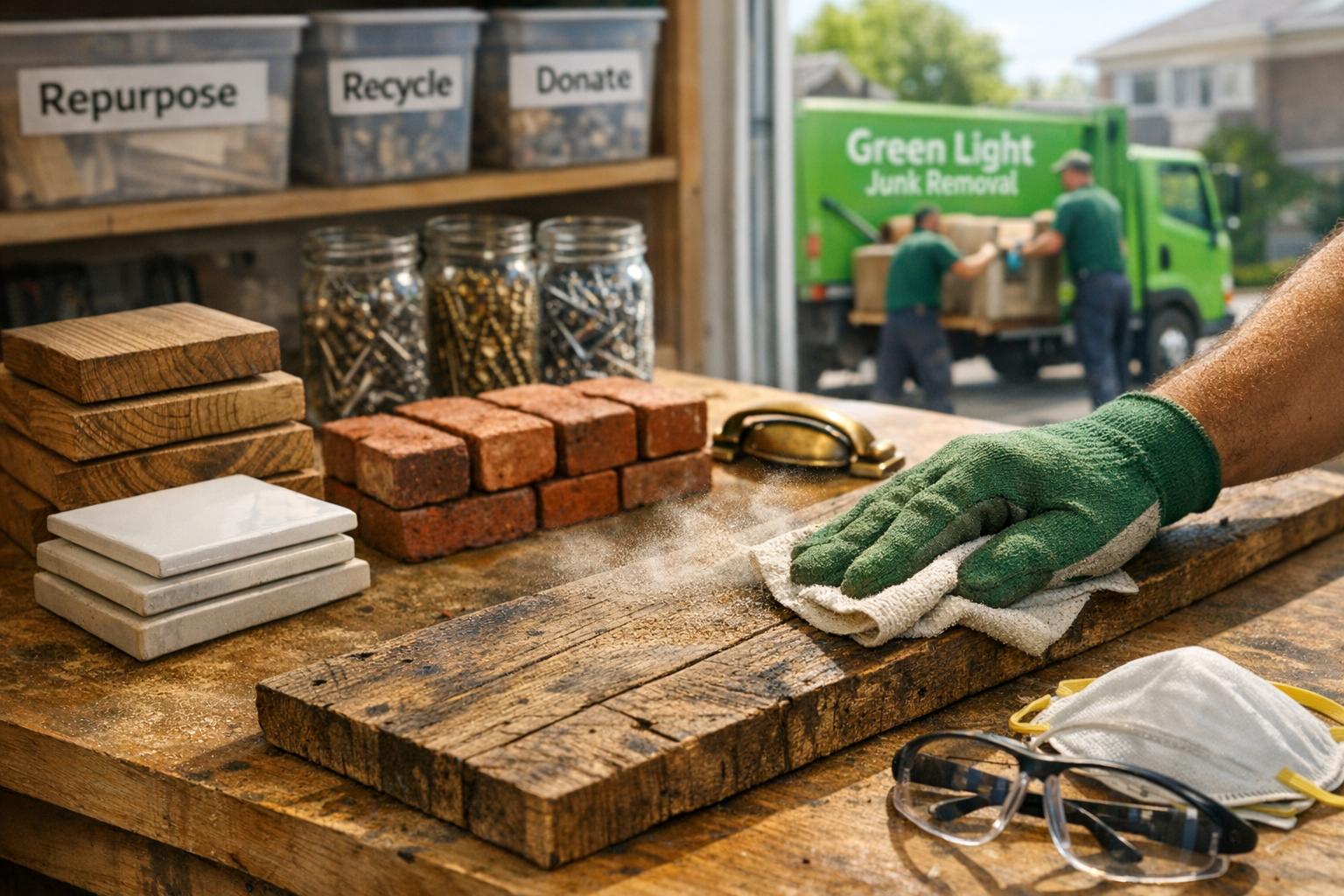
Every construction project generates leftover materials like wood, tiles, or paint. Instead of discarding them, you can reuse these materials to save money and reduce waste. Here’s how:
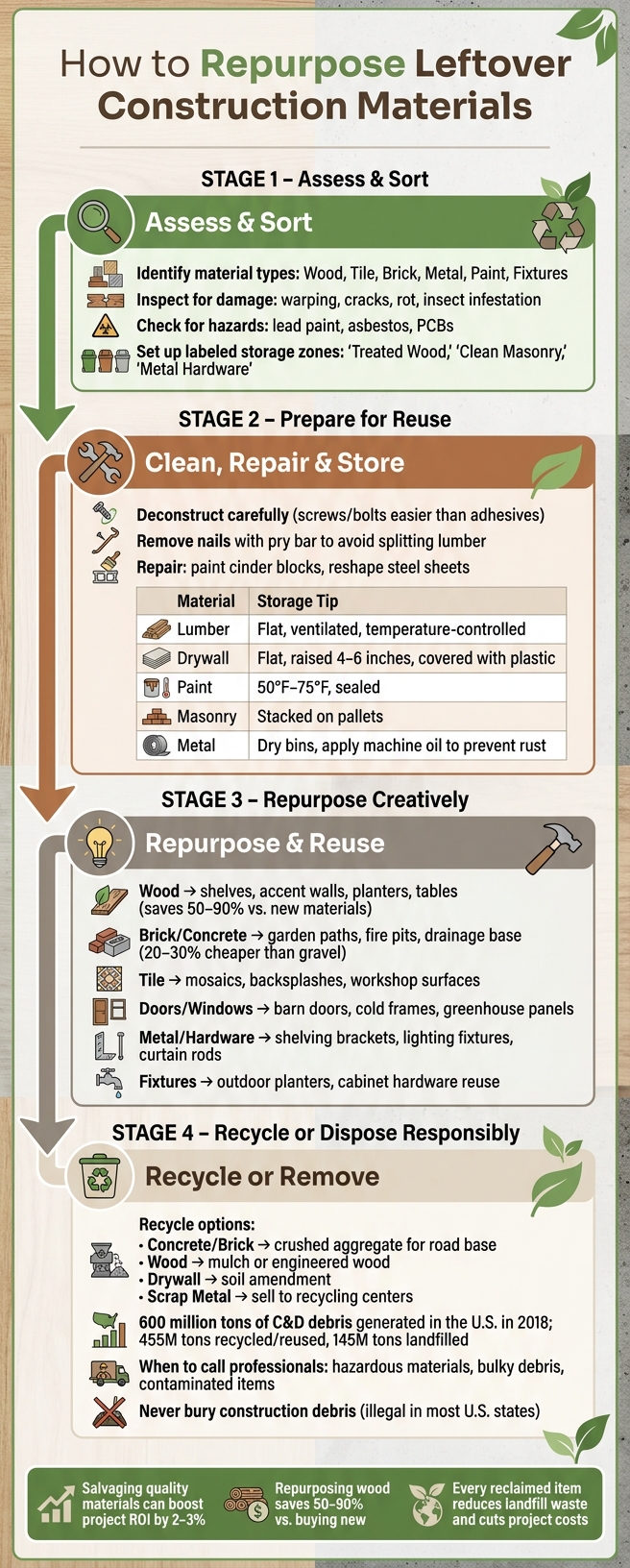
- Sort and Inspect: Separate materials like wood, tile, and masonry. Check for damage or hazards like lead paint or asbestos.
- Prepare for Reuse: Clean, repair, and store materials properly to keep them usable. For example, store lumber flat to prevent warping.
- Repurpose Ideas:
- Wood: Build shelves, planters, or accent walls.
- Brick/Concrete: Create garden paths or fire pits.
- Tile: Use for mosaics or backsplashes.
- Fixtures: Turn old doors into tables or windows into greenhouse panels.
- Recycle or Dispose: If materials are unsafe or unusable, recycle them or use eco-friendly disposal services like Green Light Junk Removal.
How to Repurpose Leftover Construction Materials: A Step-by-Step Guide
Salvaging Building Material | This Old House
sbb-itb-096ce5b
How to Assess and Sort Leftover Construction Materials
Before diving into repurposing, it’s important to carefully evaluate and sort your leftover materials.
Common Types of Leftover Materials
Construction projects often leave behind materials like wood (plywood, framing boards, pallets), tile, brick, metal hardware, and paint. These can all be reused in creative ways, as industry experts highlight [2]. For example, broken tile can be used as a drainage layer in planters, bricks work well for outdoor landscaping or garden paths, and leftover paint is perfect for touch-ups or small decorative projects.
After identifying your materials, it’s essential to check their condition and safety.
Safety and Quality Checks
Take a close look at the materials for signs of damage, such as warping, cracks, or insect infestations. Watch out for hazards like embedded nails or screws [3]. Be cautious with older or chemically treated wood – it might contain toxins like lead or asbestos. If you’re planning to use it indoors, testing for toxins is a must [3]. Keep in mind that reclaimed wood purchased commercially tends to cost between $20 and $40 per square foot [3]. Also, avoid burning treated wood, as this can release harmful chemicals into the air. Only untreated wood is safe for burning.
Once your materials pass inspection, it’s time to organize them efficiently.
How to Set Up a Sorting System
Sorting materials right away helps streamline the repurposing process. Create clearly labeled storage areas for different types of materials, such as "Treated Wood", "Clean Masonry", and "Metal Hardware" [5]. A strong magnet can help you quickly remove metal fasteners from mixed debris. For separating heavier materials like bricks from lighter ones like wood trim, a sloped ramp can be a handy tool. Before storing, make sure to clean materials that have been contaminated to keep them in good shape for future use [4]. A well-thought-out sorting system ensures that only usable materials move forward to the next stages of preparation and reuse.
How to Prepare Materials for Repurposing
Once you’ve sorted and inspected your materials, the next step is to clean, repair, and store them properly. Skipping these steps often leads to project setbacks or failures, so it’s worth taking the time to do it right.
Cleaning and Deconstructing Materials
Before you start cleaning, check for hazardous substances. Materials containing asbestos, lead paint, or polychlorinated biphenyls (PCBs) are regulated by federal law. If you suspect lead paint or asbestos, follow all federal and state regulations before handling the material [6]. This isn’t just a suggestion – it’s a legal requirement for safety.
For non-hazardous items, the method of deconstruction makes a big difference. Materials held together with screws, bolts, or nails are much easier to disassemble than those stuck together with adhesives or sealants [6]. For example, when removing nails from salvaged wood, use a pry bar and work slowly to avoid splitting the lumber. Similarly, bricks bonded with weaker mortar are easier to clean, leaving a smoother surface for reuse [6].
Once materials are deconstructed and cleaned, you can move on to repairing them to ensure they’re structurally sound.
Repairing and Stabilizing Materials
Not all damaged materials are unusable. Plywood, for instance, is a solid option for reuse because its layered construction resists cracking and warping [7]. Even after rough handling, it remains a dependable choice.
For cinder blocks repurposed indoors – like for a bookshelf or seating – painting the surface helps prevent dust and enhances the look. Adding a plywood top creates a smooth, sturdy surface for practical use [7]. Steel sheets are another flexible material. They can be reshaped for various uses, including as alternatives to tile or stone in kitchen projects [7].
How to Store Materials Safely
Once your materials are repaired and ready, storing them properly is essential to prevent damage. Here’s a quick guide to common materials and their ideal storage conditions:
| Material Type | Recommended Storage Method | Primary Risk to Avoid |
|---|---|---|
| Drywall | Flat, raised 4–6 inches, covered with plastic | Sagging, moisture, mold |
| Lumber/Trim | Flat, ventilated, in a temperature-controlled space | Warping, mildew, twisting |
| Paint | Climate-controlled (50°F–75°F), sealed with a plastic layer on the surface | Freezing, separation, skinning |
| Masonry/Brick | Stacked on pallets on level ground | Cracking, moisture absorption |
| Metal/Hardware | Stored in dry, organized bins, away from humidity | Rust, corrosion, misplacement |
To keep everything organized, use a spreadsheet to track your inventory and apply the FIFO (First In, First Out) method. This ensures older materials are used first and reduces the risk of stock going bad [1].
Ways to Repurpose Common Construction Materials
Once your materials are cleaned, repaired, and stored, it’s time to get creative. Below is a practical guide to making the most of common leftover materials.
Wood and Lumber
Leftover wood has endless possibilities. Salvaged floor joists and heavy beams can transform into rustic mantels, sturdy shelving, or even bench tops. Solid wood door slabs – often ignored – make fantastic dining tables or desks with a little work. For outdoor projects, fence boards and scrap lumber are perfect for planters, vertical gardens, or compost bins. Indoors, reclaimed wood can create striking accent walls or floating shelves without breaking the bank.
Repurposing wood can slash project costs by 50% to 90% compared to buying new materials [9]. Even smaller hardwood scraps have value – plane them down for custom woodworking projects like picture frames or decorative bookends.
Next up, let’s look at how masonry materials can bring character to outdoor spaces.
Concrete, Brick, and Masonry
Leftover concrete and brick are fantastic for outdoor projects. Uneven concrete chunks can frame garden borders or serve as stepping stones. Simply embed them slightly below ground and fill the spaces with soil or gravel to keep them stable in high-traffic areas [10]. Salvaged bricks work beautifully for creating fire pits or edging patios.
Crushed concrete, broken into 1- to 3-inch pieces, is a practical and cost-effective drainage base for walkways or garden beds. Spread it 4 to 6 inches deep over geotextile fabric to prevent soil from seeping in [10]. It’s also 20% to 30% cheaper than purchasing fresh gravel [10]. For small DIY concrete projects, clean recycled fragments can replace up to 30% of the aggregate using a 1:2:4 mix (cement, sand, and recycled aggregate), maintaining integrity for non-structural uses [10].
Tile and Flooring
Tile and flooring scraps offer creative opportunities. Leftover tiles can be used for a kitchen backsplash, a mosaic tabletop, or as a protective surface behind a workshop bench. Mixing different sizes and colors of tile works perfectly for mosaic projects, adding charm and character.
Extra hardwood or laminate planks are great for small spaces like closets, laundry rooms, or mudroom entryways. Since these areas require minimal material, they’re ideal for using up remnants and avoiding waste.
Doors, Windows, and Fixtures
Solid-core doors can be repurposed into tables, room dividers, garden gates, or headboards. Pocket doors are easily converted into sliding barn doors with a few adjustments [9]. Old sash windows are perfect for cold frames or small greenhouse panels. Their built-in glass provides excellent light for plants [9].
Repurposing these materials not only saves resources but also supports eco-friendly home improvement.
"Every reclaimed board and repurposed hinge becomes a small act of resistance against a wasteful economy – and a step toward a more durable, honest way of living." – Mark C Ruocco [9]
For fixtures, cast iron tubs and sinks can become durable outdoor planters. Vintage knobs, hinges, and latches can be cleaned and reused for furniture or cabinetry. Even old kitchen cabinets are easy to repurpose for garage or workshop storage – they’re already designed for organization and require little effort to reuse [9].
Metal and Hardware
Salvaged metal has plenty of uses. Steel sheets can be cut into shelving brackets, garden trellises, or even used as kitchen cladding instead of tile or stone. Leftover plumbing pipes are perfect for creating industrial-style lighting fixtures or curtain rods. Small hardware like hinges, drawer pulls, and bolts can be sorted into labeled bins for future projects, reducing the need to buy new.
One key tip for metal: keep it dry. Even brief exposure to humidity can cause rust, limiting its usability. If you’re storing metal longer than a few weeks, apply a light coat of machine oil to bare surfaces to prevent corrosion.
When to Recycle or Remove Materials Instead
Not all leftover materials are suitable for creative reuse. In some cases, recycling or professional removal is the safest and most responsible option.
Signs a Material Cannot Be Reused
Materials that are severely damaged – such as those with rot, decay, or deep cracks – or contaminated with harmful substances like asbestos, lead-based paint, or PCBs should not be reused. These issues compromise both safety and structural integrity. If you suspect chemical contamination or other hazards, professional disposal is often the best course of action.
"A party managing C&D materials with these [asbestos, PCBs, lead], or other federally-regulated constituents, must meet the requirements and standards of all applicable federal regulations." – US EPA [6]
Contaminated materials fail the "next owner test." If you wouldn’t expect a stranger to use the material in its current condition, it’s not suitable for repurposing [13]. Additionally, items made from mixed materials – like plastic-coated metal or composite resins – are challenging to recycle because the components require separate disposal processes [13].
Recycling Options for Construction Materials
In 2018, construction and demolition (C&D) debris in the U.S. reached a staggering 600 million tons – more than double the total municipal solid waste generated [8]. Of this, just over 455 million tons were directed toward reuse or recycling, while nearly 145 million tons ended up in landfills [8].
Fortunately, many construction materials can be recycled. Here are some examples:
- Concrete and brick: Crushed into aggregate for road base.
- Wood: Chipped into mulch or processed into engineered wood products.
- De-papered drywall: Used as a soil amendment.
- Scrap metal: Ferrous and non-ferrous metals can often be sold to recycling centers [12].
To locate a recycling facility near you, the EPA’s Disaster Debris Recovery Tool is a helpful resource [8]. State-run waste exchanges also serve as informal marketplaces for buying and selling recyclable materials [6]. When choosing a recycler, always ask for proof of licensing or third-party certification to ensure compliance with state and local regulations [8].
One important rule: never bury construction debris on your property. This practice is illegal in most parts of the U.S., can contaminate groundwater, and creates unstable soil conditions [12].
By recycling construction materials responsibly, you can reduce environmental harm and support sustainable building practices. For materials that can’t be recycled, professional disposal is often the next best option.
Eco-Friendly Disposal Services
When recycling isn’t an option, proper removal becomes essential. If the debris is too heavy, hazardous, or voluminous for DIY handling, professional removal services can step in. This is especially important for items like concrete slabs, large metal fixtures, or old insulation that require specialized equipment and expertise [12].
Green Light Junk Removal specializes in post-construction cleanup and debris removal, including demolition waste and full property cleanouts. They emphasize eco-conscious disposal by working with local charities and recycling facilities, ensuring hazardous materials are handled according to environmental regulations [15]. Booking is simple through their online platform, with transparent pricing to avoid surprises.
To streamline the process, pre-sort your materials into categories like metal, wood, and masonry before the removal service arrives. This not only speeds up loading but can also lower your costs [12]. Additionally, ask your service provider for the names of their donation partners (e.g., Habitat for Humanity ReStore) and recycling facilities to verify their eco-friendly practices [14].
Conclusion
Making the most of leftover construction materials can be broken down into three simple steps: assess, prepare, and act. Start by conducting a pre-demo audit. This means taking inventory, sorting materials into categories (like resale-ready, upcyclable, or destined for recycling/landfill), and then cleaning, repairing, and storing the items. This organized approach transforms what might feel like chaos into something far more manageable – and even profitable.
Salvaging high-quality items such as hardwood flooring, cabinets, or vintage fixtures can boost your project’s total ROI by 2–3% [11]. Even smaller recoveries can lead to noticeable savings over the course of a full renovation. While reusing materials is a smart way to increase value, there are times when professional help is the better option.
For hazardous, severely damaged, or bulky materials, professional removal services can step in. Companies like Green Light Junk Removal specialize in handling post-construction debris, including demolition waste and full property cleanouts. They also focus on eco-friendly disposal, working with local charities and recycling facilities to ensure responsible waste management [15].
The goal here isn’t perfection – it’s progress. Diverting even a portion of leftover materials from the landfill makes a real impact. Every reclaimed item not only cuts costs but also helps reduce your environmental footprint.
FAQs
How can I tell if leftover materials are safe to reuse indoors?
When reusing leftover building materials indoors, safety should be your top priority. Some materials can contain harmful substances like lead paint, asbestos, or other chemicals. This is especially common in homes built before 1978, which may need lead testing or the help of certified contractors to ensure safety.
If a material is found to pose a hazard, it’s best to avoid reuse unless it has been professionally treated or remediated. On the other hand, non-hazardous items such as clean wood, bricks, or tiles are generally safe to reuse, as long as they are undamaged, free of mold, and uncontaminated.
If you’re ever uncertain about the safety of a material, it’s a good idea to consult with local authorities or professionals who can provide guidance.
What’s the easiest way to store leftover lumber, paint, and tile so they don’t go bad?
To ensure leftover lumber, paint, and tile remain in good condition, proper storage is key. Paint should be kept in a climate-controlled area, ideally between 50–75°F. Make sure the lid is tightly sealed and store it away from moisture. Lumber and tile should also be stored indoors in a well-ventilated space. Support them properly to prevent warping or cracking, and wrap delicate pieces to protect their edges. Avoid stacking heavy items on top to prevent damage. This way, your materials will stay ready for future projects.
When should I call Green Light Junk Removal instead of trying to recycle or reuse debris?
If you’re dealing with large, heavy, or hard-to-manage debris, or simply want professional assistance for disposing of items responsibly, Green Light Junk Removal is a great option. They take care of all the heavy lifting, provide clear upfront pricing, and prioritize environmentally conscious practices like recycling and donating items that can still be used. Whether it’s construction debris or other unwanted materials, their service makes removal easy and stress-free.