Stop Decluttering Room by Room: Why Category-Based Decluttering Works Better
If you’ve ever spent hours "organizing" one room only to feel like your home still looks the same, the problem may not be motivation or discipline. It may be the method.
A lot of people are taught to declutter space by space: tackle the kitchen, then the bedroom, then the garage. On paper, that sounds sensible. In practice, it often creates bigger messes, half-finished projects, and the discouraging sense that all your effort isn’t paying off.
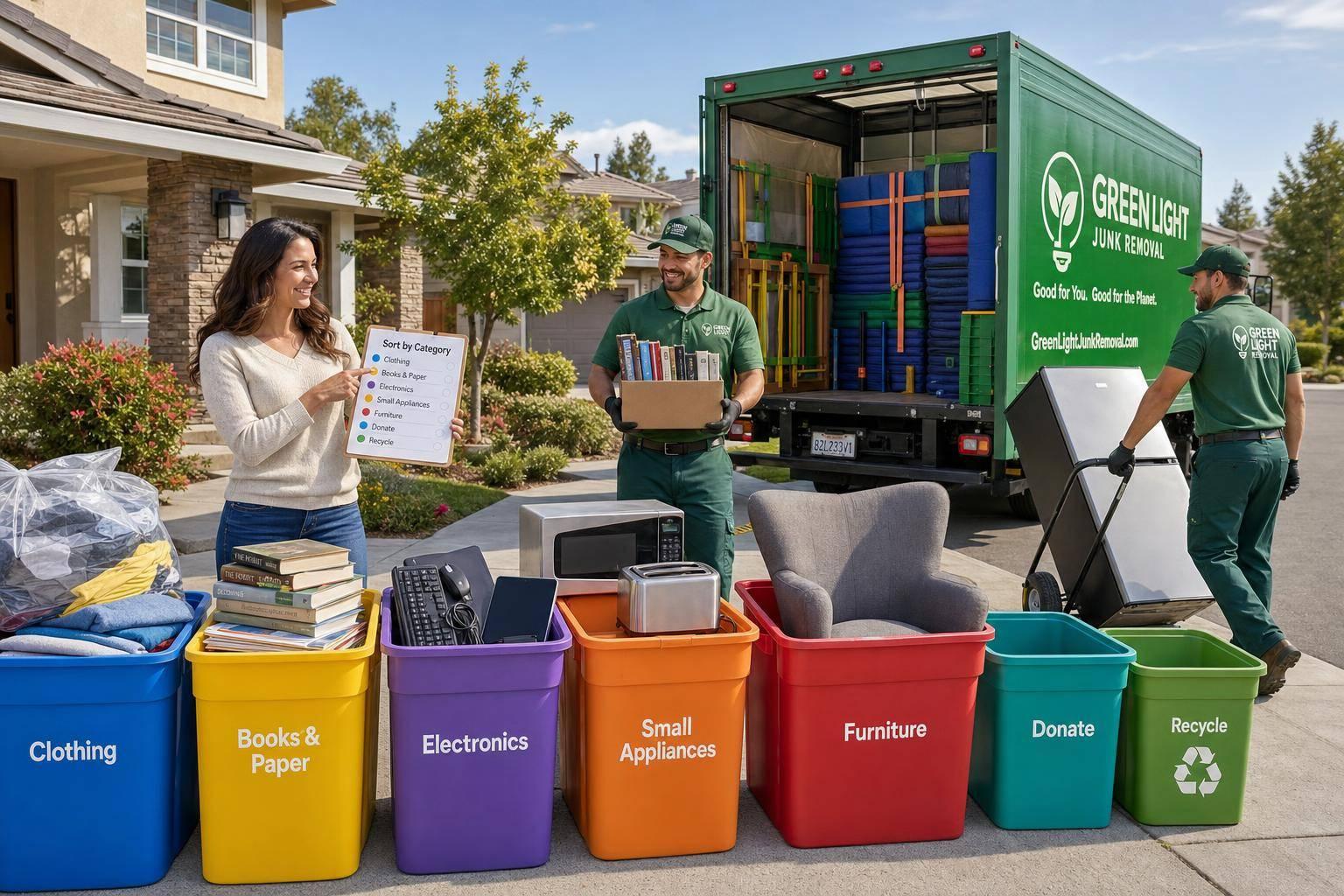
A more effective approach is to declutter by category, not by room. Instead of working on one location at a time, you work on one type of item at a time – mugs, towels, shoes, food containers, cleaning supplies, or paperwork – wherever those items live in the home.
That shift matters because clutter usually doesn’t stay neatly contained in a single room. It spreads. And until you see the full volume of what you own, it’s hard to make smart decisions about what should stay.
sbb-itb-096ce5b
Key Takeaways
- Room-by-room decluttering often hides the true amount of stuff you own, which makes progress feel smaller than it is.
- Category-based decluttering reveals duplicates, backups, and forgotten items across the whole home.
- Seeing everything together makes decisions easier because you’re choosing from reality, not memory.
- A better question is not "What can I get rid of?" but "What deserves space in my home now?"
- Start with easy, low-emotion categories like socks, spices, hand towels, or storage containers.
- Small wins build momentum, reduce decision fatigue, and make future decluttering less overwhelming.
- You do not need to empty an entire room to make meaningful progress.
- The goal is less friction in daily life, not picture-perfect minimalism.
Why Room-by-Room Decluttering Often Backfires
The room-by-room method fails for many people for one simple reason: it asks you to solve too many problems at once.
When you declutter a room, you aren’t just deciding what to keep. You’re also:
- managing visual chaos,
- handling emotional decisions,
- figuring out where items belong,
- cleaning the space,
- and often trying to reorganize storage at the same time.
That’s a lot of mental load for one session.
It also creates a familiar pattern: you pull everything out, make piles, get interrupted, run out of time, and now the room is less usable than when you began. The result isn’t just clutter – it’s frustration.
This matters for busy households in particular. Whether you’re a homeowner preparing for a remodel, a renter getting ready to move, or a landlord turning over a property, unfinished decluttering projects can quickly interfere with everyday life. Kitchens still need to function. Bedrooms still need to be slept in. Garages still need to open.
In other words, a method that creates temporary disorder isn’t always practical.
The Hidden Problem: Your Clutter Is Scattered
One of the strongest ideas in the video is that clutter is rarely confined to one place.
Think about common household categories:
- Towels may be split between bathrooms, linen closets, laundry rooms, and storage bins.
- Mugs can end up in kitchen cabinets, office desks, garages, and break areas.
- Paperwork often lives in drawers, backpacks, purses, baskets, and countertop stacks.
- Batteries, candles, tools, and cleaning products tend to migrate to multiple zones.
If you only declutter one room, you see just part of the inventory. That partial view can be misleading.
You might believe you own six coffee mugs because that’s what you see in one cabinet. Once you gather them from the whole house, you may find twenty. The same thing happens with towels, food containers, duplicate cleaning products, and backup supplies.
This is where category-based decluttering becomes powerful: it exposes hidden volume.
And hidden volume is often the real reason a home feels crowded.
Why Decluttering by Category Works
Category-based decluttering is effective because it gives you a complete picture.
When you collect all similar items in one place, several things happen:
1. You see the true quantity
It becomes obvious how much you own, including duplicates and "just in case" extras.
2. You notice quality differences
Favorites stand out. So do damaged, outdated, or low-value items.
3. You make better decisions
Instead of asking what to toss at random, you compare like with like. That makes judgment easier.
4. You set realistic limits
You can decide how many items actually fit your space, household size, and current lifestyle.
5. You reduce repeat clutter
Once a category is fully assessed, it’s easier to maintain because you know what belongs and how much is enough.
This is more than organizing. It’s editing your home with intention.
A Better Decluttering Question
The video makes an important mental shift: don’t begin with, "What should I get rid of?"
Start with: What deserves a place in my home today?
That is a more grounded and less punishing question.
It changes decluttering from a loss-focused task into a values-based decision. You aren’t forcing yourself to part with random things. You’re identifying what you actually use, enjoy, and need in this phase of life.
That distinction is especially useful for people in transition – downsizing, moving, renovating, managing an estate, or preparing a home for sale. Those situations already come with enough stress. A method centered on clarity and usefulness tends to be easier to sustain.
How to Declutter by Category: A Practical Process
1. Choose one category only
Pick a single type of item, not an entire room.
Good beginner categories include:
- coffee mugs
- food storage containers
- socks
- hand towels
- pot holders
- spices
- cleaning supplies
- pet toys
- water bottles
Avoid starting with sentimental items, attic storage, or a packed garage if you’re already tired or short on time. Those are high-effort, high-emotion categories and can stall momentum early.
2. Gather every item in that category
Bring together all items from every room, closet, drawer, shelf, car, or storage area.
This step is essential. If you skip it, you’ll still be deciding from an incomplete picture.
A full gather lets you compare:
- what gets used,
- what’s duplicated,
- what’s broken,
- and what no longer fits your routines.
3. Identify your favorites first
Before you think about discarding anything, choose the items you genuinely prefer.
Look for what:
- works best,
- feels easiest to use,
- fits your habits,
- and earns its place through regular use.
This creates a positive filter. Instead of focusing on guilt or waste, you focus on usefulness.
4. Remove obvious excess
After your favorites are set aside, the extra items are easier to identify.
That may include:
- broken or chipped pieces,
- incomplete sets,
- worn-out items,
- expired products,
- duplicates you don’t need,
- and "backup" quantities that exceed realistic use.
The point is not to own as little as possible. The point is to own the right amount.
5. Test the amount against your space and lifestyle
Once you’ve selected what stays, put the category back where it belongs and evaluate it.
Ask:
- Does this fit comfortably?
- Is it easy to access?
- Does this amount match the number of people using it?
- Can I put it away without overstuffing shelves or drawers?
If the answer is no, the category probably still needs editing.
This is one of the strongest practical insights from the video: decluttering isn’t done when you’ve made decisions. It’s done when what remains actually functions well in your home.
Example: Decluttering Coffee Mugs
Mugs are a simple but revealing category.
When gathered together, they tend to show a pattern many households recognize:
- a few favorites used all the time,
- several novelty mugs no one reaches for,
- travel mugs missing lids,
- chipped or stained mugs,
- and extras saved out of habit rather than need.
By seeing all of them at once, you can separate sentimental or occasional-use pieces from the mugs that truly support daily life.
A practical standard is to keep:
- the mugs you enjoy using,
- enough for the people in your household,
- and a small buffer if that fits your routine.
What counts as "enough" is not specified in a universal way in the video, because households vary. The broader principle is to keep an amount that makes your cabinets functional rather than cramped.
Example: Decluttering Towels
Towels are another category that often expands unnoticed.
Because they’re stored in multiple places, most people underestimate how many they own. Once gathered, the differences become obvious:
- soft, absorbent towels used regularly,
- older towels kept as backups,
- stained or rough ones no one likes,
- and stacks that remain untouched for months or years.
This category highlights a common decluttering truth: extra inventory creates extra laundry, extra storage pressure, and extra visual bulk.
Reducing towel quantity doesn’t just clear shelves. It can simplify household maintenance.
Why Small Categories Create Big Momentum
One of the most valuable lessons in the video is psychological, not just practical: small wins matter.
When people start with a massive project – an entire garage, a chaotic storage room, an attic full of memories – they often hit resistance fast. The task feels heavy, and the risk of quitting rises.
Starting small changes that.
When you successfully edit one category in 10 to 20 minutes, you gain:
- visible progress,
- quicker decision confidence,
- a sense of control,
- and less dread about the next session.
This is especially helpful for people who have tried to declutter before and ended up with unfinished piles. Small wins rebuild trust in the process.
They also make decluttering easier to fit into real life. You may not have an open weekend, but many people can find time for one category before dinner, between errands, or during a maintenance reset before guests arrive.
Common Mistakes to Avoid
Starting with emotional categories
Sentimental belongings require more energy and reflection. Beginning there can make the whole process feel draining.
Choosing categories that are too broad
"Clothes" may still be too large. "Black pants" or "socks" is more manageable.
Focusing only on what to discard
That mindset can trigger indecision. Start by identifying what you want to keep.
Ignoring storage reality
If your chosen items don’t fit your available space without being crammed, you likely still have too much.
Creating unnecessary chaos
You do not have to empty an entire room or buy a system of bins and labels before making progress. The video argues for a more restrained, practical approach: less setup, more deciding.
How This Method Helps During Moves, Remodels, and Property Cleanouts
Although the video is aimed at everyday home decluttering, the category approach also works well during major transitions.
For example:
- Moving: Decluttering by category reduces what you pack, move, and unpack.
- Downsizing: It helps you make realistic decisions based on new space limitations.
- Rental turnovers: Property managers and landlords can assess left-behind items more efficiently when grouped by type.
- Pre-sale prep: Real estate agents and sellers benefit from reducing visible excess that makes rooms feel smaller.
- Estate cleanouts: Categories can provide structure during an emotional, logistically complex process.
- Renovations: Clearing by category prevents scattered duplicate purchases and simplifies temporary storage.
The method is flexible because it mirrors how households actually accumulate things: in layers, across spaces, over time.
The Real Goal: A Home With Less Friction
One of the best insights in the video is that decluttering is not mainly about having less for its own sake. It’s about making daily life easier.
That can mean:
- opening a cabinet without items falling out,
- finding what you need quickly,
- doing less laundry,
- keeping surfaces clearer,
- and reducing the stress of visual overload.
This is a useful way to define success. A decluttered home doesn’t need to look perfect. It needs to function better.
For many people, that’s a more motivating standard than minimalism.
Final Thoughts
If room-by-room decluttering has left you exhausted, surrounded by piles, or stuck in a cycle of restarting, that doesn’t mean you’re bad at decluttering. It likely means the method is working against the way clutter actually exists in your home.
Decluttering by category offers a smarter alternative. It helps you see the full picture, identify what truly serves your life now, and make decisions with more clarity and less overwhelm.
Start small. Pick one category. Gather it all. Choose your favorites first. Then test what remains against your real space and routines.
That approach is often simpler, gentler, and far more effective than trying to "finish a room." For many households, it’s the difference between temporary effort and lasting progress.
Source: "Decluttering Room by Room Is Backwards. Try This Instead" – Tracy Lynn – Declutter in Minutes, YouTube, Jan 1, 1970 – https://www.youtube.com/watch?v=jezQ3nGAjwE