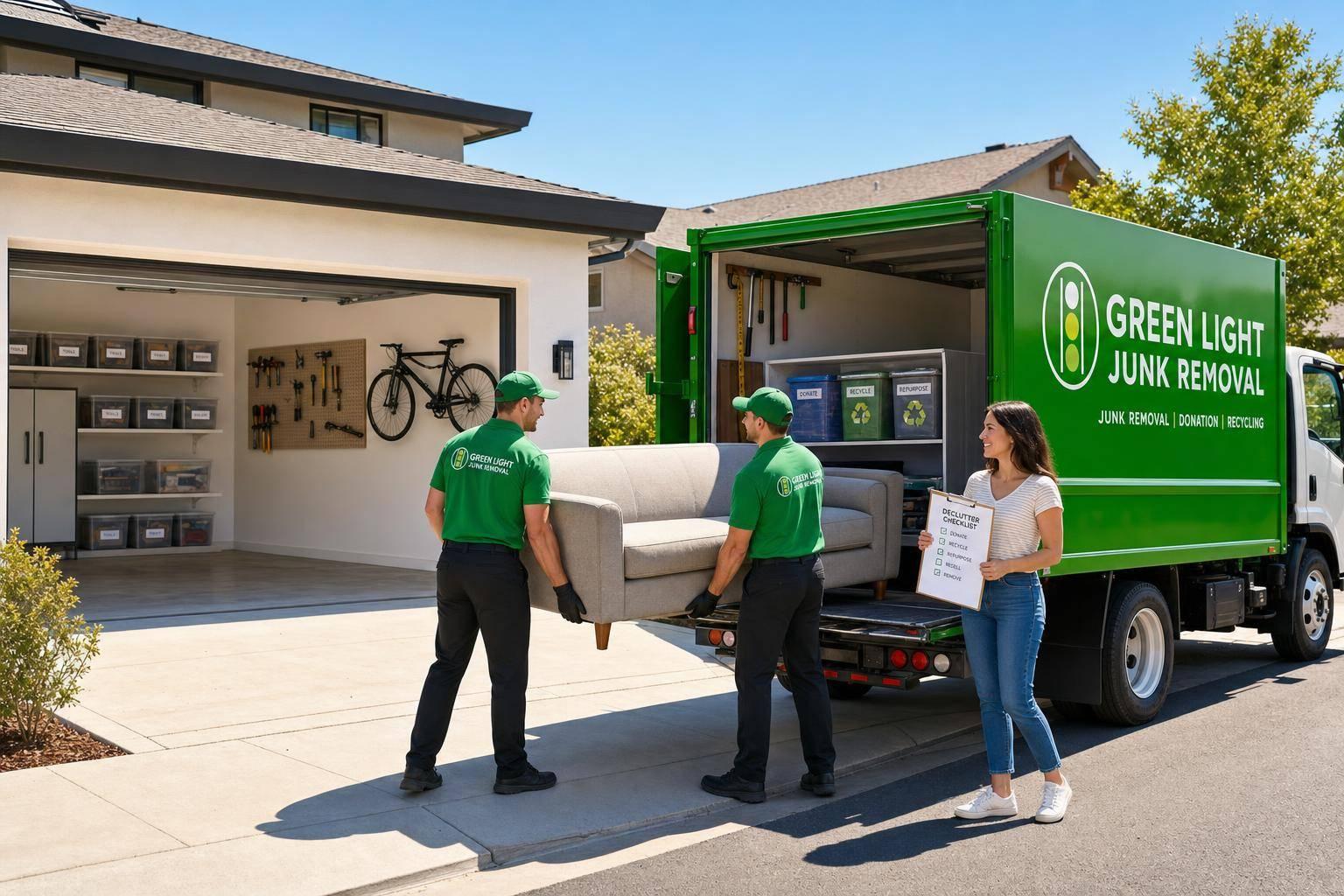
An organized home rarely happens because someone buys the right basket set or spends one hyper-productive Saturday cleaning. More often, it comes from a repeatable system: reduce what you own, decide where things belong, and build small habits that keep clutter from creeping back.
That’s the core message behind this home organization approach. Rather than chasing a picture-perfect house, the goal is to create a space that feels calmer, easier to maintain, and less mentally draining.
For homeowners, renters, landlords, and busy families in the Sacramento region, that idea matters. Whether you’re preparing for a move, resetting after a renovation, clearing out a rental, or simply trying to reclaim a garage or spare room, the same principle applies: organization works best when it matches real life.
This guide breaks down the video’s 10-step framework into a practical, readable plan – plus added context on why these steps work and how to use them in everyday homes.
Why Decluttering Feels So Overwhelming
Before getting into the steps, it helps to name the real challenge. Most people don’t struggle because they don’t know how to tidy. They struggle because clutter creates too many decisions at once.
A disorganized room often contains several problems layered together:
- Too many items in one space
- No clear "home" for everyday objects
- Storage that doesn’t match how the room is used
- Delayed decisions about what to keep
- Daily habits that allow surfaces to refill
That’s why the advice in the video starts with visible clutter first. When the room already feels chaotic, pulling everything out of drawers and closets can make it worse before it gets better. A small visual reset lowers stress and makes the bigger work feel possible.
sbb-itb-096ce5b
Key Takeaways
- Start with what you can see first so the space feels manageable before deeper organizing begins.
- Use a realistic checklist, not an idealized one, to match your actual schedule and energy.
- Work one room or zone at a time to create momentum and avoid burnout.
- Sort items into four categories: keep, donate, trash, and sell.
- Wait to buy storage products until after you declutter, so you only purchase what you truly need.
- Give every item a designated home to prevent counters, tables, and entryways from becoming clutter magnets.
- Organize around daily habits, not social media aesthetics.
- Keep containers only partly full so they control clutter instead of hiding it.
- Build a short daily reset routine to maintain the system.
- Revisit organized spaces regularly and use a one-in, one-out rule to prevent backsliding.
Step 1: Clear the Visible Clutter First
The first recommendation is simple but powerful: start with surfaces.
That means:
- Kitchen counters
- Dining tables
- Coffee tables
- Bathroom counters
- Entryway consoles
- Desk tops
This isn’t the full decluttering process yet. It’s more like preparing the space for real work. Clearing obvious visual mess gives you an immediate sense of progress and reduces the feeling that the whole house is out of control.
Why this works
Visible clutter has an outsized effect on stress. Even when closets are stuffed, it’s usually the pile on the counter or the overloaded table that makes a room feel unmanageable. Starting there creates quick relief.
Practical example
If you’re tackling a home office, don’t begin by emptying every drawer. First remove cups, loose papers, packaging, random cords, and anything that doesn’t belong on the main surface. Then move into cabinets, shelves, and filing areas.
Step 2: Make a Checklist You Can Actually Finish
One of the strongest points in the video is the emphasis on a realistic checklist.
A plan only works if it fits your life. If you create a giant weekend agenda that would realistically take three weeks, you’re setting yourself up to quit halfway through.
A better approach
Walk through your home and make a room-by-room list. Under each room, add mini-zones.
For example:
Kitchen
- Countertops
- Junk drawer
- Pantry
- Under sink
- Refrigerator side shelves
- Food storage containers
Primary bedroom
- Nightstands
- Dresser top
- Closet floor
- Hanging clothes
- Shoes
- Under-bed storage
This method turns "organize the house" into a set of specific tasks you can complete one by one.
Why this matters for busy households
If you’re balancing work, kids, rental property turnover, or move-out prep, vague goals don’t help. A checklist creates a path forward when time is limited.
Step 3: Focus on One Space at a Time
Trying to declutter the entire house at once is one of the fastest ways to lose momentum. The video recommends working room by room – or even shelf by shelf.
That advice is more strategic than it sounds.
The hidden benefit: visible wins
When you complete one closet, one bathroom vanity, or one pantry shelf, you get a finished result. That matters psychologically. Progress fuels motivation.
By contrast, if you partially tear apart six rooms, your home can feel worse than when you started.
Best ways to divide the work
You can organize by:
- Room: kitchen first, then hall closet, then bathroom
- Function: all paperwork, then all kids’ toys, then all linens
- Time block: one 30-minute task per day
- Urgency: spaces that affect daily life most, like the kitchen or entryway
The video leans toward finishing one room before moving on, and for many people that’s the easiest way to avoid unfinished projects.
Step 4: Use Four Sorting Categories
A practical decluttering session needs decision buckets. The video suggests four:
- Keep
- Donate
- Trash
- Sell
This is a classic system because it forces decisions instead of creating a vague "deal with later" pile.
How to make faster decisions
The creator encourages people to be decisive and ask questions like:
- Do I use this?
- Do I wear this?
- Does this add value to my daily life?
- When was the last time anyone needed this?
That approach matters because overthinking is one of clutter’s biggest allies.
A useful reality check
If you’re saving large numbers of low-value items to sell someday, ask whether that plan is realistic. The video includes "sell" as a category, but not everything worth a few dollars deserves weeks of storage and mental clutter. In many homes, donating more and selling less speeds up the process.
Step 5: Organize Only After You Declutter
This is one of the most important distinctions in the entire video: decluttering and organizing are not the same thing.
Decluttering is removing what you don’t need.
Organizing is deciding how to store what remains.
People often reverse these steps. They buy bins first, then try to fit too much stuff into them. The result looks cleaner for a while, but the volume problem never gets solved.
Why storage products should come later
The video wisely advises waiting to buy baskets, bins, hangers, or drawer organizers until after you know what you’re keeping.
That prevents three common mistakes:
- Buying containers that are the wrong size
- Over-purchasing storage you never use
- Using products to justify keeping excess items
A smarter sequence
- Empty or reduce the space
- Decide what stays
- Group similar items together
- Test rough placement
- Identify what storage tools would actually help
This order saves money and creates a system that fits the space.
Step 6: Give Every Item a Home
A major maintenance principle in the video is that every item needs a designated place.
That sounds basic, but it’s the backbone of a functional home. If an object doesn’t have a clear destination, it will usually land on the nearest flat surface.
High-impact places to assign homes
Some areas matter more than others:
- Entryway: keys, wallets, bags, shoes, mail
- Kitchen: lunch containers, everyday dishes, reusable bags
- Bathroom: daily grooming items, backup products, cleaning supplies
- Kids’ areas: toys, school items, stuffed animals, art supplies
The video specifically highlights "drop zones", especially near the entry. That’s smart because transition points – where people come in, set things down, and move on – tend to collect clutter fastest.
Labels can help
Labels aren’t mandatory, but they’re useful in shared homes, especially with children. A label removes ambiguity. Instead of asking where something goes, the system answers the question.
Step 7: Organize for the Way You Actually Live
This may be the most important idea in the whole framework: your house does not need to look perfect to be organized.
The video makes the case that systems should reflect real routines, not a Pinterest image. That distinction is crucial.
What functional organization looks like
- Kids’ items stored low enough for them to use
- Daily-use dishes in the easiest-to-reach cabinet
- Bathroom cleaning supplies kept where the bathroom is cleaned
- Lunch prep tools stored near the fridge
- Coats and shoes near the door they actually use
This is where many organizing systems fail. They look attractive but ignore behavior. When storage fights your habits, clutter wins.
A helpful rule
The easier it is to put away, the more likely it stays organized.
That single insight can improve almost any room.
Step 8: Use Containers Wisely, Not Excessively
Storage containers can be helpful, but the video offers an important caution: don’t stuff them full.
The recommendation is to keep bins and baskets at roughly 75% to 80% capacity. That built-in breathing room matters more than most people realize.
Why partially full storage works better
A little extra space allows for:
- Easier retrieval
- Faster cleanup
- Less visual chaos
- Room for normal life fluctuations
Overfilled storage is a sign that the system is already failing. When containers become cramped, people stop putting things away properly.
A subtle but important mindset shift
Containers are not meant to help you keep unlimited amounts of stuff. Their real job is to define limits.
That is one of the strongest organizing principles in the video, and it’s worth repeating: storage should control quantity, not disguise excess.
Step 9: Build a Simple Daily Reset Routine
Once a space is decluttered and organized, the next challenge is maintenance. The video recommends a basic daily tidying routine.
This doesn’t have to be elaborate. In fact, shorter is better if you want it to last.
What a daily reset might include
- Return items to their assigned places
- Clear counters
- Sort mail
- Put away shoes, bags, and jackets
- Reset the kitchen after dinner
- Put folded laundry where it belongs
The video also mentions the "one-touch" idea: if you pick something up, take the extra minute to put it all the way away instead of moving it halfway.
That habit can dramatically reduce clutter buildup because it breaks the cycle of temporary piles.
Why daily resets matter
Without maintenance, even a beautifully organized room begins to drift. Daily resetting turns organization from a one-time event into a livable routine.
Step 10: Plan for Ongoing Maintenance
Even the best systems need periodic review. The video recommends revisiting organized spaces at least once a year for a quick reset.
That’s realistic. Homes change. Needs change. Kids outgrow things. Work habits shift. Seasonal items rotate in and out.
Two maintenance rules worth keeping
1. One in, one out
If a new item enters the home, another item in that category should leave.
Examples:
- New shirt in, old shirt out
- New mug in, one donated
- New toy in, one passed along
2. Pause before buying
The video points out that clutter doesn’t appear by magic – we bring it in. That’s a valuable reminder.
A short delay before purchasing can prevent impulse accumulation. Even a simple overnight pause can reveal whether something is needed or just temporarily appealing.
What This Approach Gets Right
The strength of this 10-step method is that it focuses on behavior, not just appearance.
It recognizes that:
- overwhelm blocks action,
- organization must be realistic,
- storage is not the same as decluttering,
- and maintenance depends on daily habits.
That makes the advice useful for ordinary households, not just curated spaces online.
It also avoids one common organizing trap: treating perfection as the goal. The video’s message is more practical than that. A successful home system is one that reduces stress, helps people find what they need, and makes cleanup easier.
Where People Still Get Stuck
Even with a strong plan, some spaces are harder than others.
The video doesn’t go deeply into specialty problem areas, but in practice people often struggle most with:
- Garages
- Sheds
- Storage units
- Estate cleanouts
- Post-move leftover piles
- Rental turnover debris
- Renovation waste
Those spaces are difficult because they combine clutter with bulk, weight, or disposal challenges. The organizing principles still apply, but the execution may take more time, more help, or larger-scale removal solutions. That limitation isn’t a flaw in the advice – it simply reflects that some projects go beyond basic home tidying.
A Simple Order to Follow If You’re Starting This Week
If you want to turn these ideas into action, this sequence makes the process easier:
- Pick one room
- Clear visible surfaces
- Make a mini checklist for that room
- Sort items into keep, donate, trash, and sell
- Put back only what belongs there
- Assign every category a home
- Add storage only if needed
- Leave space in containers
- Do a short reset each day
- Revisit the room in a few months or at least yearly
That order reflects the logic of the video while making it easier to apply in a real household.
Final Thoughts
A well-organized home isn’t about perfection, matching containers, or making every shelf look styled. It’s about reducing friction in everyday life.
When clutter is under control, rooms are easier to clean, belongings are easier to find, and the home often feels noticeably calmer. As the video suggests, the goal is a space that supports your life rather than adding to your stress.
If there’s one takeaway that rises above the rest, it’s this: start small, finish what you start, and build systems around real habits. That combination is what turns decluttering from a one-time project into lasting order.
Source: "10 TIPS FOR AN ORGANIZED HOME!🏠 HOME ORGANIZATION IDEAS 2026 | DECLUTTERING & ORGANIZING MOTIVATION" – Hannah’s Happy Home, YouTube, Apr 14, 2026 – https://www.youtube.com/watch?v=d4QqhG2C8YM