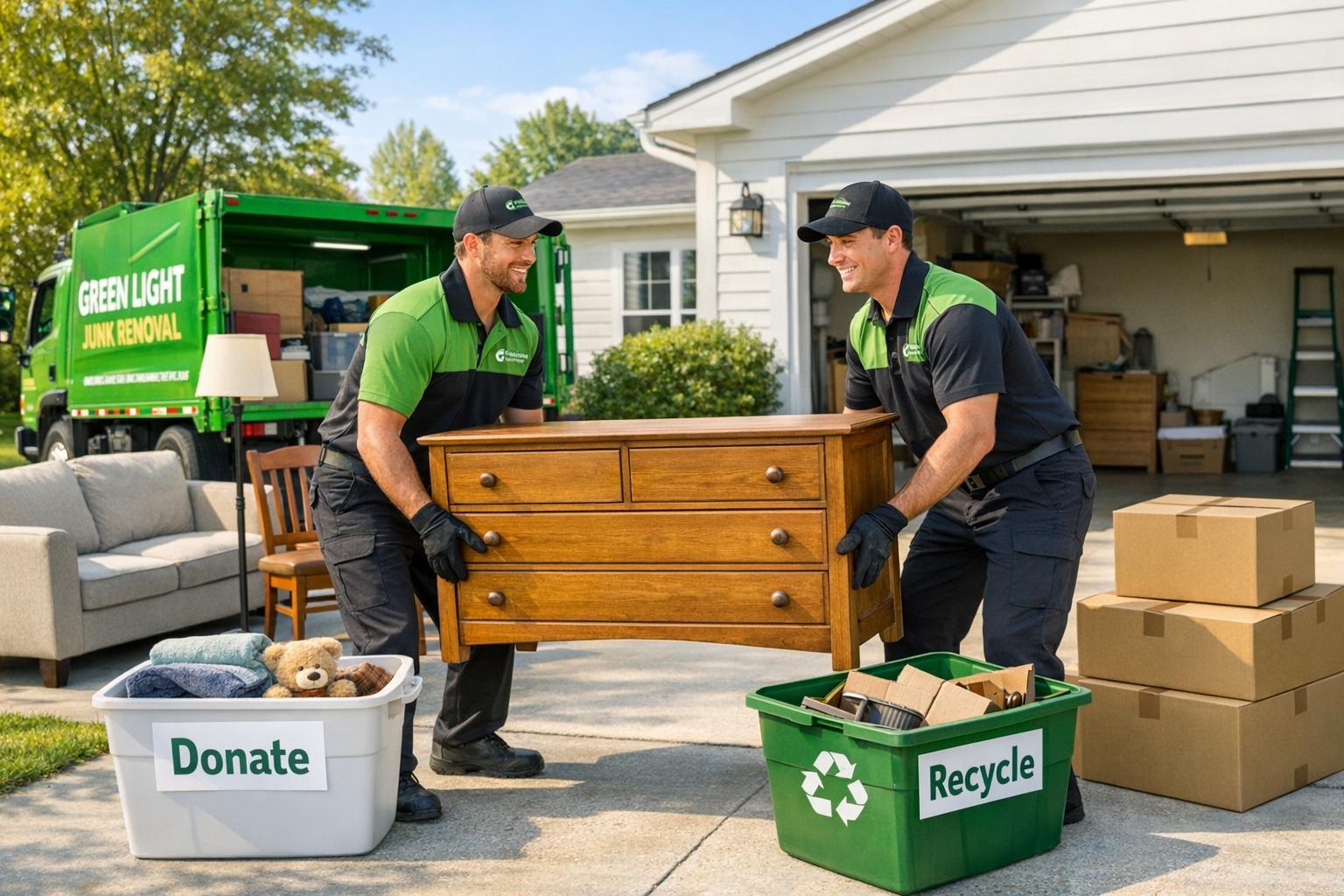
Every year, millions of tons of furniture end up in landfills, contributing to waste and environmental harm. But getting rid of old furniture doesn’t have to mean throwing it away. Here’s how you can handle it responsibly:
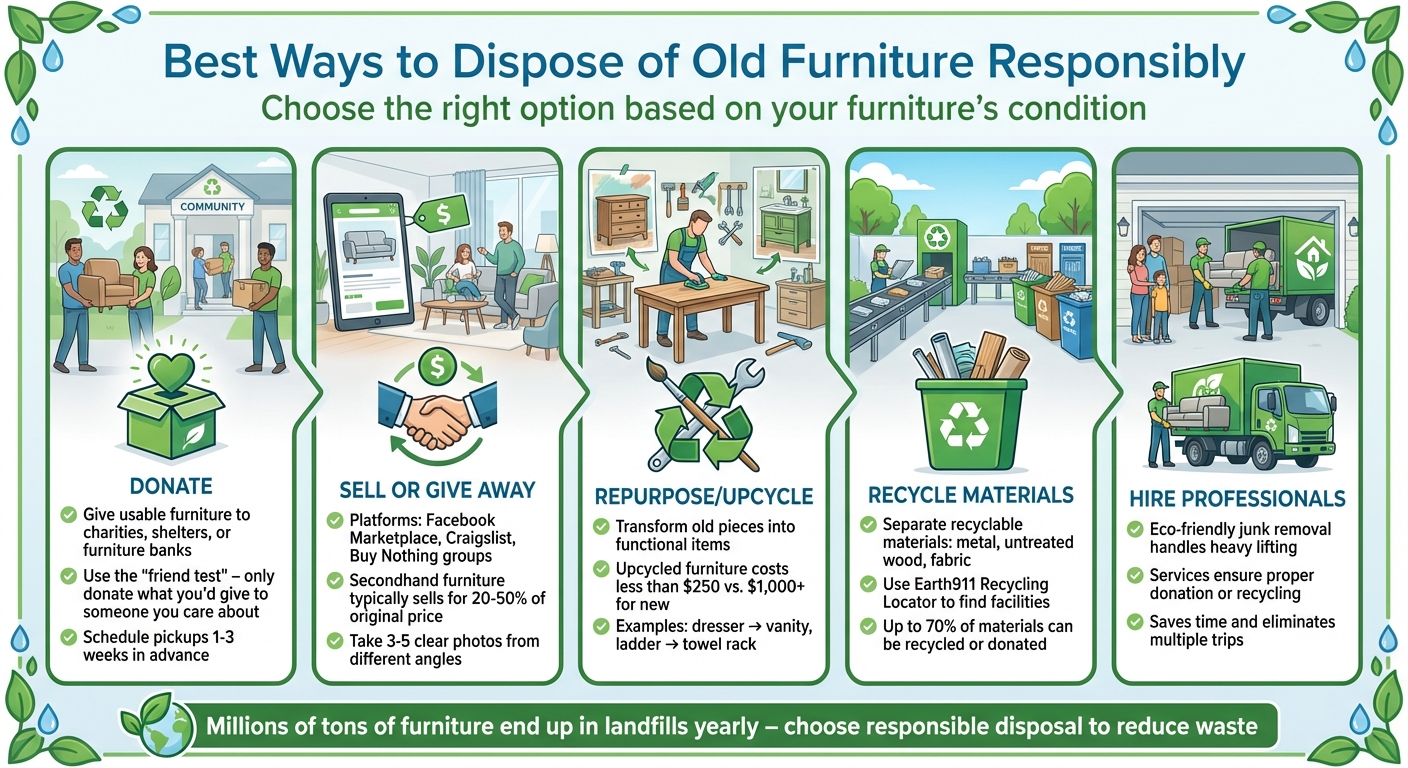
- Donate: Give usable furniture to local charities, shelters, or furniture banks. Clean and prepare items to increase acceptance.
- Sell or Give Away: Use platforms like Facebook Marketplace, Craigslist, or Buy Nothing groups to find new homes for your furniture.
- Repurpose: Upcycle old pieces into something functional, like turning a dresser into a vanity or a ladder into a towel rack.
- Recycle: Break down furniture to separate recyclable materials like metal and untreated wood. Use local recycling facilities or bulk pickup services.
- Hire Professionals: Eco-friendly junk removal services can handle heavy lifting and ensure proper disposal or donation.
Start by evaluating your furniture’s condition to choose the best option. Whether donating, selling, or recycling, these methods help reduce landfill waste and give your furniture a second life.
5 Responsible Ways to Dispose of Old Furniture
How to Donate or Dispose of Your Sofa Sustainably
sbb-itb-096ce5b
Donate Furniture to Local Charities
Donating furniture is a great way to reduce waste while helping those in need. Many national charities, local shelters, and furniture banks welcome donations, but it’s important to ensure your items are in good condition. Use the "friend test" – only donate furniture you’d feel comfortable giving to someone you care about. Items with broken frames, noticeable stains, strong odors, or dangerous features like protruding nails are usually declined. Additionally, oversized pieces, such as large sectionals or entertainment centers wider than 5 feet, are often rejected due to storage and transportation challenges. Once you’ve assessed your furniture, the next step is finding a donation center nearby.
Find Donation Centers Near You
To locate a nearby center, try searching online with phrases like "[your city] furniture donation pickup." Many municipal waste or recycling websites also list local charities and reuse programs. National directories like PickUpMyDonation.com, DonationTown, or the Furniture Bank Network allow you to search by ZIP code for nonprofit organizations accepting furniture.
Don’t forget about local groups – community centers, homeless shelters, and faith-based organizations often need furniture, even if they don’t widely advertise. Be sure to schedule pickups 1–3 weeks in advance and confirm which items are accepted.
Prepare Furniture for Donation
Getting your furniture ready can increase the likelihood it will be accepted. Start by cleaning everything: wipe down hard surfaces and vacuum upholstered items to remove dust and pet hair. Empty drawers and compartments, and make sure all moving parts work properly.
For larger pieces like bed frames or dining tables, disassemble them to make transportation easier. Place any hardware in a labeled plastic bag and attach it securely to the item. If your donation is valued at over $500, take photos for tax purposes and plan to complete IRS Form 8283.
"Clean furniture is easier to place immediately into homes, and it shows dignity and respect for the families receiving it."
– Charlotte’s Web Enrichment Center
On pickup day, place items curbside or near a ground-floor entrance as required by many charities. If leaving furniture outside, label it with the charity’s name to avoid confusion. Keep in mind, drivers have the final say on accepting items – they may decline anything that doesn’t meet quality standards or if there’s limited storage space available.
Repurpose or Upcycle Old Furniture
If you’re looking for a way to reduce waste and breathe new life into your old furniture, upcycling is a fantastic option. This method lets you transform worn-out or broken pieces into functional, one-of-a-kind creations, keeping materials out of landfills while embracing a more eco-conscious lifestyle. Plus, it’s an affordable alternative – upcycled furniture often costs less than $250, compared to over $1,000 for brand-new items [4]. Whitney Frances Falk, Founder and CEO of ZZ Driggs, sums it up perfectly:
"It’s doing your part to combat the climate crisis, but in a way that’s not only practical and beautiful but feel-good too" [3].
Upcycling Ideas to Try
You don’t need to be a master carpenter to give upcycling a shot. A few simple tweaks can completely transform old furniture:
- Turn an outdated dresser into a chic vanity.
- Repurpose wooden doors as coffee tables or headboards with some sanding and new hardware.
- Use bookshelves to organize shoes or display items.
- Convert vintage ladders into towel or quilt racks.
For families, upcycling can even be fun and functional. An old TV stand or dresser can become a miniature play kitchen, while combining headboards and footboards can create a cozy storage bench. Even vintage suitcases can be turned into nightstands when reinforced with plywood and fitted with legs. The key is to match the furniture’s structure to your needs – sturdy, solid pieces are best.
DIY Tips for Beginners
If you’re new to upcycling, start small with items like nightstands, chairs, or side tables. These are easier (and cheaper) to experiment with [2][4]. Before getting started, check the material: solid wood is ideal and can be identified by its natural grain on the back or underside. Particle board, on the other hand, is made from compressed bits and doesn’t hold up well when painted. Also, avoid damaged laminate, as it can’t be refinished like real wood.
When working on your project, keep these tips in mind:
- Safety first: Work in a well-ventilated area, especially when sanding, staining, or using paint strippers [2].
- Simple upgrades: Swap out old knobs for modern hardware, add a fresh coat of paint, or use fabric paint to revive faded upholstery. These small changes can make a big impact. As Grace Baena, Interiors Curator at Kaiyo, says:
"Repurposing furniture is also commonly known as upcycling. For most, it’s a way to take something that may have seen better days and make it feel fully custom and unique" [3].
- Ease into upholstery: Start with straightforward projects like stools or dining chair seats.
- Prep for staining: Use a pre-stain wood conditioner to ensure even absorption.
- Protect yourself: Wear gloves and safety glasses, especially when cutting materials like glass or mirrors [5].
And don’t forget Whitney Frances Falk’s advice:
"Paint is your best friend when it comes to entry-level upcycling" [3].
With a little creativity and effort, you can turn outdated furniture into something both functional and stylish.
Recycle Furniture Materials
When your furniture has reached the end of its usable life and can’t be donated or repurposed, recycling is a smart way to prevent it from ending up in a landfill. Many furniture pieces contain materials like metal, wood, and fabric that can be recovered and reused. By recycling, you not only reduce waste but also contribute to the circular economy. Since most furniture isn’t designed for easy disassembly, it’s important to separate recyclable components beforehand. If donation or upcycling isn’t an option, recycling provides an effective way to reclaim valuable materials.
Find Furniture Recycling Facilities
Start by identifying the materials used in your furniture. Metals, such as those found in patio sets, bed frames, or couch springs, are highly recyclable, and scrap metal dealers might even pay for them [1]. Untreated wood can often be composted or sent to wood recycling facilities. However, painted, stained, or varnished wood requires special handling due to the chemicals involved. As Sophia Bennett from RecycleNation points out:
"The chemicals in varnishes, paints and other wood treatment products make your old furniture a bad candidate for all those applications [compost or fuel]." [7]
To find recycling facilities near you, consider using tools like the Earth911 Recycling Locator or the GreenCitizen Green Directory. You can also search for "construction materials recycling" centers, which may accept large wood or metal components. Additionally, check your city’s bulk pickup schedule – many municipalities offer curbside collection for large items at least once a year.
| Material Type | Best Facility | Cost Range |
|---|---|---|
| Metal (Aluminum/Steel) | Scrap Metal Dealer | May pay you |
| Untreated Wood | Wood Recycler/Composting | Varies by location |
| Treated/Painted Wood | Construction Recycler/Landfill | $25–$75 per item |
| Mattresses | Specialized Mattress Recycler | $25–$75 per item |
Disassemble Furniture for Recycling
Once you’ve found a recycling facility, disassembling your furniture can help maximize material recovery. Many recycling centers require materials to be separated, so breaking down furniture in advance makes the process smoother. Use basic tools like screwdrivers, wrenches, a utility knife, pliers, and possibly a saw, and wear protective gloves to handle sharp or splintered parts safely.
Start by emptying any drawers and removing cushions. For upholstered furniture, flip it over and use a utility knife to cut away the dust cover fabric on the bottom. This will expose the frame and fasteners [9]. Work methodically, starting with the legs, then moving to detachable arms, the backrest, and finally separating the fabric and foam from the frame [8] [9]. A magnet can help you identify metal types – steel will attract the magnet, while aluminum and brass will not. These non-ferrous metals are often more valuable to scrap dealers [1].
Keep all screws, bolts, and small hardware in labeled plastic bags to stay organized and avoid accidents during transport [8]. Keep in mind that particleboard and chipboard usually can’t be recycled because they contain toxic glues like formaldehyde [7]. Additionally, polyurethane foam from cushions is generally accepted only by specialized private recyclers.
Use Eco-Friendly Junk Removal Services
After trying options like DIY donation, repurposing, or recycling, you might find that professional help makes things much easier. Junk removal services offer a simple and environmentally conscious way to handle unwanted items when doing it yourself feels overwhelming. These services take care of the heavy lifting, sorting, and transportation, all while ensuring proper disposal methods. Instead of juggling multiple trips to donation centers or recycling facilities, you can have everything taken care of in one go.
How Green Light Junk Removal Works

Green Light Junk Removal makes the process stress-free with online booking and clear pricing. You can schedule a pickup online and get notified shortly before their team arrives. Once there, they assess your items and provide a price based on how much space your stuff will take up in their truck. After agreeing on the price, they handle all the loading and hauling. To make things smoother, organize your items and remove any obstacles before their arrival. If you’re in an apartment, reserving the elevator in advance can help speed things up.
Benefits of Eco-Friendly Junk Removal
Professional junk removal services, much like donating or upcycling, help extend the life of your furniture in a responsible way. These companies follow a thorough sorting process to minimize landfill contributions. Usable furniture is donated to local charities, while items that can’t be reused are broken down to salvage recyclable materials like wood, metal, and certain plastics. This process ensures that up to 70% of collected items are either recycled or donated [10], cutting down significantly on waste sent to landfills.
Sell or Give Away Usable Furniture
If your furniture is still in good shape, selling it or giving it away can keep it out of landfills and encourage more mindful consumption. Typically, secondhand furniture sells for about 20%–50% of its original price [13]. The trick is to pick the right platform and make your items look appealing.
Sell Furniture Online
Platforms like Facebook Marketplace are fantastic for reaching local buyers quickly. Willow Wright, owner of Urban Redeux, highlights its popularity:
"It [Facebook Marketplace] has exploded. It would be my No. 1 place to recommend over any other" [12].
Facebook Marketplace is free to list items, doesn’t take a commission on local cash sales, and has an enormous audience of about 1.185 billion users [6]. Craigslist is another solid choice for fast, local sales, especially for those who prefer not to use social media. OfferUp, with its built-in user ratings, adds a layer of trust for buyers and sellers.
To attract buyers, take clear, well-lit photos using natural light and a clutter-free background. Show the furniture from 3–5 different angles, making sure to highlight any unique features or imperfections. Include key details like dimensions, material, and style (e.g., "solid wood", "mid-century modern") in your description to improve your listing’s visibility. Pricing your item slightly above your ideal selling price gives you room to negotiate – a common practice on these platforms.
When meeting buyers, prioritize safety. Opt for well-lit, public places such as police station "safe exchange" zones. If a buyer needs to see the item at your home, keep it in a neutral area like the garage or driveway, and have a friend present. On apps like OfferUp, checking buyer ratings before agreeing to meet can also provide peace of mind.
For a more community-driven approach, consider platforms that connect you with neighbors.
Use Community Networks for Free Giveaways
If selling isn’t your goal, platforms like Nextdoor and Facebook’s Buy Nothing groups are ideal for giving away furniture locally. These networks connect you with nearby residents, often leading to faster and easier pickups. Home organizer Bonnie Borromeo Tomlinson recommends:
"Utilize your local area Facebook Buy Nothing page. You can post what you’re giving away and someone comes and picks it up" [6].
Before listing, clean your furniture thoroughly. Take clear photos and include accurate dimensions in your description. Make sure to specify "pickup only", especially for heavier or bulkier items. If you’re concerned about no-shows, listing the item for a small fee (like $5–$10) can help ensure that only serious takers respond [14].
Conclusion
Getting rid of old furniture doesn’t have to be complicated. You have plenty of options: donate to local charities, repurpose items into something fresh, recycle materials at designated facilities, sell online, or share through community networks. Each approach keeps furniture out of landfills, reduces waste, and minimizes harm to the planet.
For those dealing with bulky items or short on time, professional eco-friendly junk removal services can make the process much easier. Companies like Green Light Junk Removal handle everything – lifting, loading, and sorting for donation or recycling – saving you the trouble of renting trucks or figuring out local disposal regulations. It’s a hassle-free way to ensure your furniture is handled responsibly.
The first step is to evaluate your furniture. If it’s in good condition, donating or selling is the way to go. If it’s beyond repair, recycling or hiring a professional service ensures the materials are properly processed instead of ending up in a landfill. By taking the time to assess each piece, you can choose the best option – whether that’s donation, resale, recycling, or removal. As Sean Smith of Junk Smiths explains:
"Getting rid of furniture is the first step… reclaiming your space and moving forward with clarity and ease" [11].
Responsible furniture disposal doesn’t just help the environment – it supports your community and can even offer tax benefits. Whatever method you pick, making sustainable choices leaves a positive mark for the future.
FAQs
How do I decide whether to donate, sell, recycle, or junk my furniture?
Deciding what to do with old furniture depends on its condition, your schedule, and your personal goals. If your furniture is still in good shape, donate it to organizations like Goodwill or Salvation Army, where it can find a new home. For clean, functional pieces, you can also sell them through garage sales or resale shops to earn a little extra cash. If the furniture is made of recyclable materials like wood or metal, check with local facilities to see if they can recycle it responsibly. For large, damaged, or unusable items, hiring professional junk removal services might be the fastest and easiest way to ensure proper disposal.
What will most charities refuse when donating furniture?
Most charities won’t take furniture that’s broken, dirty, water-damaged, stained, or covered in pet hair. They also tend to avoid items like flammable materials, chemicals, or construction supplies. It’s a good idea to review the donation guidelines of the organization you’re considering to make sure your items meet their requirements.
Do eco-friendly junk removal services donate or recycle my furniture?
Eco-friendly junk removal services focus on recycling and donating furniture whenever possible. If your furniture is still in usable condition, it might be donated to charities or community organizations, giving it a new life while benefiting those in need. For items that can’t be donated, these services often recycle materials like wood, metal, and plastic at specialized facilities. This approach helps minimize waste and supports responsible disposal practices.