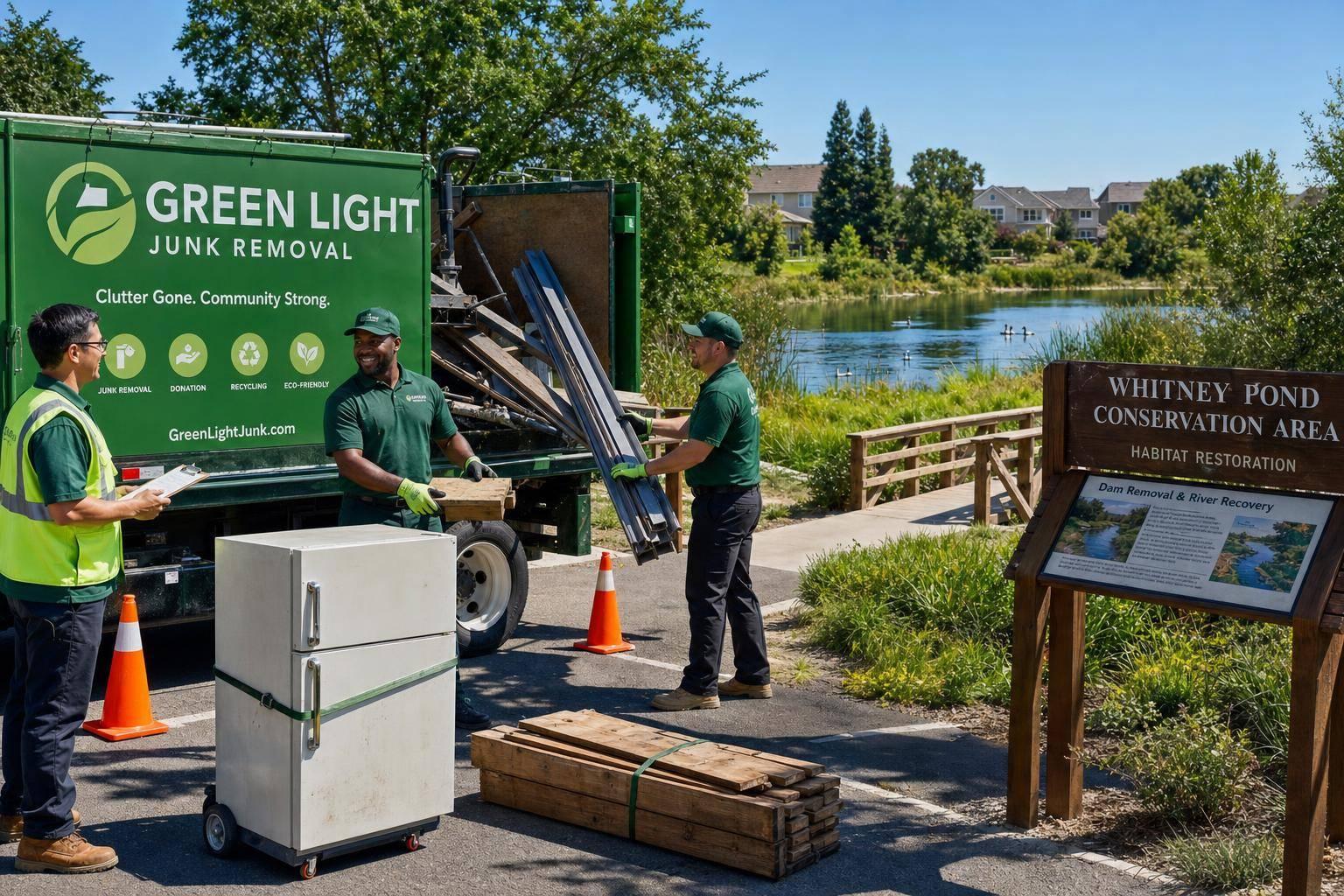
A former furniture factory site in South Ashburnham has reopened as a public conservation area after a yearslong effort to remove a dam once deemed a significant safety hazard.
The Whitney Pond Conservation Area at 2 Gardner Road in Ashburnham opened to the public on Tuesday, July 14, with a ceremonial ribbon-cutting led by town officials. The project took nearly a decade and more than $1.2 million in state and non-profit grants.
The site was once home to the W.F. Whitney furniture factory. More recently, attention centered on the Whitney Pond Dam, located on the Whitman River across Center Street at 2 Gardner Rd. in Ashburnham. In 2017, during a routine inspection, the Massachusetts Dam Office categorized the dam as a significant safety hazard. The article said the dam had not been used for hydropower since 1975 and no longer had a particular use.
State funding was secured in 2019, and Ashburnham residents approved the removal project after the town determined that maintaining and repairing the dam would continue to cost millions of dollars in the years ahead. Last summer in 2025, the dam was removed, allowing freshwater to flow freely and begin restoring itself as a cold-water fishery resource.
"Removing the dam was important not only to prevent a major hazard that could flood and damage homes downstream and Route 101, but it will also improve water quality for native species like the Native Eastern Brook Trout who live downstream", Lambert said.
Beth Lambert, director of the Division of Ecological Restoration, said the project was about more than taking out outdated infrastructure.
"It wasn’t just about removing an unwanted old dam, but also how we could give a little more back to the community", Beth Lambert, director of the Division of Ecological Restoration, said. "This project is an inspiration of how local, state, and private non-profit partnerships can come together to accomplish a big-picture project."
The Nashua River Watershed Association helped coordinate the dam removal and construction of the recreation area along with the DER, Ashburnham Department of Public Works, and Conservation Commission. The site now offers space for visitors to walk, sit, and observe the ecological restoration.
Planning for the area is still continuing. The town’s Rail Trail Committee is in the early stages of a project to extend the conservation area pathways so they connect with existing trails in town.
Susie Bresney, a Mass Division of Ecological Restoration specialist, said DER will continue monitoring the Whitman River’s natural restoration now that cold water is flowing freely. The article said two culverts downstream are preventing native Eastern Brook Trout from swimming back up to the Whitman River, and removing those culverts is another project planned as part of the habitat restoration.