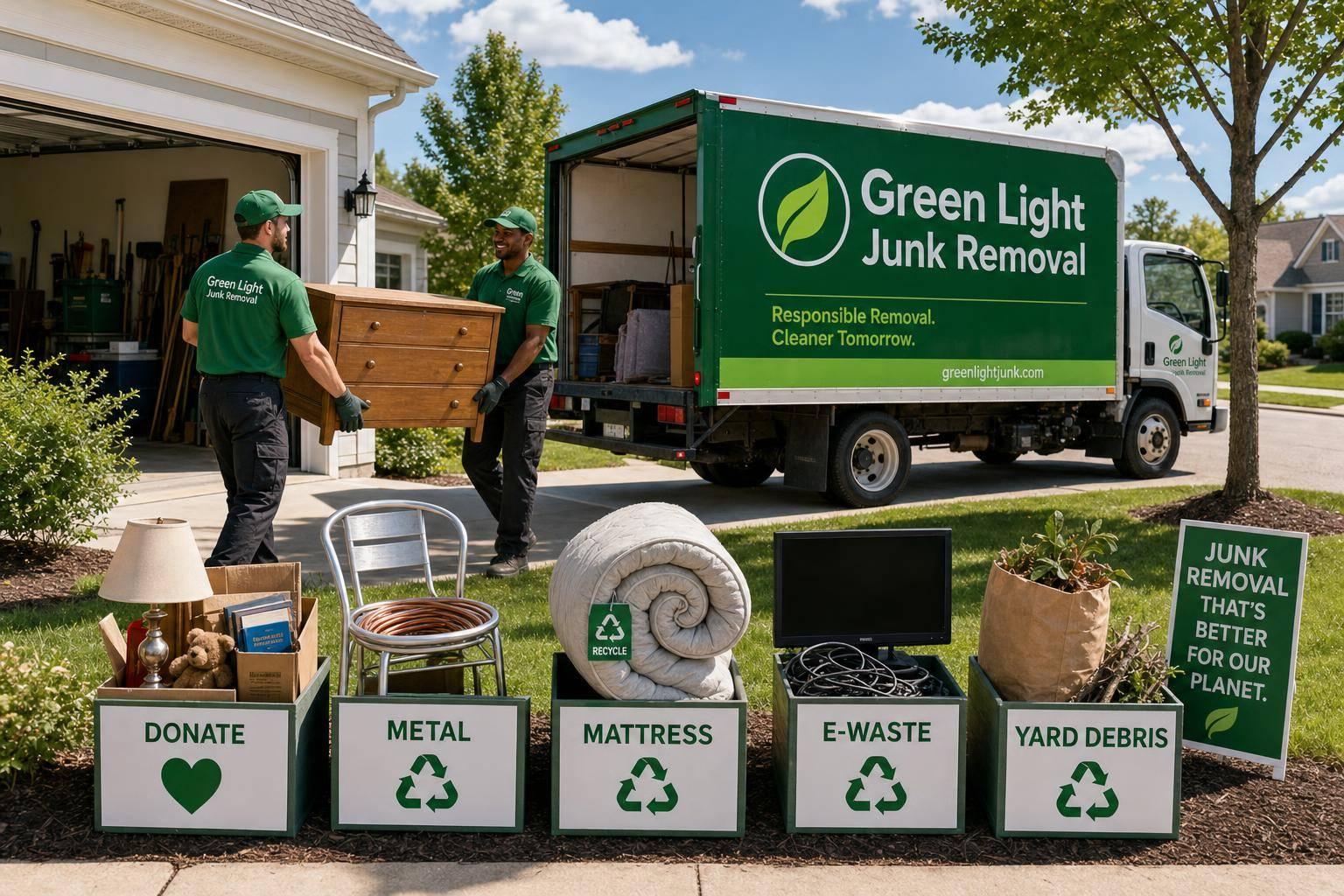
Most junk does not need to end up in a landfill. I sort items by condition, material, and disposal type first, then send them to the right place: donation, metal recycling, e-waste, yard-waste processing, or – only if there’s no other option – the dump.
Here’s the short version:
- Usable items like clean furniture, books, clothes, and working appliances may be donated.
- Metal items like bed frames, shelving, grills, and appliances can often go to scrap recycling.
- Electronics like TVs, monitors, and computers should go to a certified e-waste facility because they may contain lead, mercury, or cadmium.
- Mattresses are worth separating because up to 75% of one can be recycled into steel, foam, wood, and fiber.
- Yard debris and clean cardboard often have a clear recycling path if they stay dry and sorted.
- Paint, batteries, propane tanks, refrigerant appliances, and fluorescent bulbs need special handling and should be kept out of mixed junk piles.
I also keep one rule in mind: sort before pickup day. Once items get wet, moldy, or broken down, donation and recycling options drop fast.
A few examples make this simple:
- A refrigerator may contain $15 to $35 in recoverable metal, but it still needs refrigerant recovery first.
- A hot tub can be broken into parts like metal, pumps, and wiring so each piece follows its own disposal path.
- Untreated wood may be chipped or reused, while painted or pressure-treated wood often needs a separate route.
If I want less waste from a cleanout, I don’t treat junk like one pile. I treat it like several piles with different next steps.
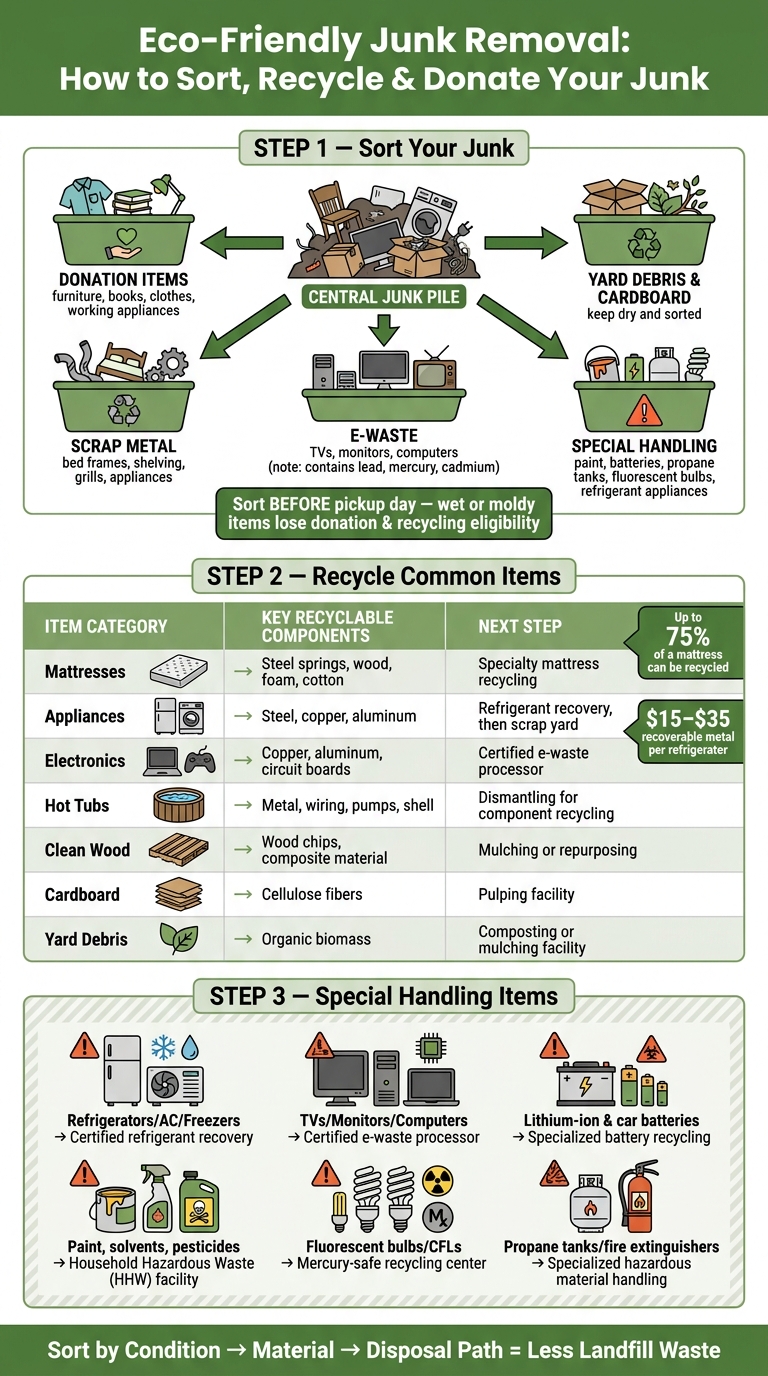
Eco-Friendly Junk Removal: Sort, Recycle & Donate Guide
Step 1: Sort your junk by condition, material, and disposal path
Sort everything before pickup day. That one step turns a messy mixed pile into separate donation, recycling, and special-handling loads.
For Sacramento-area cleanouts, this matters for a simple reason: reusable stuff has a better shot at staying in local circulation instead of taking up room in a landfill. It also makes pickup faster because each pile already has a clear destination – donation, metal recycling, e-waste, yard waste, or hazardous-waste handling.
Separate donation items from broken or worn-out junk
Start with the usable items. Furniture with a solid frame, working appliances, clean decor, books, and clothing are all good donation candidates if they’re clean and structurally sound. Donation centers usually take items that are gently used and in good condition.
If something has mold, heavy stains, broken frames, or torn upholstery, move it out of the donation pile and into recycling or disposal instead. Even then, don’t write it off too fast. Broken items can still contain parts worth separating. A busted bed frame, for example, may still have metal pieces that can go to scrap.
After that, group the rest by material so each recycling stream stays clean.
Group recyclables by material type
Sort the remaining items by material. Metal, cardboard, wood, hard plastics, and electronics usually go to different facilities. Flatten cardboard boxes, and keep scrap metal together in one pile.
Here’s one tip that saves hassle later: separate untreated lumber from painted, stained, or pressure-treated wood. Clean lumber can often be mulched or chipped, while painted, stained, or pressure-treated wood needs a separate disposal route [1][3].
Set aside items that need special disposal
Some items need extra care because they contain chemicals, refrigerants, or batteries. These should never be tossed into a mixed junk load.
| Item | Why It Needs Special Handling | Where It Goes |
|---|---|---|
| Refrigerators, AC units, freezers | Contain refrigerants (Freon) | Certified refrigerant recovery |
| TVs, monitors, computers | Contain lead, mercury, cadmium | Certified e-waste processor |
| Lithium-ion and car batteries | Fire hazard; contain heavy metals | Specialized battery recycling |
| Paint, solvents, pesticides | Chemical contamination risk | Household Hazardous Waste (HHW) facility |
| Fluorescent bulbs, CFLs | Contain mercury | Mercury-safe recycling center |
| Propane tanks, fire extinguishers | Pressurized and flammable | Specialized hazardous material handling |
Set these items in a clearly separate area before pickup day. Keep them apart so they don’t end up in the mixed load. Once sorting is done, each pile can head to the right recycling route.
sbb-itb-096ce5b
Step 2: Recycle common junk items instead of sending them to the landfill
After sorting everything, the next move is simple: send each pile where it belongs. That could mean donation, scrap, certified recycling, or a specialty disposal site. The point is to move each item into the right stream instead of dumping it in the nearest landfill.
Furniture, mattresses, and usable household goods
Clean, sturdy furniture – like couches, tables, and chairs – can often go to donation centers if it’s still usable and not badly damaged. Even broken furniture can still be worth something. A damaged couch may be taken apart for its metal frame, and a broken wood table can still yield wood parts that can be reused.
Mattresses deserve special attention. Up to 75% of a mattress can be recycled into new materials, including steel springs, wood frames, cotton batting, and foam. Even so, a large portion of the 18.2 million mattresses thrown out each year in the U.S. never makes it to a recycling facility [2].
Appliances, scrap metal, and electronics
Appliances like refrigerators, washers, and stoves contain steel, copper, and aluminum, which makes them strong scrap options. A single refrigerator can hold $15 to $35 worth of recoverable metal. Refrigerators and air conditioners also need refrigerant recovery before they can go through scrap recycling [2][4].
Electronics are in a separate lane. TVs, monitors, and computers can contain hazardous materials like lead and mercury, along with metals such as copper and aluminum. These items should go to certified e-waste processors so the dangerous parts are handled safely and the recoverable materials are removed the right way [4][5].
Other metal items – like filing cabinets, bed frames, metal shelving, and grills – can often go straight to scrap yards, where the metal is melted down and used again.
Hot tubs, wood, cardboard, and yard debris
Hot tubs may look like one giant item, but they’re made up of mixed parts. Once dismantled, the metal, wiring, pumps, and shell materials can be split up, and each part follows its own recycling or disposal path.
With wood, the big split is treated versus untreated. Clean, untreated lumber can be chipped into mulch or turned into composite material. Painted or chemically treated wood often needs a separate disposal route.
Cardboard is easier to deal with. Keep it dry, flatten it, and it can be pulped into new paper. Yard debris – branches, brush, and leaves – usually goes to a composting or mulching facility, where it becomes compost or mulch.
Once you separate these materials, pickup and drop-off get a lot easier.
Here’s a quick breakdown of the most common recycling paths.
| Item Category | Key Recyclable Components | Next Step |
|---|---|---|
| Mattresses | Steel springs, wood, foam, cotton | Specialty mattress recycling facility |
| Appliances | Steel, copper, aluminum | Refrigerant recovery, then scrap yard |
| Electronics | Copper, aluminum, circuit boards | Certified e-waste processor |
| Hot Tubs | Metal, wiring, pumps, shell material | Dismantling for component recycling |
| Clean Wood | Wood chips, composite material | Mulching or repurposing |
| Cardboard | Cellulose fibers | Pulping facility |
| Yard Debris | Organic biomass | Composting or mulching facility |
Step 3: Let Green Light Junk Removal handle pickup, sorting, and drop-off
Once you’ve sorted items into donation, recycling, and special disposal, pickup is the easy part. Figuring out where things should go does a lot of the work. Getting everything there is the next piece.
What Green Light Junk Removal picks up
Green Light Junk Removal handles pickups that can be routed to donation, recycling, or special disposal. That includes residential junk removal, garage cleanouts, estate cleanouts, storage unit cleanouts, appliance removal, yard cleanups, demolition cleanup, office cleanouts, hot tub removal, and other bulky-item pickups.
That means you don’t have to lift heavy items, load a truck, or make a bunch of separate drop-off runs.
From there, the process is straightforward and predictable.
What to expect from estimate to pickup day
You request an estimate, confirm the pickup, and the crew collects the items. After pickup, the load is sorted for donation, recycling, and disposal.
Common junk items and their usual next step: a quick reference table
| Item Type | Usual Next Step | What the Crew Does |
|---|---|---|
| Couch / Furniture | Routed to donation if usable | Picks up and delivers to donation centers |
| Refrigerator | Refrigerant recovery, then metal recycling | Loads and hauls to certified processors |
| Hot Tub | Dismantled and separated into salvageable parts | Manages demolition and material separation |
| Cardboard Boxes | Sent to paper recycling | Collects bulk volumes for processing |
| E-waste (TVs, PCs) | Delivered to certified electronics recycling | Routes toxic components to legal handlers |
| Scrap Metal | Separated for scrap processing | Identifies and pulls metals from the load |
| Yard Debris | Sent to green-waste processing | Clears and transports organic waste |
Conclusion: A simple plan for recycling more of your unwanted items
Most household clutter has a better next stop than the landfill. A lot of everyday items can be donated, recycled, or handled on their own. The key is simple: sort each item before pickup. That same flow – condition first, then material, then disposal path – shapes every eco-friendly cleanout.
Use this simple sort-and-route method before pickup day.
Key takeaways for your next cleanout
Start with the items most likely to stay out of the landfill. Put usable items aside for donation first. Then separate recyclable materials so they stay clean and easy to process.
- Remove batteries, keep refrigerant-containing appliances separate, and recycle only clean, dry cardboard.
Once everything is sorted, pickup gets much easier. Schedule pickups before items get wet, moldy, or damaged. Once materials break down, donation and recycling options shrink fast. Green Light Junk Removal handles pickup and routing, so you don’t have to set up multiple runs or guess which facility takes what. The result is a cleaner property. The process is better recycling. Sort first, and the pickup crew can move each item to the right destination.
FAQs
What should I sort out before pickup?
You don’t need to make separate piles before pickup. Our team can sort everything on-site.
That said, a little prep helps. Set aside clean, working items for donation, keep electronics, batteries, paint, chemicals, and other hazardous materials separate, and check furniture drawers and cushions for personal belongings.
Can wet or damaged items still be donated or recycled?
Sometimes. But condition is the big thing.
Donation centers usually take items only when they’re clean, working, and in decent shape. If furniture is torn, smells bad, or has pet damage, there’s a good chance it’ll be turned away.
The same idea applies to recycling. Materials like metal and wood are easier to process when they’re clean. If an item is badly damaged, contaminated, or made from mixed materials, it becomes much harder to recycle and is more likely to end up in a landfill.
Where do hazardous items like paint or batteries go?
Hazardous items like paint, chemicals, and batteries need special handling. They should never go in your regular trash, because they can release toxic substances like lead or mercury.
Instead, take them to designated hazardous waste facilities or drop-off sites. You can usually find these through:
- Your local municipality’s waste management website
- the EPA’s hazardous waste resources
- Earth911
- local collection events
Some areas also offer mail-back programs for batteries.