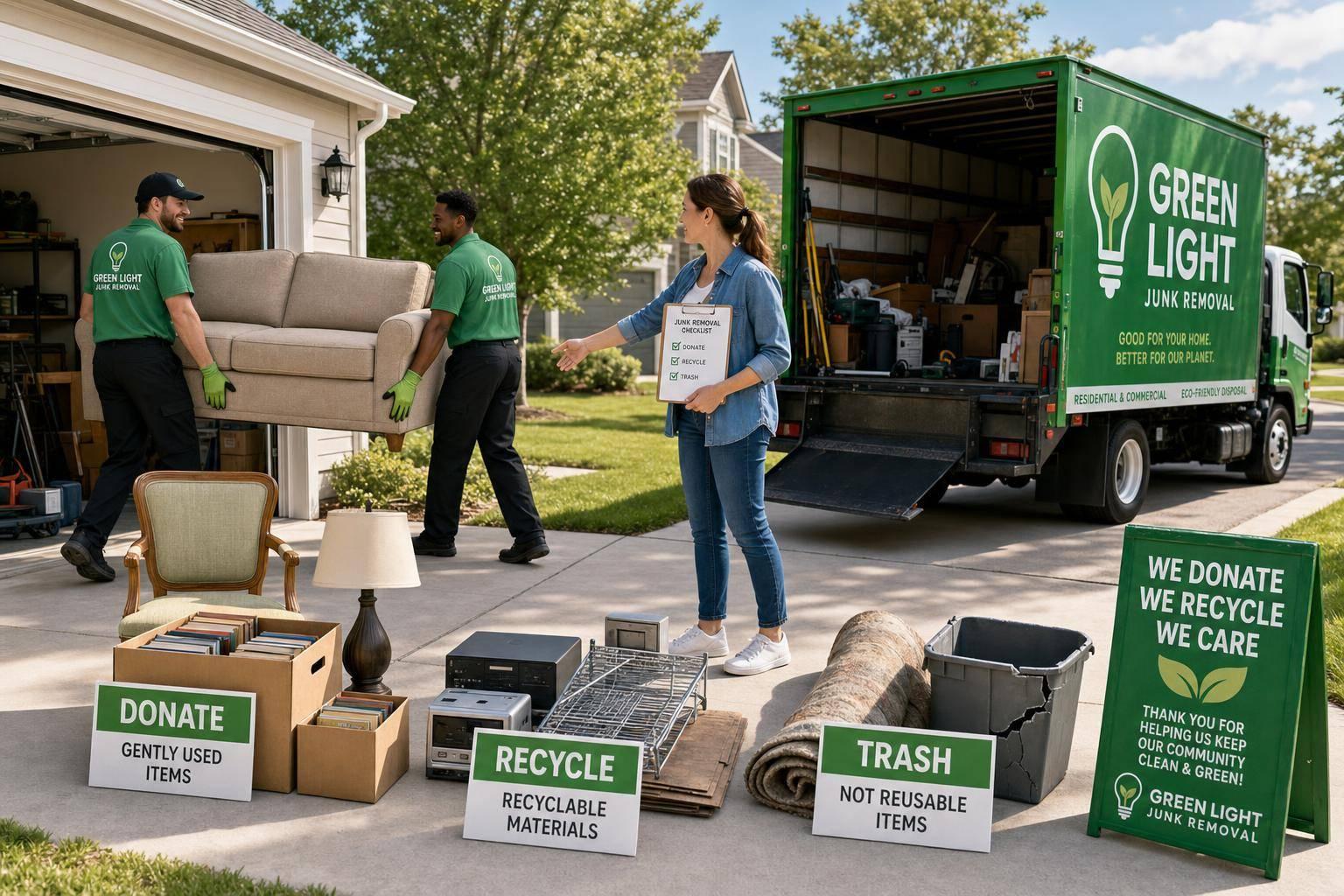
Most home junk jobs come down to four steps: sort it, check item rules, pick DIY or full-service removal, and send usable items to donation or recycling first. For many homeowners, the biggest issues are heavy lifting, local disposal limits, and cost. Items like fridges, hot tubs, concrete, mattresses, paint, and e-waste often need extra handling, added fees, or a separate drop-off.
If I wanted to clear out a house, garage, attic, basement, or yard without making a mess of it, I’d keep this checklist in mind:
- Set up four piles: Keep, Donate, Recycle, Junk
- Estimate load size: about 1/4 load, 1/2 load, or full load
- Check access first: stairs, tight turns, narrow doors, and long carries
- Separate special items: refrigerators, AC units, renovation debris, yard waste, and e-waste
- Watch the costs: DIY may run $50–$140 per load plus time and dump fees, while full-service junk removal often runs $150–$800+
- Know the time gap: DIY can take 3.5–6.5 hours per trip; a crew often finishes in 1–2 hours
- Keep banned items out: wet paint, gas, oil, solvents, propane tanks, pesticides, asbestos, and medical waste
- Try to cut landfill use: pro haulers may divert 60%–80% through recycling and donation
Declutter & Demolish: Everything You Need to Know About Professional Junk Removal
sbb-itb-096ce5b
Quick Comparison
| Option | Best for | Typical cost | Time | Labor | Main issue |
|---|---|---|---|---|---|
| Municipal bulk pickup | Small bulk set-outs | Varies by city | Days to weeks | You do it | Item limits and curb-only service |
| DIY hauling | Small loads with easy access | $50–$140 per load, plus dump fees | 3.5–6.5 hours per trip | High | Lifting, hauling, and sorting |
| Full-service junk removal | Heavy, bulky, or mixed loads | $150–$800+ | 1–2 hours | Low | Higher upfront price |
Bottom line: if the load is small and easy to reach, DIY may work. If the job includes stairs, heavy items, specialty pieces, or a lot of debris, hiring help often saves time, cuts strain, and lowers the chance of damage.
How to Identify, Sort, and Plan Your Cleanout
Before any hauling starts, map out the property with four sorting zones. Go room by room: living areas, bedrooms, kitchen, bathrooms, then heavier storage spots like the garage, attic, basement, shed, and yard. The point is simple: figure out what needs to go based on volume, material type, and how hard it is to remove.
Room-by-Room Walkthrough and Load Size Estimate
As you walk, pay close attention to access. Look for narrow attic stairs, tight basement turns, long driveways, and anything that may need to come apart first, like bed frames, tables, desks, or large entertainment centers. Spotting those issues early helps you avoid slowdowns on pickup day.
For each space, estimate the job in truck fractions, such as 1/4 load, 1/2 load, or a full load.
| Space | What to Look For | Key Planning Note |
|---|---|---|
| Living Area | Items that may need disassembly or door clearance | Measure doorways for oversized pieces |
| Garage/Attic | Stored items, tools, boxes | Stage items near the door before pickup |
| Basement | Large, heavy items | Note stair width and any tight turns |
| Yard/Shed | Branches, leaves, debris | Keep separate from household junk |
Once you know the access limits and load size, stage items by destination. That way, nothing gets mixed together when pickup day arrives.
Four Sorting Zones: Keep, Donate, Recycle, and Junk
After you scope the property, set up four clearly marked zones – Keep, Donate, Recycle, and Junk – in one central staging area, such as the garage or driveway. You can use labeled piles or taped-off floor sections. It sounds basic, but it saves time and cuts down on second-guessing.
A good rule to use is the one-year rule: if something hasn’t been used or worn in the last 12 months, move it to the donate or junk pile instead of the keep pile [5].
Pre-sort recyclables and donation items before pickup so they don’t end up mixed into the junk load.
How to Plan for Garages, Yards, Moves, and Estate Cleanouts
The plan should match the type of cleanout.
- Garages: Stage removal items near the door or driveway.
- Yards: Keep debris separate from household junk.
- Moves: Label anything that’s staying, and separate valuables, documents, and sentimental items before sorting starts.
- Estates: Build in extra time for heirlooms and documents [10].
Next, check which items need special handling, permits, or separate disposal.
Item Rules, Safety Risks, and Local Disposal Restrictions
After sorting, split items into two groups: what can go straight into the truck, and what needs special handling or a separate drop-off. That step keeps pickup day from turning into a mess.
Furniture, Appliances, Yard Waste, and Renovation Debris
Most bulky home items – like sofas, mattresses, dressers, washers, dryers, and exercise equipment – can usually go in a standard junk load [2][11][7].
The big exception is cooling appliances. Refrigerators, freezers, and AC units contain refrigerant, which has to be recovered by a certified worker before disposal. Many haulers charge an added fee of $15–$45 per unit for that service [3][13].
Renovation debris – such as drywall, concrete, tile, and lumber – is often accepted too, but pricing may work a little differently. Instead of charging by truck space, companies often charge by weight [11][6]. That matters fast if you’re dealing with heavy material like tile or broken concrete.
Yard waste should stay in its own pile. That makes it easier to send to composting or green-waste processing instead of mixing it with general junk.
Oversized and Specialty Items That Often Need Disassembly
Some items are in a class of their own. Hot tubs, pianos, safes, and sheds often need extra planning because they’re heavy, awkward, or hard to get through doors, hallways, or gates.
An empty hot tub usually weighs 400–1,000 lbs, and a piano can weigh 300 to 1,200 lbs [3]. That’s not the kind of thing you want to "just figure out" on the way to the truck. These pieces often need disassembly and more than one person to move them safely [3][14].
Trying to move bulky items without the right tools can lead to:
- Back strain
- Cuts from staples or broken parts
- Property damage, like scratched floors or dented walls [3][15]
If something can’t be moved safely in one piece, break it down first.
Hazardous Materials, Permits, and Curbside Rules
Before pickup day, check local rules on banned or restricted items. Most standard junk haulers won’t take wet paint, motor oil, solvents, gasoline, propane tanks, pesticides, asbestos, lead paint, or medical/biohazard waste [2][11][6][3]. If a chemical container still has a label on it, move it to a household hazardous waste site instead of adding it to the junk pile.
A few local rules are also worth checking ahead of time:
- Many HOAs limit how long items can sit at the curb [2][13]
- If you’re doing a DIY haul, most states require straps and a tarp for exposed loads [3]
- If a dumpster goes on a public street instead of a private driveway, you often need a street-use permit from the local municipality to avoid fines [16]
DIY Hauling vs. Hiring Green Light Junk Removal
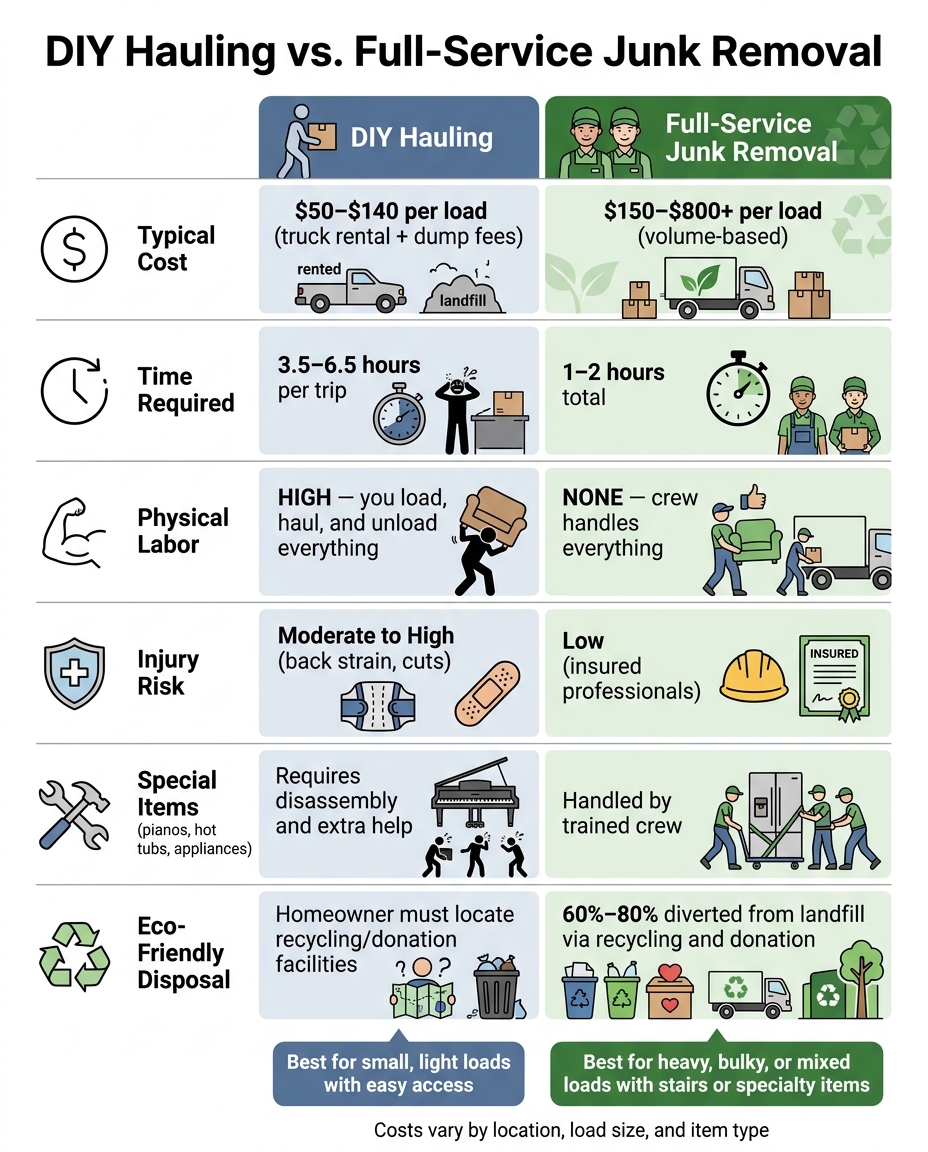
DIY Hauling vs. Full-Service Junk Removal: Cost, Time & Effort Compared
Once you’ve sorted everything, the next call is simple: haul it yourself or bring in a crew. After the keep, donate, recycle, and junk piles are set, pick the safest and fastest way to get the stuff out. That’s where the DIY vs. full-service choice comes in.
When DIY Hauling Makes Sense and What It Requires
DIY hauling works best for small, light loads. If you already have a truck, a helper, and easy access to a landfill or transfer station, it can be a solid option. It’s also a better fit when the path out is easy and you’re not dealing with long carries or stairs.
If you need to rent a truck, expect to pay about $20–$50 per day plus $0.59–$0.99 per mile for a pickup truck or cargo van [3][18]. On top of that, landfill or transfer station fees can run $20–$150 per load, based on weight and location [2][3][17][18]. You’ll likely need a few basic tools too:
- Gloves
- A dolly or hand truck
- Ratchet straps to secure the load
The time commitment is where DIY starts to sting. Between loading, driving, waiting at the dump, unloading, and returning the rental, one trip can take 3.5–6.5 hours [18]. What looks cheap at first can get expensive once you add rental time, dump fees, and your own labor.
When Hiring Green Light Junk Removal Saves Time and Effort
Some jobs are just better left to a crew. Large appliances, stair carries, and specialty items often need pro handling [3]. Green Light Junk Removal takes care of the full job – booking, arrival, loading, disposal, recycling, or donation – so you don’t have to deal with the heavy lifting or the logistics.
Most jobs are done in 1–2 hours [18]. That’s a big difference if you’re trying to clear a space fast. On top of that, professional haulers recycle or donate 60% to 80% of what they collect [4], so eco-friendly disposal is part of the service instead of one more task on your list.
For move-related cleanouts, full-service removal usually costs $200–$600 and can save about 8 hours of labor [4]. Specialty items like pianos or hot tubs often land in the $300–$800 range because they’re heavy and harder to remove [4].
Cost, Effort, and Disposal Outcome Comparison
DIY can look cheaper on paper. But once you factor in rental costs, dump fees, time, and physical effort, the gap often gets smaller.
| Factor | DIY Hauling | Green Light Junk Removal |
|---|---|---|
| Typical Cost | $50–$140 per load if you’re renting a truck [3] | $150–$800+ per load depending on volume [2][17] |
| Time Required | 3.5–6.5 hours per trip [18] | 1–2 hours total [18] |
| Lifting Required | High – lifting, loading, and unloading [3] | None – crew handles everything [2] |
| Injury Risk | Moderate to high – back strain and cuts [3] | Low – insured professionals [8] |
| Special handling needed | Often requires disassembly and extra help [3] | Handled by trained crew [2] |
| Recycling/Donation | Homeowner must locate facilities [3] | 60%–80% diverted from landfill [4] |
For bigger jobs, DIY savings tend to shrink once extra labor, delays, and injury risk enter the picture.
Eco-Friendly Disposal, Cleanout Methods, and Next Steps
Donation and Recycling Options That Cut Landfill Waste
Once you’ve sorted everything, the next step is simple: send each item down the right path.
Furniture and home furnishings create a lot of trash in the U.S. In fact, they account for more than 12 million tons of municipal solid waste every year [5][1]. That’s a huge number, which is why donation can make such a big dent.
Clean, working furniture, usable home goods, and appliances in good shape can often be donated to groups like Goodwill, the Salvation Army, or Habitat for Humanity ReStores. Many of these places even offer free pickup, which can save time and effort. A good rule of thumb: if an item is clean, works as it should, and isn’t damaged, it will often qualify. Damaged furniture, stained mattresses, and broken electronics usually won’t make the cut [9].
Recycling works best when you separate materials before loading anything up. Scrap metal, e-waste, and clean yard waste should each go to the proper facility or drop-off site. Scrap steel may bring in $0.05 to $0.10 per pound at scrap yards [3]. Electronics can usually go to a retailer take-back program or a city or county e-waste center. Yard waste should go to a composting site, since many standard landfills won’t take it [3].
Mattresses are one item to watch closely. They often come with a $10–$50 landfill surcharge because they need special recycling [3][16].
A Simple Action Plan for Garages, Basements, Attics, and Yards
Start by clearing a safe path to the exit. That sounds basic, but it makes the whole job smoother. After that, move heavy items closest to the door, group materials by type, and bag loose debris so it doesn’t blow or spill during loading.
Stick with the same sorting zones from your cleanout plan. Keep donation, recycling, and junk in separate areas so you don’t have to sort the same pile twice.
Different spaces need slightly different handling. Garages and basements usually hide a lot of items along the walls, so pull things outward first to see what’s there. Attics need more care. Wear an N95 mask to help protect against mold spores and built-up dust. In yards, keep yard waste separate from other debris so it can go to the proper site.
Here’s how that looks in a few common cleanout jobs:
- Moving cleanouts: Go room by room. Stage items in the driveway or garage so the home is clear before movers show up.
- Estate cleanouts: Pull out donation items first. Some local charities offer free pickup for furniture and appliances, which can lower cost and reduce landfill waste [12][16].
- Severely cluttered homes: Split the work into zones instead of trying to do everything at once. Taking apart large items like bed frames and tables can cut the space they take up by 40%–60% [3], which may reduce removal costs.
If you’re putting a dumpster on the driveway, place plywood sheets or rubber pads under the dumpster or under the load’s contact points. That extra layer can help prevent cracks in concrete or asphalt [16].
Conclusion: The Clearest Path to a Safer, Cleaner Property
Sort first. Then check local disposal rules and match each item to donation, recycling, or removal. It also helps to weigh the work of doing it yourself against hiring full-service help, especially when the load is heavy, bulky, or both.
FAQs
How do I estimate my junk load size?
Walk through your home and sort items into three simple groups: small things like bags or boxes, medium pieces like chairs or tables, and large items like couches, mattresses, or appliances.
That makes the math a lot easier.
A couch usually takes up 1–2 cubic yards. A mattress is often about 0.5–1 cubic yard. Once you add those numbers up, you can get a rough sense of how much truck space you’ll need:
- 1–2 cubic yards = minimum load
- 7–8 cubic yards = half-truck load
- 13–17 cubic yards = full truckload
It’s not fancy, but it works well for a quick estimate before you book.
What items usually need special disposal?
Some items need special handling and can’t go in regular trash or standard junk removal loads.
That includes hazardous materials such as paint, chemicals, solvents, motor oil, gasoline, asbestos, medical waste, and propane tanks.
Electronics like TVs, computers, and monitors need e-waste recycling. Appliances that contain freon, such as refrigerators and air conditioners, also need certified handling.
Should I haul junk myself or hire help?
It comes down to your budget, your physical limits, and how big the job is.
A DIY move can save money if you already have a truck, someone to help, and just a few small, light items to haul in one trip. But for heavy or bulky items, hiring pros often makes more sense.
If you can’t lift safely, don’t want to risk injury, or want to save time, bringing in professionals can take a lot off your plate. It can also help you avoid property damage and extra costs like truck rental, fuel, and disposal fees.